

Deciphering Radial vs Axial Load: What You Need to Know
2026-01-01Bearings play a key role in keeping machines running smoothly. You find them in everything from small home appliances to huge factory engines. These parts are built to handle different kinds of forces, mainly radial loads and axial loads.
The Basics of Radial Loads
What Are Radial Loads?
Radial loads, sometimes called transverse loads, are forces that push straight across the bearing’s shaft. The pressure hits at a right angle to the axis. It feels like someone pressing sideways on the outer ring, trying to shift the bearing left or right.
Common Sources of Radial Loads
Radial loads come from many places. They can appear because of the weight of spinning parts, shaking during work, bent shafts, or outside pressure on the machine. For example, in a car wheel, the vehicle’s weight pushes down on the hub. That creates a clear radial load.
Real-World Examples
Picture a conveyor belt in a factory. The pulleys carry the weight of boxes or materials. This weight creates radial loads on the bearings that hold the pulleys. Those bearings must fight against the side-to-side force.
The Ins and Outs of Axial Loads
Understanding Axial Loads
Axial loads, also known as thrust loads, run straight along the shaft. The force pushes or pulls in line with the axis. It is easy to imagine it as someone shoving or tugging the bearing from end to end.
Different Types of Axial Loads
Axial loads come in two basic kinds: pure thrust loads and moment loads. Pure thrust loads push or pull directly along the shaft. Moment loads create twisting force around the axis. Knowing the difference helps pick the right bearing.
Applications Requiring Axial Load Handling
Axial loads show up where machines need exact control of movement. A good example is a car transmission. Gears send force along the shaft while power moves from the engine to the wheels.
Key Differences Between Radial and Axial Loads
Load Direction and Force Distribution
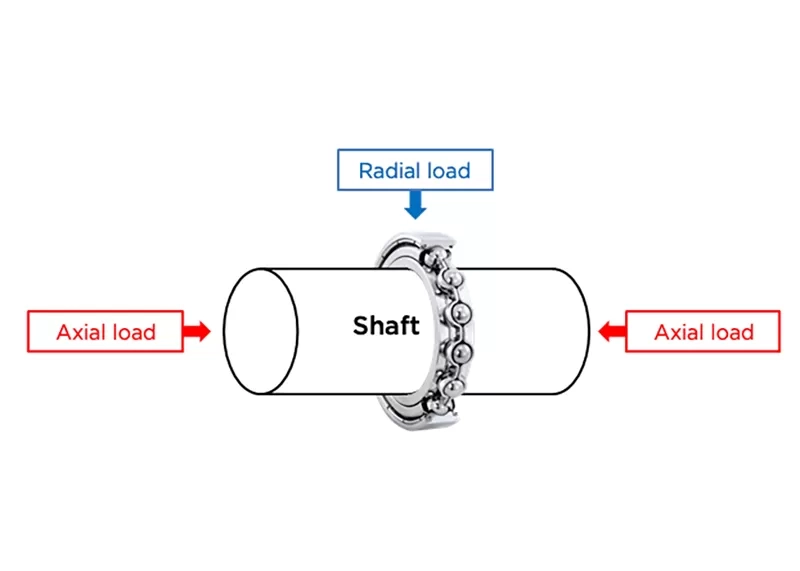
The main difference lies in direction. Radial loads push across the shaft and try to move the bearing sideways. Axial loads push along the shaft and try to slide it lengthwise. This simple difference changes how bearings are built and how well they work.
Effects on Bearing Performance
Sideways forces create stress across the bearing. Too much can bend parts or wear them out fast. Lengthwise forces test how well the bearing can stop sliding. Each type needs its own design to stay strong.
How Bearings Are Designed to Handle Each Load Type
Makers shape bearings differently for each job. Radial bearings spread sideways force evenly between the rings. Thrust bearings use special parts that resist pushing or pulling along the axis. Choosing the correct type keeps everything running longer.
Importance of Load Analysis
Why Analyzing Loads Matters
Checking loads carefully helps machines last longer and work better. It stops early breakdowns, saves repair money, and keeps production on schedule.
Reducing Bearing Wear and Tear
Good load checks show which bearings can take the real forces. This stops overload and slows down wear. Machines stay healthy and need fewer new parts.
Optimizing Bearing Selection
Knowing the exact forces helps buyers pick the best bearings. Engineers look at speed, temperature, and surroundings. The right choice means steady work and longer life.
Load Calculation Techniques
Static and Dynamic Load Ratings
Static ratings tell the highest load a still bearing can hold without damage. Dynamic ratings show what a moving bearing can carry over time. Both numbers guide smart choices.
Calculating Radial Loads
Engineers add up weights and forces that push sideways. Clear math keeps the numbers safe and stops overload mistakes.
Calculating Axial Loads
The same careful math measures forces along the shaft. Accurate numbers help choose strong thrust bearings.
Combined Load Scenarios
Most real machines face both kinds of load at once. Learning how they mix together is important. Smart bearing picks and regular care handle mixed forces well.
Bearing Selection Considerations
Matching Bearings to Load Types
The first rule is matching the bearing to the main force direction. Wrong matches cause quick failure and costly damage.
Bearing Material and Load Capacity
Material decides how much force a bearing can take. It also affects rust protection and tough conditions. Good studies pair the right material with the expected loads.
Lubrication Requirements
Proper oil or grease cuts friction and heat. The right amount and type depend on the loads. Careful plans keep temperature low and parts smooth.
Environmental Factors
Heat, water, dirt, and dust hurt bearings. Smart designs add seals or special coatings when conditions are rough.
Radial Load in Detail
Radial Load Bearings
Radial bearings handle sideways forces best. They come in many sizes and fit almost every industry.
Load Distribution in Radial Bearings
Good designs spread the force equally around the rings. Even sharing stops early wear in one spot.
Overcoming Radial Load Challenges
Straight shafts, fresh grease, and regular checks beat most radial problems. Simple habits add years to bearing life.
Real-World Applications
Electric motors, belt conveyors, and pumps all depend on radial bearings every day.
Axial Load in Detail
Axial Load Bearings
Thrust bearings manage forces along the shaft. They keep things steady when push or pull is strong.
Thrust Bearings and Their Varieties
Ball, roller, and magnetic thrust bearings each fit different jobs. Knowing the options leads to better picks.
Managing High Axial Loads
Heavy transmissions need extra-strong bearings and careful setups to stay safe.
Typical Axial Load Applications
Transmissions, ball screws, and vertical pumps all use thrust bearings to fight axial force.
Combined Load Scenarios
Understanding Mixed Load Situations
Many machines feel both forces together. Learning how they act as a team helps plan better.
Combined Radial and Axial Load Bearings
Special bearings share both jobs well. They shine when forces come from several directions.
Specialized Bearings for Complex Load Scenarios
Custom designs solve unusual load patterns that normal bearings cannot handle.
Bearings and Industry-Specific Needs
Bearings in Machine Manufacturing
Factory machines need exact and reliable bearings for steady output.
Bearings in Automotive Applications
Car bearings face both load types under strict safety rules.
Bearings in the Aerospace Industry
Plane bearings must survive extreme loads and never fail.
Bearings in Construction and Heavy Machinery
Big equipment works in dirt and shock. Strong bearings keep it running.
Testing and Quality Control
Quality Standards for Radial and Axial Bearings
Strict rules make sure every bearing is safe and strong.
Importance of Load Testing
Real-life tests prove bearings meet their promises.
Ensuring Reliability and Longevity
Tough checks cut downtime and repair bills.
Troubleshooting Load-Related Issues
Identifying Overloaded Bearings
Hot spots and strange noises warn of too much load.
Addressing Premature Bearing Failure
Fresh grease, straight alignment, and careful watching stop most early deaths.
Implementing Preventative Measures
Regular care and load checks save money and trouble.
FAQ
Why is load analysis important for industrial applications?
Load analysis prevents overloads, optimizes bearing choices, and reduces maintenance costs by ensuring compatibility with operational demands.
What factors influence bearing material selection for high loads?
Material choices depend on load capacity, corrosion resistance, and environmental exposure to maximize durability.
How can premature bearing failure due to loads be prevented?
Regular lubrication, precise alignment, and load monitoring serve as key preventative measures.
Partner with LQYS Bearings for Superior Solutions
As a leading manufacturer and seller of high-precision bearings, LQYS Bearings, operated by Shanghai Yongheshun Import and Export Co., Ltd., delivers integrated production, sales, and export services tailored for industrial needs in intelligent manufacturing, robotics, automotive, and global machinery sectors. With advanced equipment ensuring exceptional precision and reliability, LQYS Bearings offers a comprehensive range including angular contact ball bearings, cylindrical roller bearings, thrust ball bearings, and more. Contact the team today at +86 13002187311 or salesjake@lqysbearing.com to request a customized quote, explore OEM options, or discuss application-specific solutions that drive efficiency and longevity in your operations. Visit https://www.lqysbearings.com/ to discover how LQYS Bearings elevates industrial performance.
 EN
EN  RU
RU  ES
ES  PT
PT  DE
DE  FR
FR  IT
IT  HI
HI  AR
AR  JA
JA  BN
BN