

Factors to Consider When Sizing a Deep Groove Ball Bearing
2026-03-19Rodamientos rígidos a bolas work as basic parts in many different fields. They let things turn smoothly while taking both side and end pushes. These bearings appear in lots of places—from electric motors and car parts to factory tools, pumps, fans, conveyors, and exact machines. Good sizing stops early breakdowns, cuts stop time, and makes the whole system last longer with better work.
The choice process mixes several tech points. These cover main sizes, load numbers with life math, inside space, top speeds, fits and allowed differences, lube picks, seal types, and material choices. Work conditions—like heat changes, dirt levels, and shake—must shape every step. Maker catalogs and rules like ISO 281 give base info for clear checks.
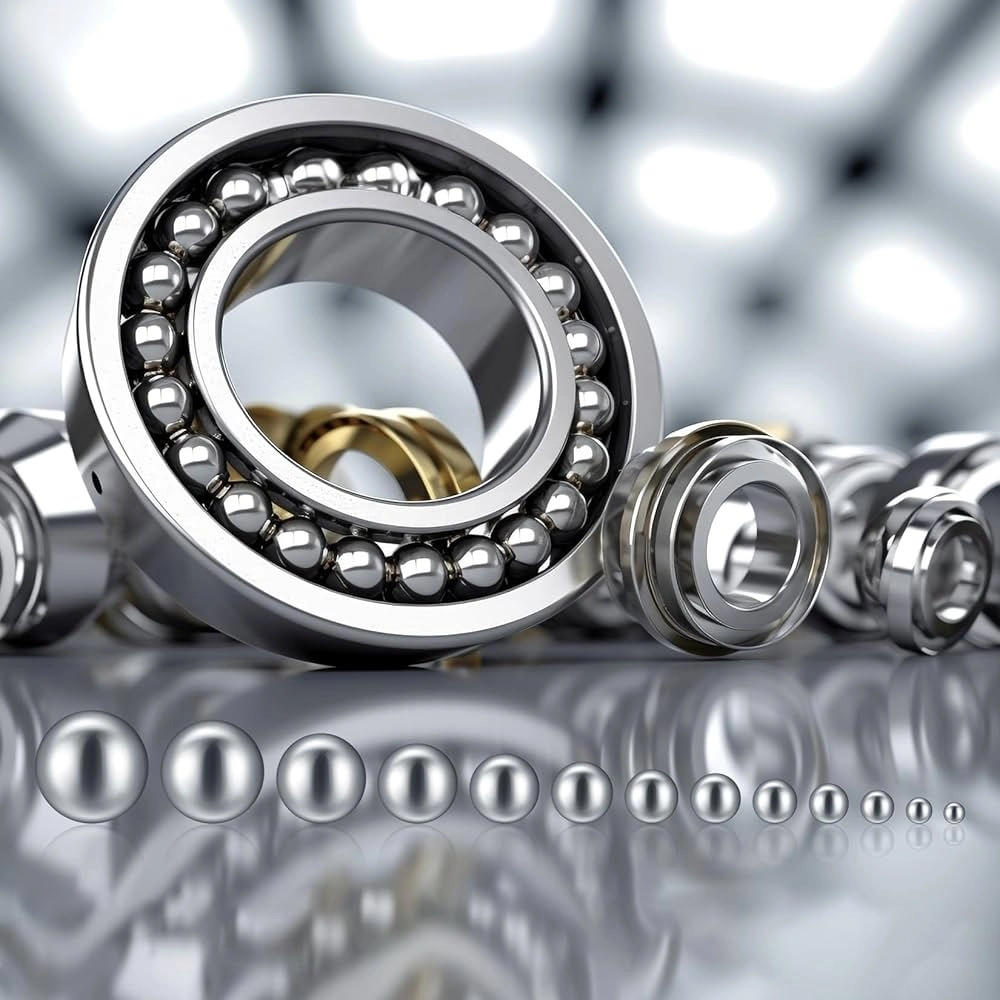
Nominal Dimensions
Main sizes set the starting point for bearing choice. The bearing must fit right in the spot built for it. Catalogs list these sizes as close numbers. This leaves room for making differences and fits.
Key measures include:
-
Inside diameter (ID or bore): The hole where the shaft goes.
-
Outside diameter (OD): The outer ring size that fits the housing.
-
Width: The side-to-side space needed.
Deep groove ball bearings stick to metric sizes (e.g., 6000 series light, 6200 medium, 6300 heavier, 6400 extra heavy). Examples cover 6000 (10 mm ID, 26 mm OD, 8 mm width) and bigger ones up to 6418 (90 mm ID, 225 mm OD, 54 mm width). To switch from inches, use 1 inch = 25.4 mm.
Start with the space limits in the gear design. This finds possible picks before checking other points.
Load Ratings
Load strength checks if a bearing can handle the forces it meets without too much wear. Picking just by size can cause failure under heavy push.
Maker catalogs show dynamic load ratings (C) for turning loads and static ratings for still or shock loads. Strength comes from material grade, roller size, roller count, and groove shape—not just precision level.
If loads go past what a normal single-row bearing takes, choices include thicker series (e.g., move from 6000 to 6200 or 6300) or double-row types. These lift load numbers but change OD and width. Make sure they still match the main sizes.
Rodamientos LQYS makes strong, lasting deep groove ball bearings. They fit side-heavy loads with support for pushes both ways. This makes them solid for medium to hard jobs in cars, machines, and factory work.
Internal Clearance
Internal clearance means the free space inside between rings and balls before setup. This space handles heat growth, tight fits, and small off-center issues.
Clearance shows mostly radial (side space); axial stays often 8-10 times radial because of shape. More clearance fits tighter grips on shafts or in housings. It gives room for heat stretch and cuts rub risk.
Uses differ in what they need:
-
High-exact spots (e.g., CNC spindles or stiff systems) gain from less clearance or preload. This boosts stiffness, clearness, quiet run, shaft guide, and stops slip at fast spins or light loads.
-
Heat growth-heavy places need more clearance.
Clearance groups follow standards:
-
C1 (tightest)
-
C2
-
C0/CN (normal)
-
C3
-
C4
-
C5 (loosest)
C0/CN stands as normal clearance. Still, C3 has become a common choice for wide use. Bearings without marks usually come as C0/CN.
Pick clearance to fit the job: more for heat-heavy setups, less for exactness and stiffness.
Limiting Speed
Top speed sets the fastest safe spin before too much heat, rub, or shake causes breakdown. Catalogs list limits for grease and oil lube.
Main things that affect it include:
-
Cage material and build (e.g., steel, brass, or plastic).
-
Seal type (open highest, ZZ middle, 2RS lowest from contact drag).
-
Precision class (higher ABEC levels allow faster spins).
-
Lube (grease limits stay lower than oil).
ABEC classes (1-9, odd numbers) show tolerance clearness. Higher ones lift speed ability, smooth work, and exactness but do not raise load strength and cost more.
Fast spins make heat. Clearance choice links here—more clearance helps spread heat. Lube must match heat and speed to stop breakdown.
Run below rated limits to lengthen life. This controls heat, rub, and wear.
Bearing Fits and Tolerances
Right fits keep rings steady without too much stress or loose play. Turning inner ring (usual case) needs tight grip on shaft; still outer ring fits transition or loose in housing.
Shaft fits: k5-m6 for tight (heavy loads), h6-j6 for loose (light). Housing: H7-K7 transition/loose.
Tight grips cut inside clearance (up to 80% drop), risking too-tight if overdone. Heat growth differences (e.g., aluminum housing grows more) need changes.
Tolerances per ISO 286 guide final fits; too much tight deforms rings, while loose causes creep and wear.
Lubrication Selection
Lube cuts rub, spreads heat, stops rust, and lengthens life. Grease fits sealed bearings (30% fill usual); oil suits fast or hot uses.
Points to check: temperature (mineral grease -10°C to 110°C, synthetic wider), speed (grease lower limit), load (EP additives for heavy), surroundings (dirt-resistant).
Grease gives hold and low care; oil brings better cooling and fast-spin ability. Lube must match seals and materials.
Opciones de sellado
Seals guard against dirt and keep lube in.
-
Open: No seals, lowest rub/highest speed, needs outside guard.
-
ZZ (metal shields): No touch, low drag, good dust block, high speed.
-
2RS (rubber seals): Touch, top dirt/water block, lower speed from rub.
ZZ fits clean, fast places; 2RS harsh, wet spots. No-touch rubber types balance guard and speed.
Bearing Materials
Material affects lasting power, rust fight, and work.
-
Chrome steel (usual): High load strength, cheap, up to 120°C steady.
-
Stainless steel: Better rust fight, fits food/chemical spots, higher heat limit (up to 300°C with right lube).
-
Ceramic (hybrid or full): Lower weight, less rub, very hard, faster spins, no rust, good for high-exact or vacuum.
Chrome steel rules general use; stainless/ceramic fits special needs.
Conclusión
Sizing deep groove ball bearings needs careful mix. Check main sizes for fit, load ratings with life math, internal clearance for heat and fit needs, limiting speeds for safe run, fits/tolerances, lube, seals, and materials. Match these to job details—load, speed, surroundings, exactness—for steady work and long life.
These points together give reliable use across many jobs—from normal machines to special gear.
LQYS Bearings, a professional manufacturer and seller based in Shanghai, specializes in high-quality deep groove ball bearings (including 6000, 6200, 6300, and 6400 series) with features like low friction, wear resistance, and customization support. As a trusted supplier serving automotive, engineering machinery, railway, mining, and other industries worldwide, LQYS combines advanced production, strict quality control, and global export capabilities to deliver reliable, cost-effective solutions as alternatives or complements to international brands.
Preguntas frecuentes (FAQ)
What are the main types of deep groove ball bearings offered by manufacturers?
Common series include 6000 (light), 6200 (medium), 6300 (heavier), and 6400 (extra heavy), with options for open, ZZ shielded, or 2RS sealed configurations.
How does internal clearance affect bearing performance?
It provides space for thermal expansion and fits; higher classes (e.g., C3, C4) suit high-temperature or interference-fit applications, while lower or preloaded options enhance precision and rigidity.
What factors limit bearing speed?
Cage type, sealing (contact seals reduce limits), lubrication (grease vs. oil), and precision class primarily determine ratings; always operate below catalog limits.
Can deep groove ball bearings handle axial loads?
Primarily radial, they accommodate moderate bidirectional axial loads, though dedicated thrust or angular contact types suit higher axial demands.
Why choose customized bearings?
Customization addresses specific load, speed, environment, or dimensional needs, improving fit and longevity in unique applications.
How is bearing life calculated?
Basic rating life L10 = (C/P)^3 (millions of revolutions) for ball bearings, where C is dynamic load rating and P is equivalent load; convert to hours using speed.
Partner with LQYS Bearings – Your Trusted Manufacturer and Seller
Business seeking high-precision deep groove ball bearings benefit from Rodamientos LQYS‘ integrated production, sales, and export services. With wear-resistant, durable products, OEM customization, competitive pricing, and reliable global delivery, LQYS supports optimized supply chains and performance.
Contacta con el equipo hoy mismo a través de WhatsApp en 8618013237311, teléfono en 8613002187311, o correo electrónico en salesjake@lqysbearing.com to discuss bulk orders, technical specifications, custom solutions, or distribution partnerships. Visit https://www.lqysbearings.com/ to explore the full range and request a quote. Secure dependable, high-quality bearings for enhanced equipment reliability.
Anterior: what-are-cam-follower-bearings
 ES
ES  EN
EN  RU
RU  PT
PT  DE
DE  FR
FR  IT
IT  HI
HI  AR
AR  JA
JA  BN
BN