

Choosing the Right Deep Groove Ball Bearings for Your Application
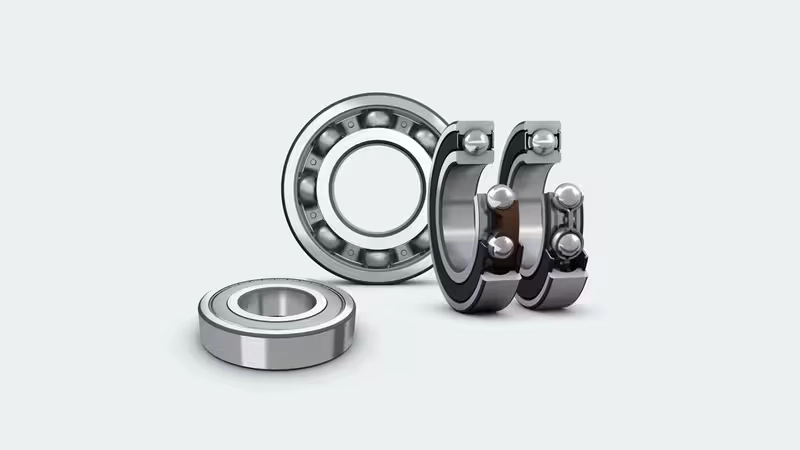
2026-03-26Roulements à billes à gorge profonde stand out as some of the most flexible rolling-element parts used in many industries. Their simple build, low friction, and ability to take both radial and two-way axial loads make them useful in all sorts of machines. Picking the right deep groove ball bearings calls for a careful look at working conditions. This helps get good performance, longer life, and better fit in the system.
Factors to Consider When Selecting Deep Groove Ball Bearings
Many engineering points matter during deep groove roulements à billes selection. Things like size for mounting, load types, turning speeds, allowed misalignment, needed stiffness, noise levels, accuracy grades, and outside conditions all shape the best deep groove ball bearings choice. Changes in materials, inner shape, and extra features let makers match needs for factory tools, automated setups, and mechanical parts.
Installation Space
Tight space in assemblies means the bore size, outer size, and width must fit exactly. Standard deep groove ball bearings series like 6000, 6200, and 6300 give set sizes. These work with different shafts and housings and still keep strength.
Load Rating
After size checks, load ability is key. The dynamic load rating (C) shows the steady radial force the deep groove ball bearings can handle for one million turns at 90% reliability. The static load rating (Co) sets the limit for loads when not moving without damage. Double-row deep groove ball bearings types give higher radial and axial strength than single-row deep groove ball bearings, especially in small spaces with big forces. Equivalent dynamic load math combines radial and axial parts. This makes sure ratings beat what the job needs.
Vitesse
Allowed turning speeds come from shape, cage type, and inner friction. Deep groove ball bearings often reach high speeds compared to other kinds. Cage material and accuracy class affect this. Maker catalogs list reference speeds and limiting speeds. Better designs allow higher numbers.
Misalignment
A small angle difference between rings, up to about 0.25 degrees, works in normal types. Too much bend in shafts or bad mounting calls for better tolerance or extra alignment help. This stops edge pressure and early wear.
Rigidité
Rigidity measures how much the deep groove ball bearings fights shape change under load. Preloading adds slight negative clearance. This boosts stiffness for precise machines where little bend matters. Load and ring/rolling element bend link to total system stiffness.
Running Noise
Low-friction shape and smooth raceways cut vibration and sound. Deep groove ball bearings fit quiet jobs like electric motors and fine tools.
Accuracy
Accuracy classes (ISO P0 to P5 or better) control turning steadiness. Higher precision cuts runout and gives steady results in tight setups.
Installation Concerns
Mounting steps differ by bearing kind and housing. Interference or transition fits on shafts and clearance fits in housings need exact tolerances. This sets right inner clearance after putting together.
Internal Clearance and Preload Considerations
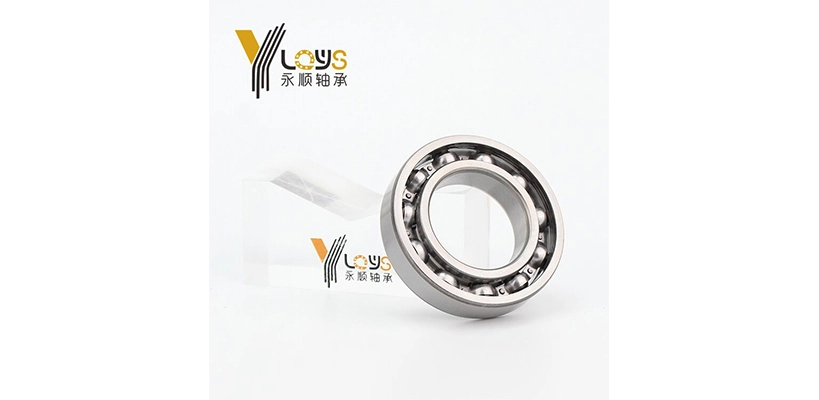
Inner clearance choice greatly affects how deep groove ball bearings run and last.
Radial Internal Clearance Classes
Clearance groups go from C2 (tightest) to normal (CN), C3, C4, and C5 (loosest). C3 is common. It handles interference fits and heat growth. Clearance in micrometres grows with bore size. For example, a 6008 bearing in C3 usually has 13–28 µm. Pick based on temperature changes, fit tightness, and speed to keep good clearance while running.
Preload for Enhanced Rigidity
Preload removes play. It makes contact angles even and raises stiffness. Light preload fits fast, precise spindles. Heavier preload works where max stiffness beats a bit more friction. Keep preload low enough to avoid too much heat or shorter life.
Cage Design and Material Options
Cage build guides balls, cuts friction, and sets speed limit.
Pressed Steel Cages
Cheap pressed steel cages are standard in most deep groove ball bearings. They stay light and strong. They handle normal speeds and loads and spread grease well.
Machined Brass Cages
Machined brass types offer better strength and heat handling. They do great at high speeds or heavy loads. They resist shape change and guide balls well under fast spin.
Polymer Cages
Glass-fiber polyamide cages lower weight and noise. Low mass helps high speeds. They resist chemicals in some places. Check temperature limits since they cap lower than others.
Load Rating Calculations and Bearing Life Basics
Math checks use standard ways.
Dynamic and Static Load Ratings
Basic dynamic load rating C is the load for one million turns at 90% reliability. Static load rating Co is the point for damage when still. Catalogs show both from material and shape.
Operating Temperature Ranges
Heat fit keeps materials stable and clearance right.
Standard Temperature Limits
Normal chrome-steel bearings work from about −30 °C to +120 °C. Some get heat-treated for higher tops.
Material Impacts on Temperature Performance
Special steels or stainless handle wider ranges. Cage and seal materials add limits. Polymer cages often stop at 120 °C continuous. Brass takes more. Heat makes rings expand differently. Adjust clearance for high heat.
Deep Groove Ball Bearing Options
Different setups match job needs closely.
Single-Row or Double-Row
Single-row types focus on low friction, quiet run, and high speeds. They suit high heat too. Double-row handle bigger loads in small space. They give balanced strength and fit tight spots.
Lubrification
Sealed ones come filled with good grease. It lasts long across speeds and temperatures.
Materials and Sealing Options
High-purity chrome steel with pressed cages is basic. Metal shields (ZZ) or rubber seals (2RS) keep dirt out and grease in. Special coatings or stainless fight rust or tough settings. Sizes go from tiny to big. Online tools help match exact sizes.
When choosing deep groove ball bearings, full review of loads, surroundings, accuracy needs, and size limits gives smooth fit in systems.
Deep groove ball bearings from Roulements LQYS provide high-quality, wear-resistant, and durable performance as products manufactured and sold directly by the company. Advanced production facilities, precision testing protocols, and extensive customisation support enable LQYS to supply bearings engineered for mechanical equipment, automotive, railway, steel, mining, and additional demanding sectors. Versatile configurations accommodate combined radial and bidirectional axial loads across medium to high speed regimes.
FAQ
What are the primary advantages of deep groove ball bearings?
Deep groove ball bearings feature simple structure, low friction, versatility, and capability to handle radial loads plus bidirectional axial loads, making them suitable for high-speed applications.
When should double-row deep groove ball bearings be selected over single-row types?
Double-row variants suit applications requiring higher load capacity in limited space, whereas single-row options excel in low-friction, high-speed, or low-noise scenarios.
How do sealing options affect operation?
Sealed types (ZZ metal shields or 2RS rubber seals) retain lubricant and exclude contaminants, supporting consistent performance across operating envelopes.
What industries commonly use deep groove ball bearings?
These bearings find application in mechanical equipment, automotive, railway, engineering, steel, metallurgy, mining, oil, papermaking, and precision instruments.
Can deep groove ball bearings be customized?
Customisation options include size adjustments, sealing configurations, clearance classes, cage materials, and specialised features to meet unique operational requirements.
Partenaire avec LQYS Bearings en tant que fabricant et vendeur de confiance
Business seeking reliable deep groove ball bearings benefit from collaborating with LQYS Bearings. As a dedicated manufacturer and seller, LQYS offers high-precision, customisable solutions backed by advanced manufacturing and global export capabilities. Contactez l'équipe via WhatsApp au 8618013237311, téléphone au 8613002187311, ou courriel à salesjake@lqysbearing.com to discuss specifications, request quotations, or explore tailored bearing options for production needs. Secure optimal performance—reach out today for expert support and competitive supply.
Précédent: Aucun
Suivant : ce-sont-cam-follower-roulements
 FR
FR  EN
EN  RU
RU  ES
ES  PT
PT  DE
DE  IT
IT  HI
HI  AR
AR  JA
JA  BN
BN