

Cylindrical vs Tapered Roller Bearings for Wind Turbines
2025-11-14

When it comes to wind turbine dependability, few parts matter more than the bearings. Tucked deep inside the nacelle, they quietly hold huge weights, keep rotation smooth, and directly affect how long the turbine lasts.
But under strong winds, sudden temperature changes, and constant shaking, even the toughest bearing can break. And every break means stopped work, pricey fixes, and lost power.
So, what’s the top pick for wind turbines: Cylindrical Roller Bearings or Tapered Roller Bearings? Let’s look at how each works in the tough world of modern wind power.
Why Bearings Matter in Wind Energy Systems
Wind turbines run non-stop, often 20 years or longer. They face wild loads and bad weather. Bearings must deal with slow spins, big torque, and shifting forces from gusts and direction shifts.
One bearing failure can stop a turbine for weeks. That leads to huge losses in energy output. That’s why designers and repair teams focus hard on bearing type, grease, and seals.
Long-lasting bearings aren’t just a small mechanical thing. They’re a smart spend on uptime and trust.
Understanding the Two Bearing Types
Cylindrical Roller Bearings (CRBs)
These use round rollers to take big side loads and run easy at fairly quick speeds. You often see them in gearboxes and generators, where exact moves and little drag are key.
Advantages:
They give great side load power and low roll resistance. This cuts heat and power waste while running. CRBs fit well for shafts that need high output and long breaks between checks.
CRBs shine where side forces rule, like in the generator part of the turbine drive.
Tapered Roller Bearings (TRBs)
These have cone-shaped rollers and paths. They’re built to manage both side and end loads. They suit the main shaft or yaw system best, where the bearing must fight push forces and slight twists.
Advantages:
Tapered Roller Bearings stand out for their stiffness and shake resistance. They offer long life even under heavy, changing loads.
In short: CRBs bring speed and ease. TRBs give power and steadiness.
The Harsh Reality of Wind Turbine Conditions
Bearings in wind turbines face some of the hardest tasks in building stuff:
-
Slow turns and heavy weights speed up metal tiredness.
-
Temperature swings from -30°C to +50°C mess with grease and gaps.
-
Dust, water, and salt, especially offshore, cause rust and pits.
-
Uneven loads from blade moves demand spot-on lining up.
Under these tough spots, the right bearing pick, plus good shields, can mean a 5-year life or a 20-year one.
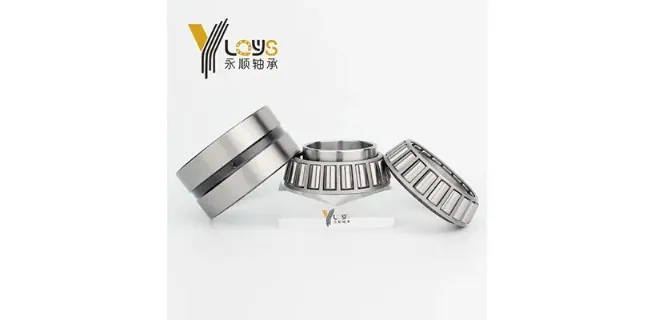
Cylindrical vs Tapered Bearings: Detailed Comparison
| Parameter | Cylindrical Roller Bearing | Tapered Roller Bearing |
|---|---|---|
| Load Type | Radial | Radial + Axial |
| Speed | Higher speed, low friction | Lower speed, high stiffness |
| Friction | Lower | Slightly higher |
| Rigidity | Moderate | Very high |
| Alignment | Lower tolerance | Better axial control |
| Maintenance | Easier | Requires careful preload setup |
| Typical Use | Gearbox, generator | Main shaft, yaw bearing |
Engineering Insight:
In most big multi-megawatt turbines, you’ll spot both kinds. CRBs go in the gearbox. TRBs sit on the main shaft. This mix balances smooth running and load strength.
Common Failure Modes and How to Prevent Them
Even top bearings can quit early if picked wrong or cared for badly.
Common problems include:
-
Flaking or spalling from metal wear.
-
Grease running dry or getting dirty.
-
Wrong lining or too much squeeze.
-
Fretting rust from shakes when still.
Smart design fixes, like right squeeze, better grease, and shake control, are a must for long runs.
Material and Heat Treatment: The Hidden Performance Factor
The core of bearing toughness sits in its steel. Pure bearing steel with exact heat work gives better wear fight and steady size. Fancy surface polish also drops drag and slows wear under big loads.
Yongheshun Bearings uses top-grade steel and tight heat steps to make bearings that keep shape and power during non-stop wind turbine work. Each piece gets hard checks for toughness, inner structure, and surface shine to promise steady trust.
Selecting Bearings for Different Wind Turbine Components
Main Shaft
The main shaft takes side and end forces from the rotor. Tapered roller bearings usually go here. They bring strength and keep steady under high mixed loads.
Gearbox
The gearbox needs smooth spins and little drag. Cylindrical roller bearings are picked often. They handle heavy side loads well and help keep steady torque flow.
Generator
For the generator, quiet and exact work matters a lot. Cylindrical roller bearings fit great. They make sure smooth moves and cut shakes and noise.
Yaw and Pitch Systems
These systems run slow but face big push and twist issues. Tapered or spherical roller bearings get chosen mostly. They manage direction load shifts and hold lining over time.
Conclusion: Combine Strength and Efficiency
Both cylindrical and tapered roller bearings belong in wind turbine plans.
-
CRBs bring ease and low drag in quick-use spots.
-
TRBs offer stiffness and load power where it counts most.
By knowing their special wins and pairing them smartly, builders can boost work and cut stops over the turbine’s life.
Want to boost the trust of your wind power setups? Contact Yongheshun for pro tips and strong bearing fixes made for green energy jobs.
FAQ
Q: Why are bearings important in wind turbines?
Bearings support massive loads, ensure smooth rotation, and directly impact turbine lifespan.
Q: What are the main advantages of Cylindrical Roller Bearings (CRBs)?
They handle high radial loads, offer low friction and higher speeds, making them ideal for gearboxes and generators where efficiency and low heat are critical.
Q: What are the main advantages of Tapered Roller Bearings (TRBs)?
They manage both radial and axial loads, provide high stiffness and vibration resistance.
Q: How are CRBs and TRBs typically used together in wind turbines?
CRBs are used in gearboxes and generators; TRBs are placed in the main shaft and yaw systems.
Q: What are common failure modes of wind turbine bearings?
Flaking/spalling, lubricant dry-out or contamination, misalignment, improper preload, and fretting corrosion.
 EN
EN  RU
RU  ES
ES  PT
PT  DE
DE  FR
FR  IT
IT  HI
HI  AR
AR  JA
JA  BN
BN