

Guide to Choosing High Temperature Bearings: Basic Tips
2026-02-06Comprehensive Overview: How To Choose The Best High Temperature Bearings
Introduction
High-temperature bearings fill an important job in factory work where strong heat brings big problems to regular parts. These bearings keep steady work in places that go past the edge of normal bearings. They stop early breakdowns and cut stop times. Fields like metallurgy, aerospace, chemical work, and making use high-temperature bearings to hold good output in hard spots.
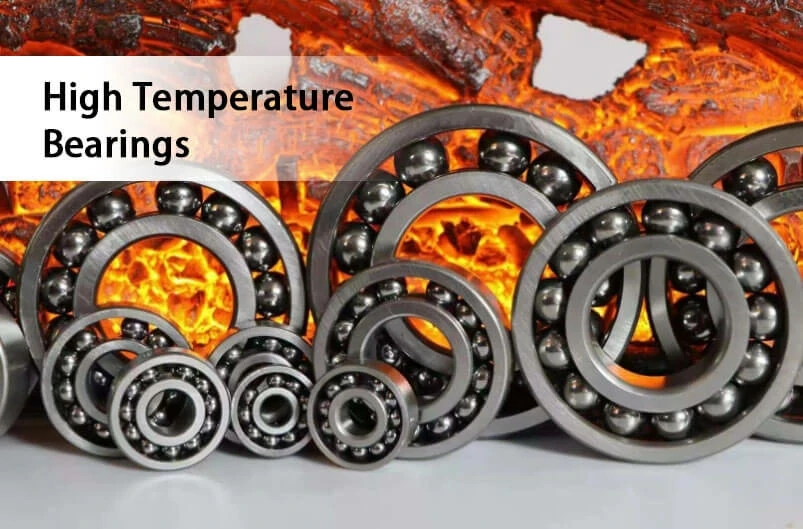
What Are Potential Concerns For Bearings Used In High-temperature Environments?
Bearings that run in high heat meet a few key problems. These can hurt work and life span:
-
Material degradation: Long time in heat makes normal stuff soft, tired, and less hard.
-
Lubrication failure: Regular fats and liquids split, dry up, or turn black. This raises rub and rub-off.
-
Thermal expansion: Parts grow at unlike speeds. So, inside spaces change. This may cause stick or too much loose.
-
Corrosion acceleration: High heat speeds up mix reactions, above all in rough spots.
-
Clearance management issues: Wrong space fixes lead to shake, sound, and less true.
-
Reliability and maintenance concerns: Often breaks raise work costs and safe risks.
Fixing these problems needs special builds and stuff fit for strong heat.
Understanding High Temperature Bearings
Definition And Typical Operating Temperature
High-temperature bearings get built to work well past the usual -20°C to 120°C. These often run from 150°C to 350°C. New kinds hold up to 800°C or more in special uses.
Advantages Of High Temperature Bearings
High-temperature bearings bring many good points:
-
Strong fight against strong heat.
-
Better last against break and bend.
-
Use of special stuff and slide helpers.
-
Less power use and fix costs.
-
Better work safe and long life.
-
More build choice for hard uses.
Types Of High Temperature Bearings
High-temperature bearings split into two chief groups:
-
Standard structure bearings: Made from chromium steel or stainless steel. They pair with high-temperature greases for fair heat levels.
-
Special structure bearings: Add new stuff like ceramics, graphite, or strong plastic to deal with big heat grow and rub.
Material Types For High Temperature Bearings
Ceramic Bearings
Ceramic stuff, like silicon nitride (Si₃N₄) or zirconia (ZrO₂), gives great heat hold up to 1600°C. These bearings have light weight, no power pass, and good fight against eat-up. So, they fit well for aerospace motors, clean room gear, and health clean uses.
Stainless Steel Bearings
Stainless steel kinds (e.g., 440C) give high power, hard, and rub hold at 350–400°C. They do well in eat-up spots, like car parts, heavy tools, and food work gear.
Hybrid Bearings
Hybrid builds mix ceramic roll parts with steel rings. This keeps load hold and less rub. These bearings fit fast tools, power motors, and uses that need last with little fix.
Polymer Bearings
Plastics like PTFE or PEEK give heat steady up to 270°C. They bring mix fight and low dirt, fit for food work and mix fields.
Common Applications Of High Temperature Bearings
High-temperature bearings help many fields:
-
Aerospace: Jet motors, space craft, and help power units.
-
Automotive: Exhaust setups, boost chargers, and motor parts.
-
Steel Mills: Non-stop cast, oven doors, and roll mills.
-
Energy Generation: Gas turners, coal fire plants, and core splitters.
-
Chemical Processing: Mixers, pumps, and pressers.
-
Manufacturing Equipment: Shot mold, ovens, and fire pots.
-
Food Processing: Ovens, deep fryers, and pack tools.
-
Metallurgy and Glass: Ovens and high-heat work lines.
The Difference Between High Temperature Bearings VS Ordinary Bearings
Regular bearings, often from carbon or normal stainless steel, work well up to about 250°C. High-temperature bearings take 1000°C or more. They use new stuff that handles heat grow, mix steady, and machine power. Thus, they give long sure in strong spots. Normal ones fail from slide break or stuff weak.
Factors To Consider When Selecting A High-Temperature Bearing
Main pick points cover:
-
Maximum Operating Temperature: Fit stuff skills (e.g., ceramics for top ranges).
-
Load Capacity: Check side, end, and mix loads in heat.
-
Coefficient Of Thermal Expansion (CTE): Make sure match to keep right space.
-
Corrosion Resistance: Key in rough mix spots.
-
Lubrication Needs: Pick solid slide (graphite, molybdenum disulfide), high-temperature greases (PFPE, silicone), or self-slide builds.
-
Environmental Factors: Think of dust, wet, and shake.
-
Speed Requirements: High speeds make extra heat. So, they need strong builds.
Conclusion
Picking the right high-temperature bearing needs full check of use needs. This covers heat tops, load shapes, heat grow, eat-up risks, slide choices, and run speeds. Good picks boost tool output, stretch work life, and cut full costs.
FAQ
What is the typical temperature range for high-temperature bearings? High-temperature bearings work well from 150°C to 800°C. Special kinds go past 1000°C.
What materials are best for extreme heat applications?
Ceramics give the top hold (up to 1600°C). Next come high-temperature alloys, stainless steel, and polymers.
How do high-temperature bearings handle lubrication?
They use solid slide, high-temperature greases, or self-slide holders to stop fail in heat.
In which industries are high-temperature bearings most commonly used? Metallurgy, aerospace, chemical work, steel mills, power make, and food work.
What causes bearing failure in high-temperature environments?
Stuff break, slide split, heat grow problems, and fast eat-up.
Partner with LQYS Bearings – Your Trusted Manufacturer and Seller for High-Temperature Solutions
LQYS Bearings acts as a top manufacturer and seller of high-true bearings, adding new high-temperature hold ball bearings. With know in stuff like high-temperature steel, ceramics, and special mixes, LQYS Bearings gives fixes that run steady up to 800°C and more. Makers and sellers looking for sure, long-life bearings in hard uses can count on LQYS Bearings for top good and work.
Contact LQYS Bearings today at salesjake@lqysbearing.com, WhatsApp: +8618013237311, or Telephone: +8613002187311 to talk custom high-temperature bearing needs and get a price for big buys. Raise factory work with tried, high-good bearing fixes from LQYS Bearings.
 EN
EN  RU
RU  ES
ES  PT
PT  DE
DE  FR
FR  IT
IT  HI
HI  AR
AR  JA
JA  BN
BN