

How to Choose the Best Spherical Roller Bearings for Mining and Metallurgy Equipment
2026-03-05Introduction
Mining and metallurgy work in 2026 pushes mechanical systems to their limits. Machines such as cone crushers, vibrating screens, dragline excavators, rolling mills, and belt conveyors face tough conditions. These include heavy shock loads, fast vibration, high temperatures (at times over 180°C), and constant contact with dust, water, and rough contaminants. Bearings in these machines act like vital tools for endurance.
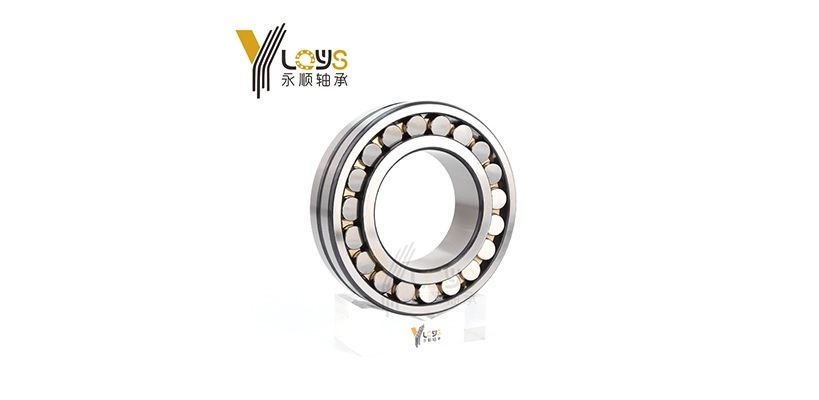
This is where spherical roller bearings play a key role. They feature a special setup with two rows of barrel-shaped rollers placed at an angle across the inner and outer raceways. This setup lets the bearing adapt to different alignment and load paths, which makes them very flexible. Their ability to self-align—often handling misalignments up to 1–2°—proves essential in heavy-duty machines where perfect alignment is hard to achieve. These bearings mainly handle high radial loads along with some axial loads.
By 2026, the field sees growing need for sealed types that keep out dirt, bigger bore sizes for large mining gear, brass cages that manage heat growth without bending, low-friction inner shapes to cut energy use, and built-in sensors for maintenance predictions.
This piece gives a practical guide to picking the right spherical roller bearings for mining and metallurgy gear. It covers main factors—from load and speed limits to cage materials and seal choices—while highlighting common errors and actual cases from crushers to rolling mills. Whether checking details for a swap or building a new drivetrain, this guide helps ensure the proper bearing fits the right machine.
Understanding Spherical Roller Bearings: Design and Advantages
At the heart, spherical roller bearings have a double-row arrangement of barrel-shaped rollers. These run between an inner ring with two raceways and a curved outer ring. The structure includes a self-aligning trait. It comes from floating guide rings or designs without centers. These allow the bearing to deal with angular shifts due to shaft flex or wrong setup.
In fields like mining and metallurgy—where gear faces strong shocks, regular bends, and big radial forces—this setup is vital. Spherical Roller Bearings: These bearings are primarily designed for high radial loads with a moderate level of axial loads. The radial dynamic load rating (C) is usually two to three times greater than that of deep groove ball bearings of the same size.
Main benefits include:
-
Strong ability to handle misalignment
-
High radial and some axial load strength
-
Good defense against shock and vibration
-
Flexibility in dirty or heat-changing settings
Common series are:
-
222xx: Flexible; fine for basic conveyors
-
223xx series: Strong capacity; good for crushers
-
230xx / 231xx: For loads heavy on axial, like in excavators
-
240xx / 241xx: Made for big misalignment, perfect for vibrating screens
Cage types affect how they work:
-
Steel cages: Basic use, sturdy and cheap
-
Brass cages: Better heat handling and vibration control
-
Polyamide cages: Light but not as good with heat
Seal choices cover open bearings (fit when greased often) and sealed ones (marked as W33). These guard against dust, mud, and water entry. Spherical Roller Bearings: Ideal for heavy machinery in mining and construction, wind turbines, and applications where misalignment might occur.
Comparison Table
| Bearing Type | Radial Load | Axial Load | Misalignment Tolerance | Shock Resistance | Sealing Options |
| Spherical Roller Bearings | High | Moderate | Up to 2° | Excellent | Open / Sealed |
| Cylindrical Bearings | High | Low | Poor | Moderate | Mostly Open |
| Tapered Roller Bearings | High | High | Low | Good | Open / Greased |
Step-by-Step Guide: How to Choose Spherical Roller Bearings
Step 1: Determine Load Requirements
Begin by figuring out radial (Fr) and axial (Fa) loads. Mining gear like jaw crushers often deals with changing loads and repeated hits. Here, dynamic load rating (C) is key.
For example:
-
Crushers: Pick 223xx series for their strong load handling.
-
Haul trucks: Look at 231xx for mixed axial-radial loads.
If C is too low, early wear happens. Always rely on actual load info or tests.
Step 2: Assess Misalignment & Deflection
Heat growth or setup mistakes can lead to shaft-to-housing shifts over 1°. Select a bearing series based on likely angle changes:
-
Up to 1°: 222xx or 223xx work well
-
Up to 2°: Choose 240xx or 241xx series; they give more room
For vibrating screens, shaft bends are usual from back-and-forth motion—pick 241xx.
Step 3: Evaluate Speed & Temperature
Top speed (nG) differs by bearing type. Most spherical roller bearings manage average speeds. But if running over 3000 rpm (as in some conveyor parts), you may need precision levels like P6 or P5.
For temperature:
-
In cases over 120°C steady (like rolling mills), brass cage types like 230xx with heat-safe grease are best.
-
Some types run up to 200°C without losing strength.
Step 4: Consider Environment & Contamination
Mining settings are very rough:
-
For dusty crushers and underground boxes: Use sealed bearings (W33)
-
For wet spots or chemical areas (like ore cleaners): Go for coatings such as phosphate or ceramic
-
For high-wear zones: Multi-lip seals boost lifespan
Step 5: Select Cage & Precision Class
Gear with lots of vibration gains from brass cages due to their firmness. Brass also deals with heat growth better than steel or polyamide.
Precision level counts when spin accuracy matters:
-
P6 or P5 for belt conveyors or rotary kilns
-
Standard class fits slower gear like excavators
Step 6: Factor in Size, Mounting & Maintenance
Pick bore size based on shaft width—cylindrical and tapered bores exist. Clearance levels (C3/C4) are crucial for heat expansion.
For simple mounting:
-
Use adapter sleeves or hydraulic nuts
-
SensorMount tech tracks bearing fit with inner gauges
For upkeep:
-
Sealed bearings cut greasing needs
-
Open types need planned greasing—every few hundred hours based on speed
Step 7: Check TCO & Life Calculation
Use ISO 281 to guess L10 life from dynamic load rating. Top spherical roller bearings can offer up to 65% more strength than basic ones.
Sample life math:
-
Crusher bearing with C = 900 kN
-
Working load = 400 kN
-
Estimated L10 = ~35,000 hours if greased right
This cuts downtime and total ownership costs.
Practical Examples
| Application | Recommended Series | Notes |
| Crushers | Sealed 223xx | Handles impact + contamination |
| Vibrating Screens | Open 241xx | Best misalignment tolerance |
| Rolling Mills | Brass-cage 230xx | Heat-resistant for furnace proximity |
| Excavators | 231xx | Handles axial + radial combo loads |
Common Applications & Recommendations for Mining & Metallurgy
Various machines bring different issues—here’s how spherical roller bearings fit:
Crushers & Screens
Sealed bearings from the 223xx or 241xx series work best. They handle steady shocks and rough particles.
Conveyors & Feeders
Basic open-type 222xx bearings with C3 clearance provide long service under ongoing radial loads.
Excavators & Haul Trucks
These face big axial forces in turns or climbs. Choose strong bearings like the 230xx or 231xx series.
Rolling Mills & Furnaces
Temperatures often go beyond limits for regular greases. Pick brass-cage spherical bearings from the 232xx or 239xx groups.
Equipment-to-Series Reference Table
| Equipment | Load Type | Misalignment Need | Best Bearing Series | Sealing Option |
| Cone Crushers | Shock + Radial | Moderate | Sealed 223xx | W33 Sealed |
| Vibrating Screens | Dynamic Deflection | High | Open 241xx | Labyrinth |
| Rolling Mills | Thermal Expansion | Low | Brass-cage 230xx | Open + Greased |
| Haul Trucks | Radial + Axial | Medium | Tapered Bore 231xx | Optional Seal |
Conclusion
Selecting spherical roller bearings for mining and metallurgy goes beyond just a list. It involves grasping the setting, meeting the machine needs, and thinking ahead. Focus on sealed types in dirty spots, brass cages in hot areas, and strong ratings for uneven loads. This can boost running time and trim upkeep expenses.
Apply life tools from ISO standards. Seek expert advice on clearance if unsure. Avoid skimping on specs in harsh spots.
Check our complete line of spherical roller bearings made for mining and metallurgical gear—since steady operation is a must.Explore the full range at LQYS Bearings for solutions optimized for your toughest applications.
FAQs
Q1: What makes spherical roller bearings ideal for mining equipment?
A: Spherical roller bearings are primarily designed for high radial loads with a moderate level of axial loads. Their self-aligning design tolerates shaft misalignment and their robust structure resists shock, vibration, dust, and extreme heat found in mining conditions.
Q2: How much misalignment can spherical roller bearings handle?
A: Depending on the series, spherical roller bearings can tolerate angular misalignments up to approximately 1–2°, making them ideal for applications where shaft deflection or installation errors occur frequently.
Q3: Should I choose sealed or open spherical roller bearings for dusty environments?
A: For dusty environments such as crushers or screens in mining operations, sealed bearings (W33 type) are highly recommended. They prevent contaminants from entering the bearing housing and reduce lubrication intervals.
Q4: Which cage type is best for high-temperature metallurgy applications?
A: Brass cages are ideal in metallurgy settings with elevated temperatures or high vibration. They maintain structural integrity better than steel or polyamide under thermal stress.
Q5: How do I calculate the required load rating for a crusher?
A: Begin by measuring the actual radial (Fr) and axial (Fa) loads during operation. Use this data with ISO 281 life equations to select a bearing with an appropriate dynamic load rating (C), often leaning toward sealed 223xx series due to their heavy-duty performance.
 EN
EN  RU
RU  ES
ES  PT
PT  DE
DE  FR
FR  IT
IT  HI
HI  AR
AR  JA
JA  BN
BN