

What Are Needle Bearings Used For
2026-03-13Introduction
Needle bearings, also known as needle roller bearings, keep improving as small, strong options for 2026’s tough engineering tasks. These bearings use long, thin cylindrical rollers to manage big radial loads in very little radial room. This quality makes them important in electric vehicle (EV) drivetrains, robotics, automation systems, and industrial machinery. In these areas, every millimeter of space counts.
The aim of this guide from LQYS Bearings is to assist engineers, procurement specialists, and manufacturers. It helps them learn about the practical applications of needle bearings. It also aids them in choosing the right setup for hard settings like automotive transmissions or robotic actuators.
At their heart, these parts give great support for radial loads in tight spots. They keep a light build and good lasting power. These features match next-generation small machines just right.
What Are Needle Bearings?
A needle bearing is a kind of roller bearing. It uses slim cylindrical rollers with a length-to-diameter ratio usually over 3:1. This setup allows greater load density than other bearing kinds in like sizes.
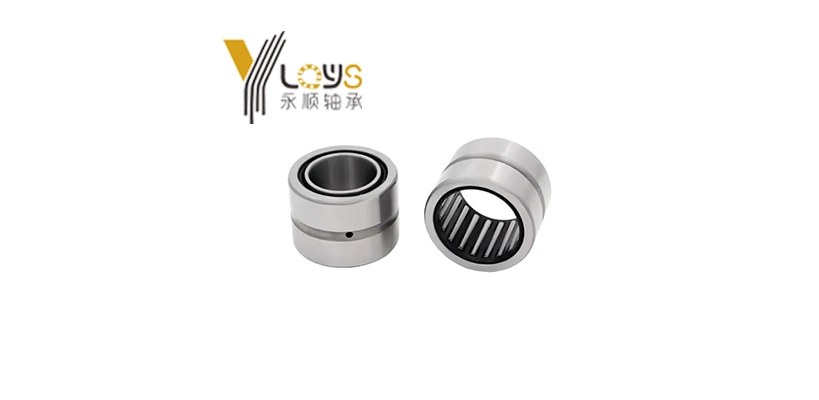
The main build includes needle rollers, inner and outer rings (or types without an inner ring), a cage or separator to hold roller spacing, and raceways. These raceways are either built into the shaft or housing, or made by special rings.
When set against ball bearings, needle bearings can carry heavier radial loads. But they work at slower speeds because of more surface touch. Materials in 2026 go from hardened chrome steel for usual uses to stainless steel for fighting rust and hybrid ceramic choices—which we frequently discuss in our latest industry news—that offer low friction and fast performance in EVs or aerospace systems.
Types of Needle Bearings
With Inner Ring vs. Without Inner Ring
Bearings with an inner ring make sure of exact shaft fitting. People use them when the shaft cannot act as a raceway. Those without an inner ring cut costs and space. They operate right on hardened shafts.
Drawn Cup Needle Roller Bearings
These have thin-walled outer rings shaped from drawn sheet steel. They are light, cheap, and simple to put in with press-fit. This setup makes them great for small housings.
Needle Roller and Cage Assemblies
These include just rollers kept by a cage. Such setups make the most of small size. They also let easy blending in custom housings or as positioning parts.
Heavy-Duty / Machined-Ring Needle Roller Bearings
These have machined outer rings with thicker walls. Experts design them for huge loads or places with shocks like construction equipment.
Specialized Variants
Cam followers have built-in studs for track leading. Thrust needle roller bearings deal with axial loads. Roller followers mix traits for straight motion systems.
How Needle Bearings Work and Handle Loads
Needle bearings mainly deal with radial loads. These loads work at right angles to the shaft axis. The line contact between rollers and raceways spreads stress evenly over a big area. As a result, they give high load ability compared to their size.
Key design points cover the length of rollers, which raises ability. Cages stop roller tilting and cut friction. Seals or shields guard against dirt.
Current types in 2026 often have sensors. These help with forward-looking upkeep. They spot changes in heat or shaking issues before breaks occur.
Key Advantages of Needle Bearings
High Load Capacity:They manage radial loads well in tiny radial measures. This makes them perfect for small powertrains.
Lightweight Construction:Designs without inner rings lower weight while keeping strength.
Low Friction Operation:Improved lubrication ways cut down heat buildup.
Design Versatility:They come with built-in seals or ready lubrication choices.
Durability:Heat-treated parts fight wear from repeated or shock loads.
Such features make them good picks where less weight joins strong mechanical staying power. Examples cover EV transmissions and robotic arms.
Challenges and Limitations
While needle bearings do well under big loads, they need exact lining up between shaft and housing. Even small misalignment can cause uneven wear marks or early breakdown.
They also face speed limits from friction heat in long rollers. So, ball bearings stay better for very high-RPM uses. Right lubrication is key. Poor grease layer can speed up wear, especially in high-stress spots.
What Are Needle Bearings Used For? Applications in 2026 Industries
Automotive Industry
In automotive systems, especially EV drivetrains, needle bearings show up in transmissions. They back gear shafts. You can also find them in torque converters, rocker arm pivots, universal joints, and differential gears. Their skill to handle high torque density while keeping efficiency backs lighter vehicle builds.
Industrial Machinery & Automation
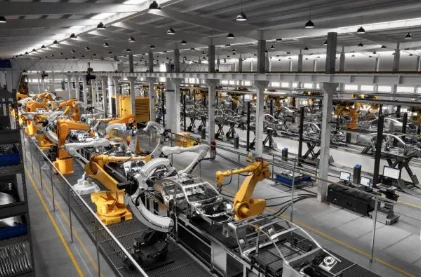
They appear in hydraulic pumps, CNC machine spindles, textile looms, printing presses, and industrial robots. In these, smooth turning accuracy is vital under ongoing work cycles.
Power Tools and Appliances
Small electric motors in drills or grinders depend on drawn cup needle bearings for even turning under heavy vibration. In the same way, washing machines use them in drum backs.
Aerospace & Heavy-Duty Equipment
Aircraft engines use hybrid ceramic variants. These can stand extreme temperatures. Mining rigs use heavy-duty machined-ring designs to take in shock loads during drilling work.
Emerging Trends
The growth of robotics and smart making highlights torque density and steady accuracy. Both fields fit needle bearings well, due to their small but sturdy build. Renewable energy setups like wind turbines also take on these parts in yaw drives. These need steady motion control.
Choosing the Right Needle Bearing
Picking the right type relies on several factors:
|
Factor |
Recommendation |
|
Load magnitude/type |
Radial → standard; axial → thrust type |
|
Space constraints |
Drawn cup or cage assembly |
|
Speed |
Hybrid ceramic materials improve performance |
|
Environment |
Stainless steel resists moisture/corrosion |
|
Alignment precision |
Inner-ring types preferred |
For B2B buying teams weighing cost against trust, drawn cup styles fit mass making lines where press-fit setup saves time. Heavy-duty machined designs suit off-road vehicles dealing with impact loads. In 2026’s electric mobility field, hybrid materials cut friction losses. This matches EV efficiency aims.
Maintenance and Best Practices
Good upkeep lengthens working life greatly:
Lubrication:Pick grease/oil based on viscosity grade fit for working temperature; add more at planned times.
Inspection:Watch noise levels or temperature jumps showing wear.
Installation:Use right press-fit tools making sure evenness between races.
Replacement:Stick to maker preload rules when putting in new units.
Forward-looking upkeep from sensor-fitted models cuts downtime more across automated making lines.
Conclusion
Needle bearings stay essential across fields where big radial loads face tight space bounds. Examples cover automotive transmissions and robotic joints running Industry 4.0 plants. Their mix of strength, accuracy, and flexibility keeps pushing new ideas into 2026’s high-efficiency mechanical setups.
For custom solutions including drawn cup assemblies, cam followers, or custom-engineered configurations optimized for your application demands, contact LQYS Bearings — delivering reliable performance through advanced design expertise.
FAQs
Q1: What are the main advantages of using needle roller bearings?
A: They give high load capacity in limited radial space while keeping low friction work—perfect for small mechanical designs like EV drivetrains or robotic arms.
Q2: Can needle bearings handle axial loads?
A: Standard versions mainly back radial forces; but thrust needle roller types are made specially for axial load cases such as gear assemblies.
Q3: How often should lubrication be performed on needle bearings?
A: Upkeep times depend on speed and setting—usually every few thousand working hours under normal industrial conditions using right grease grades.
Q4: What materials are common for modern high-load applications?
A: Hardened chrome steel stays standard; stainless steel fits corrosive spots; hybrid ceramic variants offer less friction at higher speeds common in aerospace or EV sectors.
Q5: Why choose LQYS Bearings for industrial supply needs?
A: LQYS Bearings gives precision-engineered products backed by technical expertise—ensuring dependable performance across automotive manufacturing lines, automation systems, and heavy-duty machinery worldwide.
 EN
EN  RU
RU  ES
ES  PT
PT  DE
DE  FR
FR  IT
IT  HI
HI  AR
AR  JA
JA  BN
BN