

Roulements SKF, FAG et NSK : Principales différences pour les acheteurs industriels
2026-05-29Pour de nombreuses équipes de maintenance, distributeurs et fabricants d'équipements, Roulements SKF, FAG et NSK Il ne s'agit pas d'une simple comparaison de marques. C'est généralement une décision d'achat liée à la disponibilité de la machine, au coût des réparations, aux délais de livraison et au risque de remplacement. Un roulement utilisé dans un convoyeur fonctionnant 24 h/24, un crible minier, une broche textile ou un moteur électrique ne tombe pas en panne en théorie. Il tombe en panne sur une chaîne de production, souvent lorsque la pièce de rechange est indisponible et que la machine ne peut pas attendre.
C’est pourquoi les acheteurs de roulements industriels comparent SKF, FAG et NSK selon des critères qui vont au-delà de la simple réputation figurant sur leurs catalogues. Ils examinent le type de roulement, sa capacité de charge, sa vitesse de rotation, le jeu interne, la conception du joint, la lubrification, le matériau de la cage, le niveau sonore, la plage de températures et la disponibilité. Pour les livraisons en grande quantité, la discussion porte également sur la stabilité des lots, l’emballage, la protection anticorrosion, les capacités d’inspection et la capacité du fournisseur à proposer un système de correspondance des références, au-delà de la simple indication d’une référence.

SKF, FAG et NSK dans les achats industriels
Roulements SKF et large reconnaissance industrielle
SKF est une marque reconnue sur le marché mondial des roulements et ses produits sont fréquemment utilisés dans les moteurs, les pompes, les ventilateurs, les réducteurs, les compresseurs, les équipements ferroviaires et les machines industrielles en général. Les acheteurs associent généralement SKF à une large gamme de produits et à une forte présence internationale. Ses principales catégories de produits comprennent les roulements à billes à gorge profonde, les roulements à billes à contact oblique, les roulements à rouleaux cylindriques, les roulements à rouleaux sphériques, les roulements à rouleaux coniques et les butées à billes.
Dans le cadre des achats, SKF est souvent privilégié lorsque l'utilisateur final exige une marque de roulements internationale reconnue ou lorsque la documentation de l'équipement mentionne une référence SKF. Toutefois, la décision d'achat dépend toujours des conditions d'utilisation réelles. Un roulement à billes à gorge profonde standard pour moteur et un roulement à rouleaux sphériques pour crible vibrant présentent des niveaux de risque très différents.
Roulements FAG et positionnement d'ingénierie allemande
FAG, sous l'égide de Schaeffler, est souvent associée à l'ingénierie allemande, à la fabrication de précision et aux applications mécaniques exigeantes. Les acheteurs industriels privilégient généralement les roulements FAG pour les réducteurs, les moteurs électriques, les machines-outils, les pompes, les équipements textiles, les ventilateurs et autres applications où la réduction des frottements, la stabilité de fonctionnement et la durée de vie sont essentielles.
Pour les acheteurs comparant les roulements SKF, FAG et NSK, FAG est souvent privilégié dans les projets exigeant une grande précision de fonctionnement ou une durée de vie accrue des roulements dans des conditions de montage contrôlées. Toutefois, la marque à elle seule ne garantit pas une incompatibilité. Un roulement présentant un jeu incorrect, une cage inadaptée ou un joint non conforme peut engendrer de la chaleur, des vibrations ou une usure prématurée, même pour une marque réputée.
Roulements NSK et résistance aux applications de précision
Les roulements NSK sont largement utilisés dans les systèmes automobiles, les équipements d'automatisation, les machines de précision, les moteurs, les machines agricoles et les lignes de production industrielle. NSK est reconnu pour son expertise dans les applications exigeant un faible niveau sonore, une rotation stable et une grande précision. Sa gamme comprend des roulements à billes, des roulements à rouleaux, des paliers, des roulements de super précision et des roulements pour environnements d'exploitation spécifiques.
Pour le remplacement d'un roulement NSK, les acheteurs vérifient généralement si la pièce d'origine est utilisée dans un moteur à grande vitesse, un servomoteur, un rouleau de convoyeur ou un ensemble mécanique. Le remplacement peut être simple pour un roulement standard, mais les équipements de précision nécessitent généralement une vérification plus approfondie de la tolérance, de la précharge, de la lubrification et de la classe de vibration.
Principales différences techniques que les acheteurs devraient vérifier
Type de roulement, direction de la charge et vitesse
La première étape du choix des roulements pour applications industrielles consiste à déterminer la charge et le type de mouvement. Les roulements à billes à gorge profonde sont couramment utilisés dans les moteurs et les équipements rotatifs de faible à moyenne puissance. Les roulements à billes à contact oblique sont employés lorsque la charge axiale et la vitesse de rotation doivent être contrôlées avec précision. Les roulements à rouleaux cylindriques conviennent aux charges radiales élevées. Les roulements à rouleaux coniques sont souvent utilisés lorsque les charges radiales et axiales s'exercent conjointement. Les roulements à rouleaux sphériques sont privilégiés dans les équipements lourds où des déformations ou des défauts d'alignement de l'arbre peuvent survenir.
C’est souvent là que commencent les erreurs d’achat. Un modèle peut sembler similaire d’une marque à l’autre, mais son application peut exiger un jeu, un angle de contact, une structure de cage ou un traitement thermique spécifiques. Un acheteur qui remplace des roulements de boîte de vitesses ne doit pas appliquer le même raisonnement qu’un acheteur qui remplace des roulements de moteur de ventilateur.
Détails sur le jeu, les joints et la lubrification
Les suffixes sont importants. Un palier 6205 peut être ouvert, protégé, étanche, à jeu important, silencieux ou lubrifié avec différentes graisses. Un palier à jeu C3 peut convenir à un moteur fonctionnant à haute température, tandis qu'un palier à jeu standard peut engendrer des problèmes liés à la dilatation. Un joint 2RS peut offrir une meilleure protection contre la contamination qu'un écran métallique, mais il peut également générer davantage de frottements dans les équipements à grande vitesse.
Pour les usines manipulant de la poussière, de l'humidité, de la pâte à papier, des dépôts d'acier, des fibres textiles, des brouillards d'huile ou opérant en extérieur, la conception des joints et la lubrification sont des détails essentiels. Elles font souvent la différence entre une maintenance planifiée et un arrêt imprévu. Un guide fiable de remplacement des roulements doit toujours tenir compte de l'environnement de travail avant de recommander un roulement de remplacement.
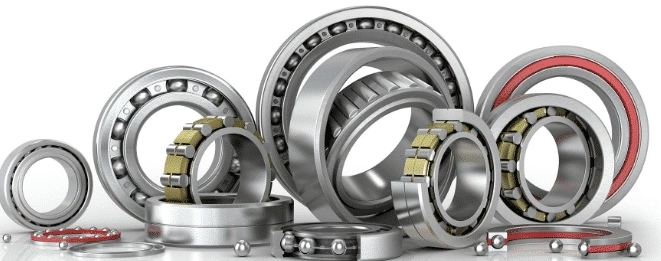
Tableau de correspondance des roulements SKF, FAG et NSK
Pourquoi un modèle équivalent a besoin de plus que des dimensions
De nombreux acheteurs recherchent des équivalents de roulements SKF, des alternatives aux roulements FAG, des roulements de remplacement NSK ou un tableau de compatibilité des roulements, car le modèle d'origine est cher, en rupture de stock ou son délai de livraison est long. Dans de nombreuses séries standard, la référence de base du roulement est commune à plusieurs marques. Les séries courantes telles que 6000, 6200, 6300, 22200, 30200, NU, NJ et NUP partagent souvent des normes dimensionnelles internationales.
Toutefois, la comparaison des roulements ne doit pas se limiter au diamètre d'alésage, au diamètre extérieur et à la largeur. Le roulement de remplacement doit également respecter le jeu, le degré de précision, le type de joint, le matériau de la cage, la lubrification, la capacité de charge, la vitesse de rotation et les exigences de température. Pour les équipements critiques, le niveau sonore, le niveau de vibration et le mode de montage peuvent également influencer le choix final.
Ce qu'un acheteur industriel doit vérifier avant de passer commande
Avant d'approuver un roulement équivalent à une marque SKF, FAG ou NSK, l'acheteur doit vérifier le type de machine, la vitesse de rotation de l'arbre, la charge radiale, la charge axiale, la température de fonctionnement, le niveau de contamination, le mode de lubrification et l'intervalle de maintenance. Pour les commandes en gros, des vérifications supplémentaires portent souvent sur l'homogénéité des lots, la disponibilité des rapports d'inspection, l'emballage pour l'exportation, la protection contre la corrosion et la réactivité du fournisseur.
Ceci est particulièrement important pour les distributeurs et les clients OEM. Un remplacement ponctuel peut être résolu avec une seule pièce adaptée. Un programme d'approvisionnement régulier nécessite un fournisseur capable de garantir la stabilité du modèle, une qualité constante et un soutien technique en cas d'évolution des besoins du client.
Quand les alternatives aux roulements d'origine sont commercialement judicieuses
Planification des coûts, des délais et des stocks
On envisage souvent des alternatives aux roulements d'origine lorsque les marques internationales pratiquent des prix élevés, une disponibilité limitée ou des délais de livraison longs. Cette situation est fréquente dans les projets de réparation, le réapprovisionnement des distributeurs et la production de machines où des dizaines, voire des centaines de roulements sont nécessaires simultanément.
Un fabricant de roulements OEM peut s'avérer une option judicieuse lorsque les exigences techniques sont clairement définies et que le fournisseur dispose de la gamme de produits, de la capacité de production et du processus de contrôle nécessaires pour honorer la commande. L'objectif n'est pas de copier une marque renommée, mais de fournir un roulement adapté à la machine, conforme aux conditions de fonctionnement et facilitant l'approvisionnement pour l'acheteur.
Roulements sur mesure pour des exigences spécifiques à l'équipement
Des roulements sur mesure sont souvent nécessaires lorsque les produits standard ne répondent pas aux exigences de conception, d'encombrement, de charge ou d'étanchéité de l'équipement. Les constructeurs de machines peuvent fournir des plans, des échantillons, des demandes de matériaux ou des données d'exploitation. Les équipes de maintenance peuvent fournir des photos de roulements endommagés, les dimensions des logements et les conditions de fonctionnement sur le site de production.
Pour les acheteurs des secteurs minier, sidérurgique, de la production d'énergie, de la papeterie, du textile, de l'agriculture et des engins de chantier, la fourniture de roulements sur mesure peut s'avérer plus avantageuse qu'un simple devis. Le fournisseur doit impérativement maîtriser la structure du roulement et son environnement de travail.
À propos de Shanghai Yongheshun Import and Export Co., Ltd.
Shanghai Yongheshun Import and Export Co., Ltd. LQYS exploite son activité de roulements en tant que fournisseur intégrant la production, la vente, le commerce et l'exportation. L'entreprise s'adresse aux acheteurs industriels, aux distributeurs, aux entreprises de maintenance de machines et aux fabricants d'équipement d'origine (OEM) qui ont besoin de roulements standard, de roulements de remplacement, de roulements sur mesure et de roulements en grande quantité.
Selon son profil d'entreprise, LQYS compte plus de 40 employés, une usine d'environ 12 000 mètres carrés et une expérience d'exportation dans plus de 30 pays. Sa gamme de produits couvre : roulements à billes de contact angulaire, roulements automobiles, roulements à billes, roulements à rouleaux cylindriques, roulements linéaires, roulements miniatures, roulements à aiguilles, paliers à semelle, roulements à billes auto-aligneurs, roulements à rouleaux sphériques, roulements à rouleaux coniques et butées à billes.
Pour les acheteurs comparant les modèles SKF, FAG et NSK, LQYS propose une assistance pour la vérification des modèles, la correspondance des roulements, les alternatives aux roulements d'origine, la fourniture de roulements industriels sur mesure et la vente en gros. Ses produits sont utilisés dans les secteurs de la mécanique, de l'hydroélectricité, des engins de chantier, du ferroviaire, de l'automobile, de la sidérurgie, de l'énergie électrique, du textile, de la métallurgie, des mines, du pétrole et de la papeterie. LQYS est ainsi le partenaire idéal des équipes d'approvisionnement qui recherchent non seulement des pièces de rechange, mais aussi un fournisseur capable de gérer des commandes régulières et une sélection adaptée aux applications.
Conclusion
SKF, FAG et NSK sont des marques internationales de roulements reconnues, chacune ayant ses principaux domaines d'application. Toutefois, les achats industriels doivent se baser sur les conditions de travail plutôt que sur la seule préférence de marque. Le sens de la charge, la vitesse, le jeu, l'étanchéité, la lubrification, le matériau de la cage, la température, la contamination et le délai de livraison sont autant de facteurs qui influent sur les performances des roulements.
Pour les acheteurs à la recherche de modèles équivalents aux roulements SKF, d'alternatives aux roulements FAG, de solutions de remplacement pour les roulements NSK ou d'alternatives aux roulements OEM, un fournisseur qualifié de roulements industriels peut réduire les risques d'approvisionnement en vérifiant à la fois le numéro de modèle et l'application. LQYS offre une voie d'approvisionnement pratique aux acheteurs ayant besoin de roulements standard, de roulements sur mesure et de roulements en vrac pour équipements industriels.
Questions fréquentes
Q1 : Comment savoir si un roulement SKF peut être remplacé par un roulement d'une autre marque ?
A1 : Vérifiez d’abord la référence complète du roulement, et non seulement sa valeur de base. Les dimensions, le jeu, le type de joint, le matériau de la cage, la graisse et la capacité de charge doivent tous correspondre aux conditions de fonctionnement.
Q2 : Quel est le moyen le plus sûr de trouver une alternative aux roulements FAG ?
A2 : Veuillez transmettre au fournisseur la référence FAG complète, des photos, l’application, la vitesse, la charge et la quantité. Un fournisseur fiable confirmera la référence et l’utilisation réelle de la machine avant d’établir un devis.
Q3 : Les roulements NSK peuvent-ils être remplacés par des roulements d’origine ?
A3 : Oui, dans de nombreuses applications standard. Pour les moteurs, les convoyeurs, les pompes et les machines en général, les options OEM peuvent convenir lorsque les paramètres techniques correspondent. Les équipements de précision nécessitent un contrôle plus approfondi.
Q4 : Pourquoi les suffixes de roulement sont-ils si importants ?
A4 : Les suffixes indiquent des détails tels que le jeu, les joints, les flasques, le type de cage et la graisse. Deux roulements de même modèle de base peuvent avoir des performances très différentes si leur suffixe diffère.
Q5 : Où les acheteurs peuvent-ils s’approvisionner en roulements en gros avec un support de référence croisée ?
A5 : Les acheteurs peuvent collaborer avec un fournisseur de roulements industriels proposant la vérification des modèles, des alternatives aux roulements d’origine et la fourniture de roulements en grande quantité. LQYS peut aider à examiner les références SKF, FAG ou NSK et suggérer des options de remplacement adaptées.