
Come qualificare un fornitore di cuscinetti SKF, NSK e FAG con tolleranze, grasso o guarnizioni speciali
2026-08-21
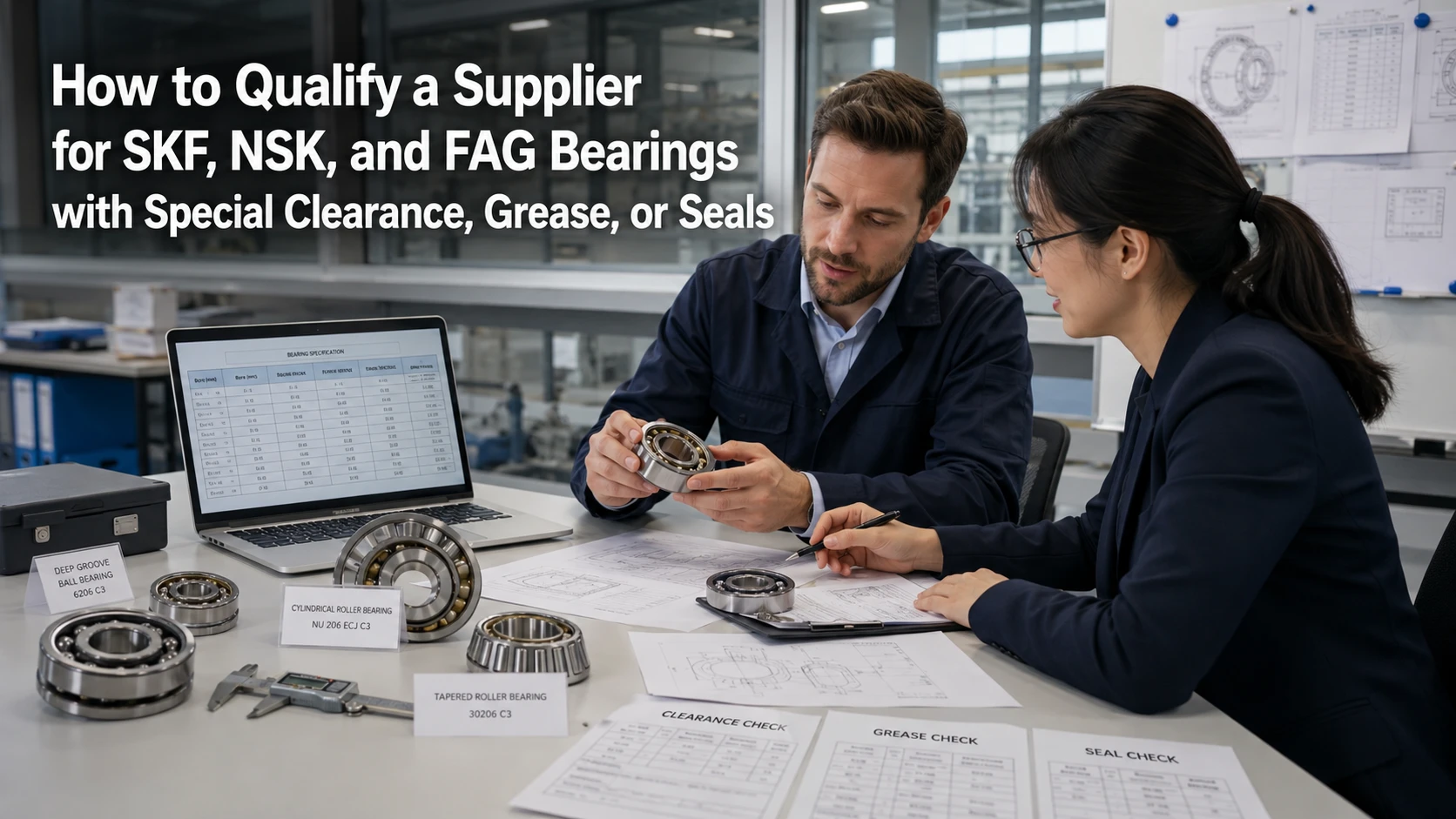
Un cuscinetto SKF, NSK o FAG con tolleranze, grasso o guarnizioni speciali non è un acquisto di routine. Una valutazione delle capacità di un fornitore di cuscinetti personalizzati deve stabilire cosa si intende per "speciale", chi controlla la configurazione, come verrà verificata e se i lotti successivi manterranno la stessa uniformità. Il prezzo e i tempi di consegna sono importanti, ma nessuno dei due sostituisce una specifica definita, un campione rappresentativo, una documentazione tracciabile e una fornitura ripetibile controllata.
Innanzitutto definisci cosa significa "speciale" o "personalizzato".
Varianti di catalogo separate dagli ordini speciali di fabbrica
Un suffisso può identificare una configurazione standard presente nel catalogo anziché un cuscinetto personalizzato. Classi di gioco, schermi, guarnizioni di contatto, gabbie e opzioni di lubrificazione potrebbero già essere incluse nella gamma pubblicata dal produttore. Verificare la denominazione completa prima di richiedere una versione speciale.
Un ordine speciale di fabbrica utilizza una specifica controllata disponibile solo per determinati tipi, dimensioni, quantità o applicazioni. Il fornitore dovrebbe identificare se la proposta è un'opzione di catalogo o un'esecuzione speciale approvata dal produttore. Gli acquirenti possono prima esaminare Significato dei suffissi SKF, NSK e FAG in modo che C3, 2RS, ZZ o DDU non vengano erroneamente considerati personalizzazioni.
Distinguere la modifica del distributore da un'alternativa personalizzata OEM
Un cuscinetto di marca rilubrificato, risigillato, selezionato in offerta o riconfezionato al di fuori del processo di produzione originale necessita di una chiara catena di responsabilità. Il preventivo deve indicare la modifica, il processo, il metodo di tracciabilità e l'effetto sulla documentazione originale, sull'imballaggio o sulla garanzia.
Un'alternativa personalizzata OEM viene prodotta in base a un disegno e a un piano di ispezione concordati, sotto la responsabilità del fornitore OEM. Può essere una soluzione pratica quando non è disponibile una versione speciale di marca, ma normalmente richiede una validazione tecnica. Gli acquirenti non devono approvare "cuscinetti SKF, NSK o FAG personalizzati" finché non siano specificati per iscritto il canale di fornitura e il responsabile.
Valutare la capacità del fornitore di ottenere autorizzazioni speciali.
Definire il gioco iniziale, di montaggio e di funzionamento.
Una richiesta di "gioco C3" potrebbe non definire l'esigenza operativa. Il gioco iniziale viene misurato prima del montaggio. Gli accoppiamenti con interferenza riducono il gioco, mentre le differenze di temperatura tra albero, anelli e alloggiamento possono modificarlo durante il funzionamento. Pertanto, SKF considera il gioco operativo dipendente dall'applicazione e tiene conto delle riduzioni dovute all'accoppiamento e alla temperatura nella scelta del gioco iniziale.
La richiesta di offerta (RFQ) deve includere informazioni su accoppiamenti tra albero e alloggiamento, velocità, carichi, temperature e qualsiasi intervallo di gioco operativo richiesto. Un obiettivo numerico specifico è appropriato solo quando l'applicazione lo giustifica.
Verificare il metodo di misurazione e i risultati effettivi.
Un fornitore che dichiara un gioco speciale dei cuscinetti dovrebbe spiegare come viene misurato. Un rapporto che riporta solo la dicitura "PASS" è meno utile di uno che elenca l'intervallo target, il metodo, lo strumento, la temperatura di misurazione, l'identità del campione e i valori effettivi.
Per l'approvazione del campione, le unità misurate devono essere riconducibili ai cuscinetti consegnati. Per la produzione, definire se l'ispezione riguarda ogni singola unità o un campione concordato e specificare la regola di scarto. Non pubblicare né richiedere un valore di gioco universale: l'accettazione dipende dal tipo di cuscinetto, dalle dimensioni, dagli accoppiamenti, dal carico, dalla temperatura e dalle condizioni operative.
Qualificare la capacità di ingrassaggio e rilubrificazione personalizzati
Specificare i requisiti di grasso e riempimento dall'applicazione
La dicitura "grasso per alte temperature" o "grasso a bassa rumorosità" non è sufficiente a fornire una specifica completa. È necessario identificare la designazione esatta del grasso o l'equivalente approvato, la velocità di esercizio, la temperatura, il carico, il ciclo di lavoro, l'ambiente e le condizioni di stoccaggio. Ove necessario, verificare l'olio base, l'addensante, la viscosità e la compatibilità con le guarnizioni o il lubrificante residuo.
La quantità di grasso dipende anche dalla geometria e dal funzionamento del cuscinetto. Un riempimento eccessivo può aumentare l'agitazione e la temperatura; un riempimento insufficiente può ridurre la durata della lubrificazione. NSK descrive il grasso come composto da olio base, addensante e additivi, e osserva che i cuscinetti a gola profonda sigillati possono essere prelubrificati con grasso trattenuto dalle guarnizioni in gomma.
Pulizia, archiviazione, sigillatura e gestione dei registri di audit.
Se il grasso viene sostituito dopo la produzione, è necessario rivedere l'intero processo. Verificare come viene rimosso il lubrificante originale, come viene valutata la compatibilità, come viene controllata la contaminazione, come viene misurata la quantità di riempimento e come le guarnizioni vengono rimosse e reinstallate senza danneggiarle.
Per ogni lotto devono essere indicati la provenienza del cuscinetto, il lotto di grasso, la data di lavorazione, lo stato di ispezione e l'identità dell'imballaggio finale. Le unità scartate necessitano di una separazione controllata. Un distributore in grado di reperire cuscinetti già lubrificati in fabbrica non è automaticamente qualificato per eseguire la rilubrificazione; i team addetti agli acquisti devono valutare queste capacità separatamente.
Qualificare la capacità di sigillo speciale
Adattare il design e il materiale della guarnizione all'ambiente
La scelta della tenuta inizia dalla tipologia di contaminante e dalle condizioni operative. Le tenute schermate e senza contatto generalmente creano meno attrito; le tenute a contatto offrono una maggiore protezione, ma possono aumentare la resistenza e la temperatura. NSK distingue le versioni a gola profonda aperte, schermate e sigillate, mentre Schaeffler osserva che le tenute a contatto garantiscono una tenuta più efficace rispetto a quelle senza contatto, ma generano maggiore attrito e calore.
Definire l'esposizione a polvere, umidità, liquido refrigerante, sostanze chimiche, fibre o particelle fini, unitamente a velocità e temperatura. Richiedere il codice o il disegno della guarnizione, il materiale, il modulo di contatto, la direzione di applicazione e la dichiarazione di compatibilità. Non si deve presumere che suffissi di marchi simili siano equivalenti.
Verificare attrito, velocità, dimensioni ed effetti dell'installazione.
Una tenuta più robusta non è adatta a tutte le applicazioni. La pressione di contatto può influenzare la coppia di avviamento, la temperatura, la velocità, l'usura e il consumo energetico. La sostituzione di una guarnizione può inoltre modificare la larghezza, il gioco della spalla, la ritenzione del grasso o gli utensili di installazione.
I controlli a campione devono essere commisurati al rischio. A seconda della macchina, possono includere dimensioni, coppia di avviamento o di funzionamento, rumorosità, vibrazioni, perdite o aumento di temperatura. Concordare i criteri di accettazione prima della produzione dei campioni. Se la guarnizione presenta tolleranze o requisiti di montaggio diversi, richiedere un disegno aggiornato anziché affidarsi alle dimensioni standard del catalogo.
Approvare il campione e controllare i lotti di produzione
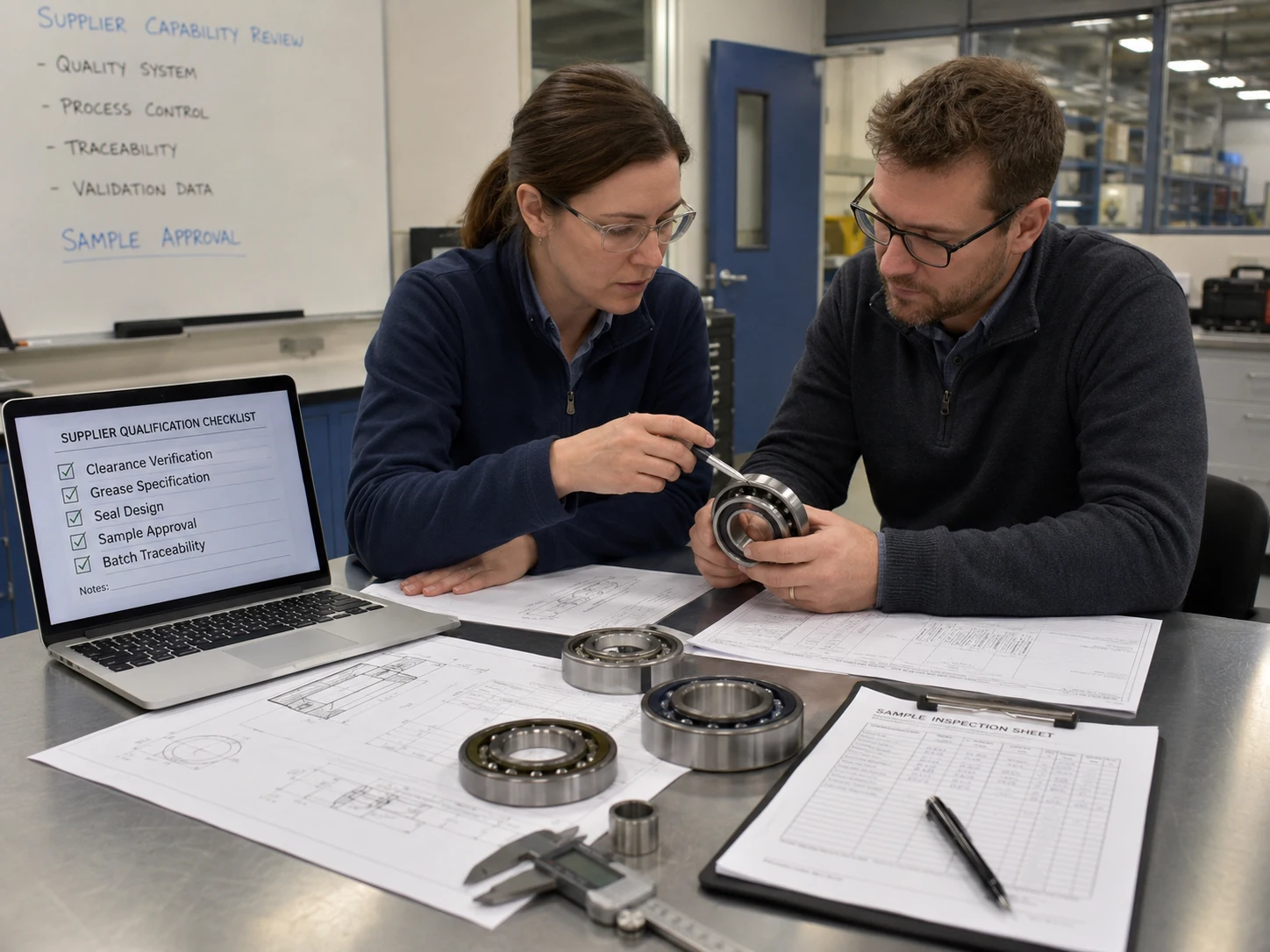
Elabora un piano per l'approvazione del primo articolo e del campione.
Il primo articolo deve dimostrare la configurazione speciale completa. Congelare il disegno approvato, la designazione completa, i requisiti di spazio libero, le specifiche di lubrificazione e riempimento, il design della guarnizione, il metodo di ispezione e l'identità dell'imballaggio.
I test dovrebbero rispecchiare l'applicazione. Un programma per motori potrebbe enfatizzare rumore, coppia e temperatura; un'applicazione industriale contaminata potrebbe enfatizzare tenuta e ritenzione del lubrificante. Prima dell'acquisto in serie, esaminare più ampiamente Approvazione di campioni e lotti di cuscinetti OEM requisiti, tra cui conferma del disegno, quantità rappresentativa del campione, coerenza degli ordini ripetuti, pianificazione della consegna e rischio commerciale.
È richiesta coerenza dei lotti e controllo delle modifiche.
Un campione di successo non garantisce che gli ordini successivi utilizzeranno lo stesso grasso, le stesse guarnizioni, lo stesso fornitore di cuscinetti, lo stesso luogo di lavorazione o lo stesso metodo di ispezione. Le specifiche di acquisto devono indicare eventuali modifiche che richiedono un'approvazione scritta prima della produzione o della spedizione.
Gli elementi controllati possono includere la designazione e il fornitore del grasso, il metodo di riempimento, il materiale di tenuta, la provenienza dei cuscinetti, il processo di selezione del gioco, le apparecchiature di ispezione, il sito di modifica, l'imballaggio e la marcatura. Gli ordini ripetuti potrebbero non richiedere ogni test di sviluppo, ma ogni lotto deve fornire la documentazione di rilascio concordata e rimanere tracciabile alla configurazione approvata.
Verificare che ogni requisito corrisponda alla documentazione fornita dal fornitore.
I documenti sono importanti solo quando attestano la funzionalità richiesta. La documentazione del produttore descrive la progettazione del prodotto; un rapporto di controllo qualità del fornitore registra l'ispezione; un registro delle modifiche documenta il lavoro svolto dopo la produzione; e una relazione di terze parti fornisce risultati indipendenti nell'ambito delle proprie competenze.
| Requisito | Prove da richiedere |
|---|---|
| Pressione interna | Intervallo target, metodo, risultati, ID campione e lotto |
| Grasso | Denominazione esatta, lotto, metodo di riempimento e quantità |
| Foca | Disegno, materiale, modulo di contatto e indicazioni |
| Dimensioni | Disegno approvato, tolleranze e risultati |
| Comportamento di esecuzione | Dati relativi a coppia, rumore, vibrazioni o temperatura, se richiesti. |
| Traceabilità | Origine, lotto, modifica e identità dell'imballaggio del cuscinetto |
| fornitura ripetuta | Norma congelata relativa alle specifiche e alla notifica delle modifiche |
Un'opzione a catalogo potrebbe richiedere meno documentazione rispetto a un cuscinetto di marca modificato o a un progetto OEM destinato alla produzione in serie.
Prepara la richiesta di offerta e scegli il percorso di fornitura corretto
Includere i dati relativi all'applicazione, tecnici e di accettazione.
Una richiesta di offerta per cuscinetti personalizzati dovrebbe specificare il cuscinetto attuale, la posizione sulla macchina, i carichi, la velocità, il ciclo di lavoro, gli accoppiamenti, le temperature, la contaminazione, il gioco target, il grasso, i requisiti di riempimento, il design della tenuta, la quantità del campione, la quantità di produzione e la tempistica. Dovrebbe inoltre definire la documentazione richiesta e i criteri di accettazione.
Dopo che i requisiti operativi sono chiari, gli acquirenti possono esaminare il gamma di prodotti per cuscinetti industriali Per identificare le famiglie di prodotti pertinenti prima di inviare la richiesta, LQYS elenca le categorie di cuscinetti industriali: a sfere, a contatto angolare, a rulli cilindrici, a rullini, a rulli sferici, a rulli conici e altre.
Valutare la reale capacità del fornitore e il percorso di approvvigionamento
Un fornitore qualificato dovrebbe specificare se il prodotto è un articolo a catalogo, un ordine speciale di fabbrica, una modifica controllata o un'alternativa OEM. La risposta dovrebbe indicare la responsabilità tecnica, la tracciabilità, le procedure di campionamento, i controlli di produzione, i tempi di consegna realistici e le condizioni per le forniture successive.
cuscinetti LQYS L'azienda presenta una vasta gamma di cuscinetti e descrive la propria attività come un'integrazione di produzione, vendita, commercio ed esportazione. Questi elementi supportano le discussioni sull'approvvigionamento da più canali, ma da soli non dimostrano l'autorizzazione a modificare prodotti di marca o la disponibilità di ogni configurazione speciale. Pertanto, ogni requisito deve essere verificato rispetto al modello, al processo e alla documentazione proposti.
Conclusione
La qualificazione dei fornitori di cuscinetti con tolleranze speciali, lubrificati su misura o con guarnizioni speciali deve seguire una sequenza controllata: definire il percorso di fornitura, convertire le esigenze applicative in specifiche misurabili, verificare il processo e la documentazione, approvare campioni rappresentativi e proteggere gli ordini successivi attraverso la tracciabilità e il controllo delle modifiche.
Per discutere di un progetto, richiedere una revisione speciale della configurazione dei cuscinetti e fornire la designazione completa, l'applicazione, le dimensioni, la velocità, i carichi, le temperature, il gioco target, il grasso, i requisiti di tenuta, i disegni o i campioni, la quantità e i documenti di ispezione richiesti.
Domande frequenti
È possibile ordinare un cuscinetto SKF con un gioco interno speciale?
Alcune serie possono offrire classi di tolleranza standard o versioni speciali. La disponibilità deve essere verificata confrontando la denominazione completa, le dimensioni, l'applicazione e le specifiche attuali del produttore.
Un fornitore può sostituire il grasso in un cuscinetto sigillato?
Potrebbe essere possibile, ma gli acquirenti dovrebbero verificare il modificatore, i controlli di pulizia e compatibilità, la misurazione del riempimento, il metodo di richiusura, la tracciabilità e la responsabilità per il prodotto finito.
Come possono gli acquirenti verificare quale tipo di grasso è presente all'interno di un cuscinetto?
Richiedere la denominazione esatta del grasso, il lotto, il registro di riempimento, la quantità o il metodo, il registro di lavorazione e un collegamento tra tali prove e le unità consegnate.
Quale report dimostra che un cuscinetto ha il gioco richiesto?
Il rapporto deve indicare l'intervallo richiesto, il metodo di misurazione, lo strumento, la temperatura, i risultati effettivi, la quantità del campione e gli ID del campione o del lotto.
I codici delle guarnizioni o dei grassi SKF, NSK e FAG sono intercambiabili?
Non automaticamente. Suffissi simili possono rappresentare materiali, forme di contatto, specifiche del grasso o regole di serie differenti. Verificare ogni denominazione completa e specifica tecnica.