

Cam Follower Flat Spots and Track Wear: Why Does the Failure Keep Coming Back?
2026-10-01
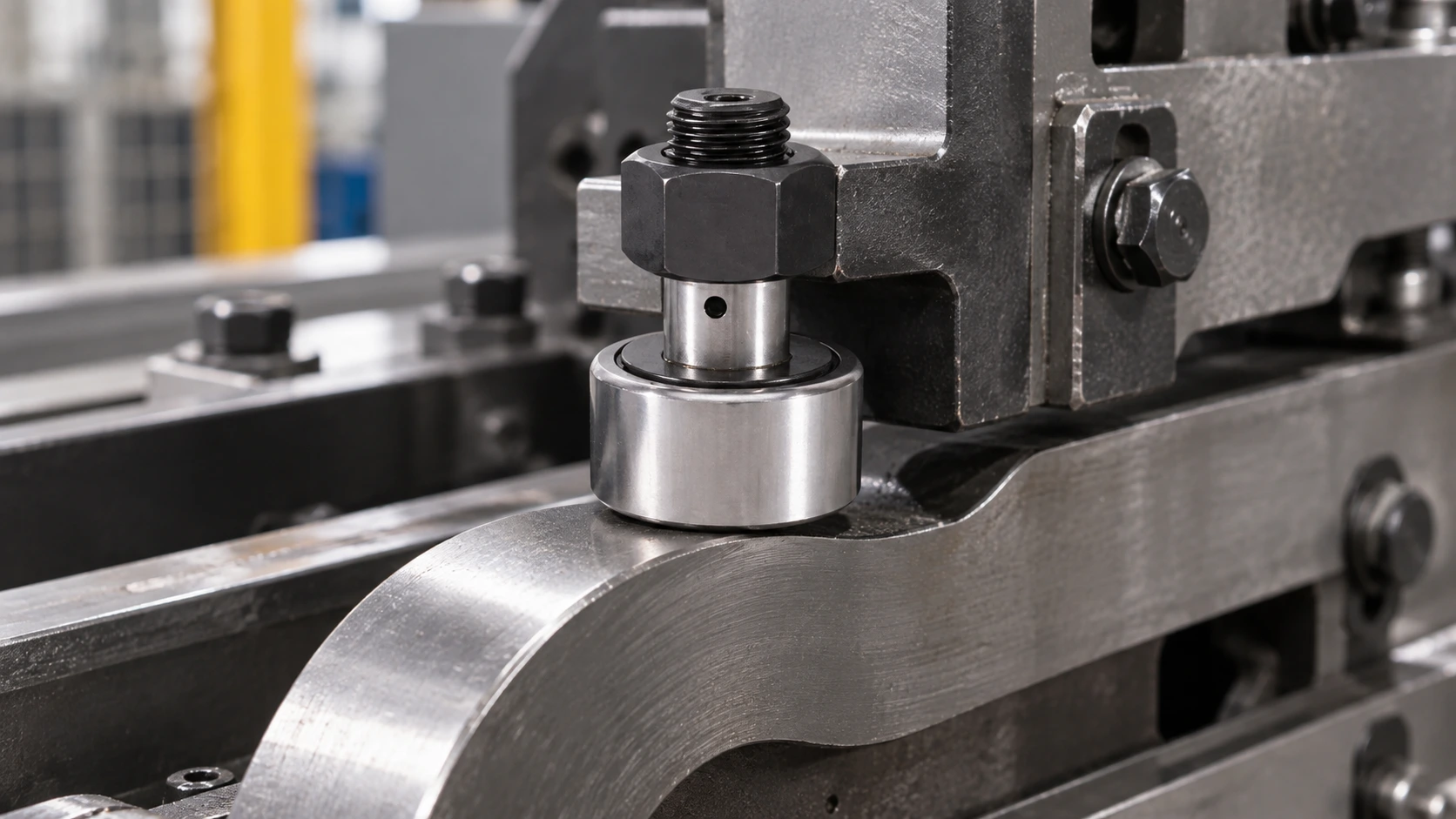
When a cam follower develops a flat spot, replacing the roller often restores motion only briefly. The repeat failure usually means the contact pair, mounting geometry, lubrication path, or load spectrum has not been corrected. A cam follower bearing is both a bearing and a rolling follower, so the roller and its track must be diagnosed as one system. The practical sequence is to identify the wear pattern, verify alignment and preload, inspect the track, then select a replacement whose load, sealing, lubrication, and dimensions match the application.
What a Flat Spot Is Really Telling You
A flat spot is a localized loss of the follower’s original rolling profile. It can come from sliding, skidding, brinelling, contamination, insufficient lubrication, or a track that forces the roller to run on an edge. The visible mark is therefore a symptom, not a root cause. If a new cam follower is installed against the same damaged track or under the same excessive side load, the new part may develop the same mark within a short operating period.
Track wear is the matching system problem. A groove, step, pitted zone, or softened track changes the contact pressure and creates a repeatable path for impact. The follower then sees a cyclic shock at the same angular position, which accelerates fatigue and can make the machine sound normal for part of the cycle and rough for the rest.
The Five Recurring Causes Behind Repeat Failure
Misalignment and edge loading
The stud axis, track face, and cam path must keep the roller load within the intended contact zone. A tilted mounting surface, bent support, or parallelism error concentrates force at one roller edge. Crowned and flat outer-ring profiles respond differently to misalignment, so the correct choice depends on the actual track geometry. Check the mounting shoulder, stud seating, side plates, and track straightness before blaming the bearing.
Excessive preload or an incorrect fit
A follower can be damaged even when the static load appears acceptable. Too much interference, an over-tightened stud, or a cam path with no running clearance raises internal stress and restricts the roller’s ability to accommodate motion. Conversely, looseness can create impact and fretting. Use the equipment drawing and the bearing maker’s fit and torque requirements; do not copy a value from a visually similar size.
Lubrication starvation or incompatible grease
Grease must reach the rolling contacts and remain stable at the operating temperature and speed. A blocked passage, incorrect grease, water ingress, or a relubrication interval that ignores duty cycle can remove the protective film. Some cam follower designs are sealed and pre-greased, while harsh applications may use a replenishment channel. Confirm which arrangement applies to the selected model and do not add grease blindly to a sealed unit.
Contamination and track damage
A small chip, weld spatter, scale, or abrasive particle can indent the track and create a repeating impact point. Once a track is pitted, installing a new roller alone leaves the damaging geometry in place. Clean the housing, inspect seals, remove loose debris, and measure the track surface. If damage exceeds the equipment’s allowable limit, repair or replace the track before commissioning the new follower.
A load spectrum that does not match the selection
Peak shock, reversing motion, acceleration, and side thrust can be more important than the nominal radial load. A compact follower may fit the envelope but lack the reserve for repeated impact. Separate radial, axial, and moment loads, then verify the dynamic and static ratings, speed, temperature, and expected life against the actual duty cycle.
A Practical Failure-Analysis Sequence
-
Record the failure position and pattern. Note whether the flat spot is centered, edge-biased, circumferential, or accompanied by pitting, discoloration, or cage noise.
-
Inspect the track before removing evidence. Measure groove depth, roughness, runout, hardness if relevant, and any repeating impact mark.
-
Check installation geometry. Verify stud alignment, shoulder contact, parallelism, clearance, tightening method, and whether the follower can rotate freely through the full stroke.
-
Review lubrication and contamination history. Compare the grease condition with the maker’s recommendation and look for water, abrasive particles, or metal debris.
-
Recalculate the application. Include shock, reversing loads, acceleration, temperature, speed, and the combined radial and axial load instead of relying on a single catalog number.
This sequence prevents a common maintenance mistake: treating a roller as an isolated consumable. The track, shaft or stud, housing, seals, grease, and mounting torque all influence the result.
Choosing a Replacement That Will Not Repeat the Same Failure
Start with the exact envelope and interface: stud or yoke arrangement, inside diameter, outside diameter, width, mounting thread, and available clearance. Then compare the outer-ring profile, seal design, internal construction, load ratings, and lubrication method. For compact high-load systems, needle roller construction can provide high load capacity in limited radial space, while an integrated stud simplifies installation. The correct choice remains application-dependent and should be verified against the product specification.
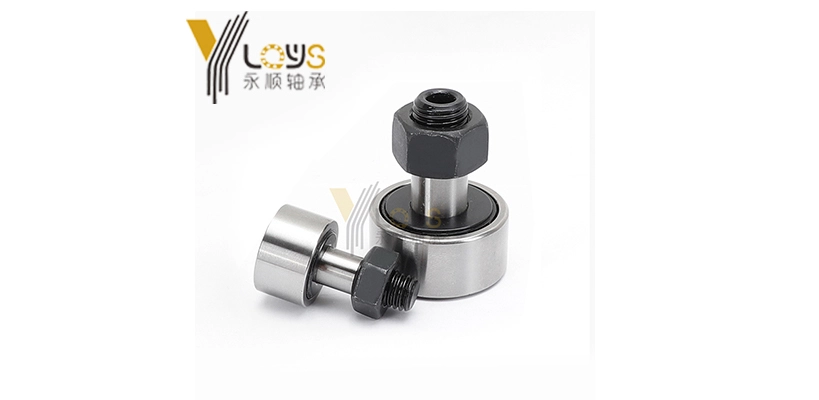
LQYS lists cam follower bearings within its needle roller bearing range and describes them for linear motion systems, cam mechanisms, and heavy-duty guide rails. Its product page also presents sealed and grease-lubricated configurations, possible grease replenishment for harsh conditions, and a range of CF, KR, and KRV size references. Use the published dimensions as a starting point, then confirm the exact model, load, and operating conditions with the technical team through the cam follower bearing product page.
Track and Bearing Checks Before Restart
Before the machine returns to production, compare the old and new contact paths. The replacement should rotate smoothly by hand, seat squarely, and maintain the intended clearance throughout the stroke. Confirm that the track is free of a sharp transition at the entry and exit, because a sudden step can create impact loading even when the average load is modest.
For systems built around needle roller technology, the needle roller bearing category explains the relationship between compact cross-section, high load capacity, and specialized cam follower designs. If the machine is part of a larger automation line, map the follower’s motion to the wider smart manufacturing application context so that indexing, acceleration, and contamination controls are reviewed together.
Conclusão
Cam follower flat spots and track wear keep returning when the replacement addresses only the visible roller damage. The durable fix is a system correction: inspect the track, remove misalignment and edge loading, verify preload and lubrication, control contamination, and select a follower for the real combined load and motion. LQYS can support a fit check when the model, dimensions, load, material, speed, temperature, drawing, and quantity are available. To discuss an application, contact the technical team with those details and the observed wear pattern.
FAQ
Can a flat-spotted cam follower be reused?
Usually it should be treated as damaged. Reuse is only defensible after a documented inspection shows that the mark is superficial and that the track and load path are within specification.
Should the track be replaced with the bearing?
If the track has a groove, pit, step, or hardness problem that recreates impact loading, yes. A new follower cannot correct a defective mating surface.
Are sealed followers maintenance-free?
Some are sealed and pre-greased, but service life still depends on load, speed, temperature, alignment, and contamination. Confirm the model’s lubrication arrangement before setting a maintenance interval.
What information is needed for a replacement recommendation?
Provide the current model, key dimensions, load directions, speed, stroke, temperature, environment, lubrication practice, track material, drawing, quantity, and photographs of the wear pattern.