

انحشار أو تآكل الدليل الخطي عند أحد طرفي مساره: الأسباب، والحلول، وفحوصات الاستبدال
2026-08-14
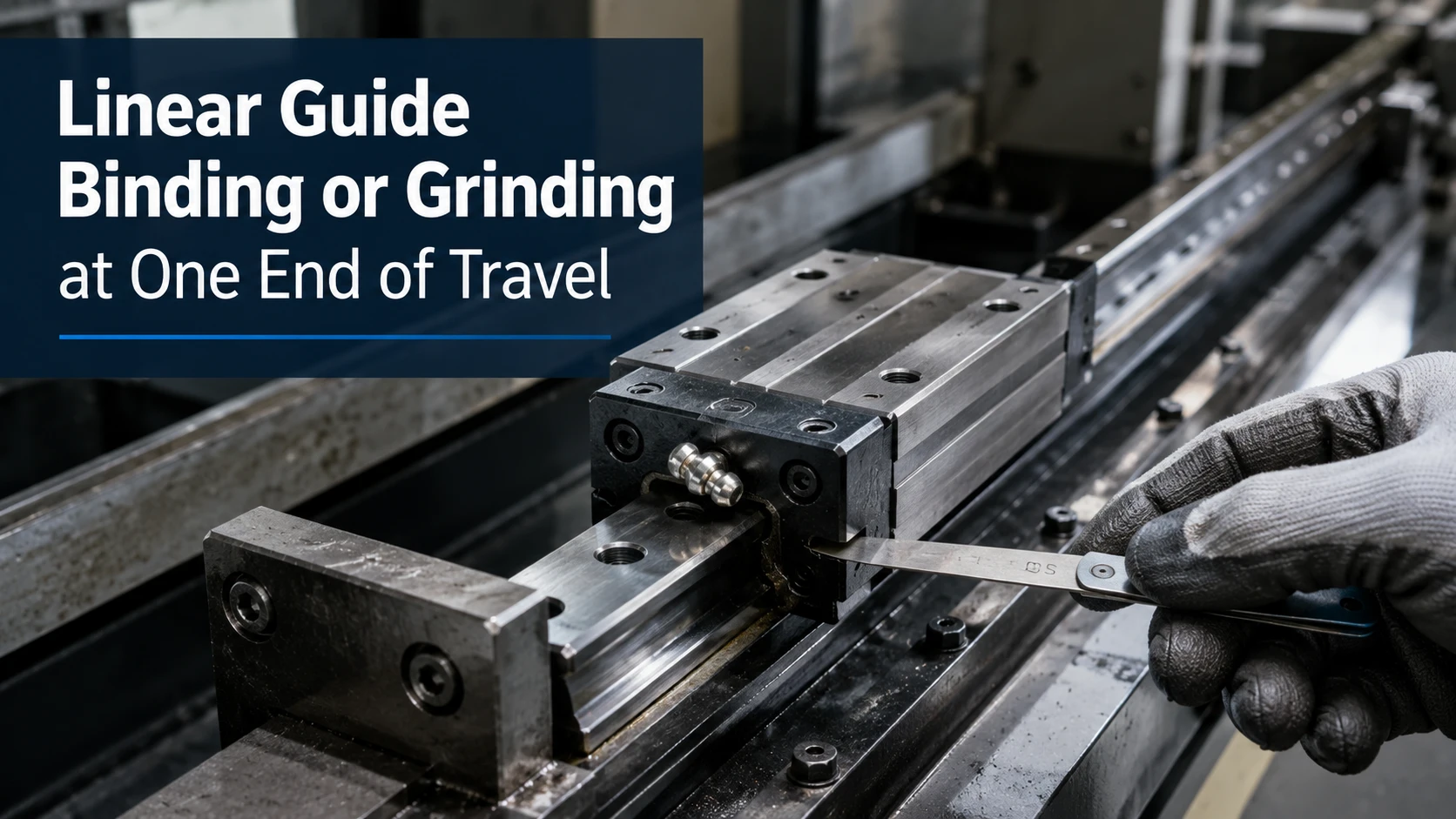
يشير انحشار الدليل الخطي عند أحد طرفيه عادةً إلى مشكلة موضعية، وليس إلى تآكل منتظم على طول المحور. قد يتحرك الدليل بشكل طبيعي خلال معظم شوطه، ثم يصبح محكمًا أو خشنًا أو صاخبًا أو يصعب تحريكه بالقرب من أحد طرفيه. والسؤال العملي هو ما إذا كان السبب هو المحاذاة، أو تشوه التركيب، أو التلوث، أو تلف مجرى الكابلات، أو التشحيم، أو التحميل المسبق، أو عدم تطابق الدليل.
سجّل موضع بدء المقاومة، واعزل الدليل عن نظام القيادة، وتأكد من السبب قبل طلب قطع الغيار. قد يؤدي تركيب كتلة جديدة على سكة تالفة أو غير متوافقة إلى تكرار العطل نفسه، بينما لن يُصلح الاستبدال قاعدة تثبيت مشوهة.
ماذا يشير إليه عادةً وجود عائق في أحد طرفي مسار الحركة؟
حدد نمط المقاومة قبل إزالة الأجزاء
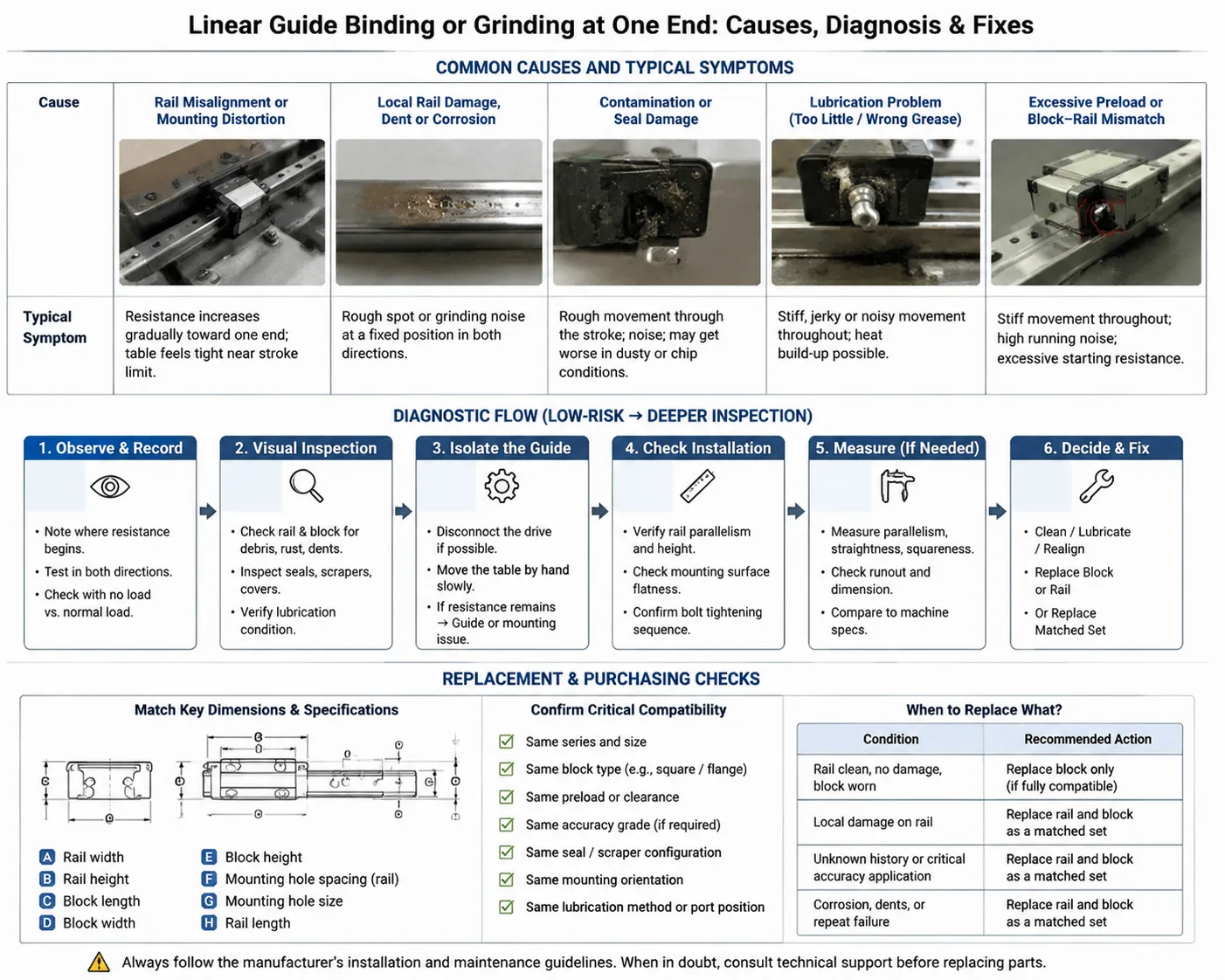
يُقدّم شكل المقاومة دليلاً مفيداً. إذا أصبحت الحركة أكثر صعوبة تدريجياً باتجاه أحد الطرفين، فتحقق أولاً من توازي القضبان، واستواء سطح التثبيت، وتشوه الطاولة. إذا تكررت نقطة خشونة واحدة عند نفس موضع القضيب، فافحص وجود أي شوائب أو تآكل أو انبعاج أو تلف موضعي في مجرى الكابلات. أما الحركة الخشنة خلال الشوط الكامل فتشير غالباً إلى تلوث عام، أو ضعف في التشحيم، أو تحميل مسبق زائد، أو تآكل واسع النطاق في الكتلة.
اختبر في كلا الاتجاهين وقارن بين حالتي عدم التحميل والحالة الطبيعية. قد ينجم العرض المرتبط بالحمل عن تشوه هيكلي أو توزيع غير متساوٍ للحمل.
| النمط الملحوظ | السبب الأكثر ترجيحاً | الإجراء الأول |
|---|---|---|
| تزداد المقاومة باتجاه أحد الطرفين | التوازي أو التشوه المتزايد | تحقق من محاذاة القاعدة والسكك الحديدية |
| نقطة وعرة واحدة في موقع ثابت | الحطام، أو الانبعاجات، أو التآكل، أو التلف الموضعي | افحص المنطقة المتضررة |
| خشونة في كامل مسار الحركة | التشحيم، أو التحميل المسبق، أو التلوث، أو التآكل | تحقق من حالة الحظر |
| لا يظهر الربط إلا تحت الضغط | تشوه الطاولة، أو التحميل الزائد، أو الدعم غير المتساوي | أزل الحمل وقارن |
تأكد مما إذا كان نظام التوجيه أو نظام القيادة هو سبب المشكلة
يجمع المحور الخطي بين دليل ومسمار كروي أو حزام أو محرك خطي. افصل مقاومة الدليل عن مقاومة المحرك حيثما يسمح التصميم وإجراءات السلامة بذلك.
بعد فصل التيار الكهربائي، قارن حركة الطاولة بعد إزالة الحمل الخارجي. عند الإمكان، افصل المحرك وحرك الطاولة الموجهة ببطء. إذا بقيت المقاومة ثابتة عند نفس موضع السكة، فمن المرجح أن يكون السبب هو نظام التوجيه أو التثبيت. أما إذا تغيرت المقاومة أو اختفت، فافحص نظام الحركة وحمل الطاولة قبل استبدال نظام التوجيه. تؤدي مكونات نظام التوجيه والمحرك وظائف مختلفة، لذا فإن هذه الخطوة تقلل من احتمالية شراء قطع غيار خاطئة.
الأسباب الرئيسية لارتباط الدليل الخطي بالقرب من أحد طرفيه
عدم محاذاة السكة أو تشوه سطح التركيب
يمكن أن تتحرك القضبان المتوازية بسلاسة خلال جزء من شوطها، ثم تتعطل عند تغير المسافة بينها أو ارتفاعها. تشمل الأسباب وجود نتوءات حول فتحات التثبيت، أو أوساخ أسفل القضيب، أو قاعدة غير مستوية، أو طاولة مشوهة، أو شد غير متساوٍ للبراغي، أو فقدان التوازي بين القضيب المرجعي والقضيب الثانوي.
يشير التحسن المؤقت بعد تحرير السكة غير المرجعية قليلاً إلى وجود إجهاد في التركيب، ولكن البراغي غير المحكمة ليست إصلاحًا. افحص أسطح التثبيت المرجعية، وموضع السكة، ووصلة الطاولة، وتسلسل الربط. تنص إرشادات التركيب على تنظيف أسطح التثبيت، وإزالة النتوءات، والربط المحكم، وفحص التوازي على طول السكة بالكامل.
من المرجح أن يكون هذا السبب ناتجًا عن إعادة بناء، أو استبدال السكة، أو اصطدام، أو إصلاح القاعدة، أو إزالة الطاولة. تشير نقطة خشنة حادة واحدة إلى تلف موضعي.
أضرار السكك الحديدية المحلية، والحطام، والتآكل، أو التلوث
قد تتسرب رقائق معدنية وغبار كاشط وسائل تبريد وأختام تالفة إلى منطقة التلامس. وقد تتسبب الجسيمات الصلبة في إحداث خشونة متكررة وإتلاف السكة أو العناصر الدوارة. لذا، تتطلب تطبيقات أدوات الآلات حماية فعالة ضد التلوث.
افحص مدخل الكتلة بحثًا عن أي خدوش أو صدأ أو انبعاجات أو تقشر أو أغطية قضبان مزاحة أو كاشطات تالفة أو حطام متراكم. إذا استمرت الخشونة في نفس موضع القضيب في كلا الاتجاهين، فمن المرجح حدوث تلف موضعي في القضيب. أما إذا ظهرت هذه الأعراض في كتلة واحدة على طاولة متعددة الكتل، فمن المرجح حدوث تلف داخلي في الكتلة أو احتكاك في مانع التسرب.
لا تقم بصقل أو تلميع مجرى الكابلات الدقيق كإجراء إصلاح روتيني. وجود انبعاجات مرئية، أو تآكل، أو تقشر، أو ضوضاء متكررة بعد التنظيف، يستدعي تقييم الحاجة إلى استبداله.
التشحيم، أو مقاومة مانع التسرب، أو التحميل المسبق، أو عدم تطابق الكتلة مع السكة
قد يؤدي نقص التشحيم إلى الاحتكاك والضوضاء والتآكل، ولكن إضافة الشحم ليست حلاً تلقائياً. وتعتمد متطلبات التشحيم على المنتج وظروف التشغيل.
ضع في اعتبارك مقاومة مانع التسرب عندما يبدأ التصلب مباشرةً بعد تركيب مكاشط أو موانع تسرب جديدة أو كتلة بديلة. قد تتناسب الكتلة مع السكة من حيث الأبعاد، ولكنها تختلف في شكل مجرى الكابل، والتحميل المسبق، ودرجة الدقة، وترتيب مانع التسرب، أو منفذ التشحيم.
بالنسبة لتجميع THK الحالي، استخدم فحوصات استبدال الدليل الخطي THK لمراجعة دقة السكة، وملاءمة الكتلة، والأختام، والتحميل المسبق، وتفاصيل التركيب قبل طلب مكون آخر.
كيفية تشخيص وإصلاح دليل خطي عالق من أحد طرفيه
اتبع تسلسل التشخيص منخفض المخاطر
استخدم الفحوصات الأقل تدخلاً أولاً:
-
افصل التيار الكهربائي واتبع إجراءات صيانة الجهاز.
-
حدد أين تبدأ المقاومة أو الضوضاء وأين تنتهي.
-
قارن الحركة البطيئة في كلا الاتجاهين.
-
قم بإزالة قطعة العمل أو الحمل الخارجي حيثما كان ذلك عملياً.
-
افحص أسطح القضبان، والأختام، والكاشطات، وحالة مواد التشحيم.
-
افصل الدليل عن محرك الأقراص إذا كان ذلك مسموحًا به.
-
تحقق من أسطح التثبيت، ومقاعد السكة، والتوازي الكامل للشوط.
-
تأكد من تحديد الكتلة والسكك الحديدية بشكل كامل.
-
أعد الاختبار بعد التنظيف أو المحاذاة أو الاستبدال.
زيادة المقاومة تدعم فحص المحاذاة؛ وجود خشونة ثابتة يدعم الفحص الموضعي. وجود مشكلة بعد الاستبدال يدعم مراجعة التوافق، والتحميل المسبق، ومانع التسرب، أو التركيب. توقف إذا تعذر التحريك الآمن.
قم بمطابقة الحل مع السبب المؤكد
يُعد التنظيف مناسبًا للتلوث الذي يسهل الوصول إليه عندما لا يكون هناك تلف ظاهر في مجرى الكابلات. ويُعدّ إعادة المحاذاة مناسبًا عندما تُظهر القياسات إجهادًا ناتجًا عن التركيب. أما تصحيح التشحيم فهو مناسب فقط عندما تتعارض الطريقة أو مادة التشحيم المستخدمة مع المواصفات.
تزداد احتمالية الاستبدال عند وجود انبعاجات أو تآكل أو خدوش أو تقشر في السكة؛ أو عند بقاء قطعة التثبيت خشنة على جزء سليم من السكة؛ أو عند تعذر التحقق من التوافق. بعد إجراء الإصلاحات، اختبر حركة السكة كاملةً بدون حمل، ثم تحت الحمل والسرعة العاديين.
كيفية منع الالتصاق وتكرار الفشل
حافظ على نظافة أسطح التثبيت وفتحات البراغي، وتأكد من تثبيت القضبان بإحكام قبل إحكام ربطها نهائيًا، وتحقق من الحركة على امتداد الشوط بالكامل. في البيئات التي تحتوي على رقائق معدنية أو سائل تبريد أو غبار كاشط أو رطوبة، راجع موانع التسرب والكاشطات والأغطية ونظام التشحيم.
قم بتسجيل رمز النموذج، وأبعاد السكة، ونمط الكتلة، والاتجاه، والتحميل المسبق أو الخلوص، وطريقة التشحيم، وتاريخ الاستبدال لمنع عمليات الاستبدال غير المناسبة.
تُدرج شركة LQYS Bearings تكوينات محامل الكرات الدوارة الخطية، والأشكال المربعة والشفة، وخيارات المانعات للتسرب أو التشحيم الذاتي، والتطبيقات التي تشمل معدات الأتمتة، وأدوات آلات CNC، وأجهزة القياس. يمكن للمشترين مراجعة هذه المعلومات. خيارات المحامل الخطية والموجهات بعد التأكد من العطل وتقديم نموذج الاستبدال المطلوب.
هل يجب استبدال كتلة التوجيه فقط أم السكة والكتلة معًا؟
قد يُنظر في استبدال القطع فقط عندما تكون السلسلة مصممة للتبديل، ويكون القضيب نظيفًا وسليمًا، وتكون متطلبات الدقة والتحميل المسبق معروفة، ويمكن التحقق من التجميع بعد التركيب. ويزداد خطر هذا الخيار عندما يكون للقضيب تاريخ خدمة غير معروف، أو تلف واضح، أو تآكل، أو انحشار موضعي.
يُعدّ استخدام مجموعة متطابقة من السكة والكتلة خيارًا أكثر أمانًا في الحالات التي يمتد فيها التلف عبر شوط التشغيل، أو عندما يتعذر تحديد الأجزاء الموجودة، أو عندما تكون دقة الآلة بالغة الأهمية، أو عندما يتعذر التحقق من توافق الكتلة. ولا تكفي الأبعاد الخارجية وحدها؛ بل تُؤخذ في الاعتبار أيضًا تفاصيل الشكل، والتحميل المسبق، والدقة، والإحكام، والتركيب.
ما يجب التأكد منه عند شراء بديل أو اختيار مورد
يجب أن يتضمن طلب عرض الأسعار النموذج الكامل، وصورًا للسكك الحديدية والكتل، والأبعاد الرئيسية، والاتجاه، ونوع الآلة، والبيئة، والشوط، وظروف التحميل، والكمية، والرسومات أو العينات المتاحة. حدد ما إذا كان المطلوب كتلة، أو سكة حديدية، أو مجموعة متطابقة.
ينبغي على المورد مراجعة التوافق قبل اعتبار أي منتج ذي حجم مماثل بديلاً مباشراً. تأكد من بيانات التحميل المسبق والدقة، وحالة السكة، والأختام، ومنافذ التشحيم، وما إذا كان يلزم تأكيد الأبعاد أو وحدة تجريبية قبل طلب دفعة كبيرة.
ال محامل LQYS يعرض الموقع الإلكتروني فئات المحامل المتاحة، بينما معلومات عن محامل LQYS يُقدّم معلومات الشركة لمراجعة المورّد. في حالة وجود عطل مُحدّد أو طلب استبدال، طلب مراجعة استبدال الدليل الخطي وتقديم النموذج والقياسات وشروط التطبيق والكمية والرسومات وصور الأعطال.
استنتاج
يجب التعامل مع انحشار أو تآكل الدليل الخطي عند أحد طرفيه كمشكلة تشخيصية خاصة بموقع محدد. سجّل نمط المقاومة، وافصل مقاومة الدليل عن مقاومة المحرك، وافحص السكة والأختام، وتحقق من هندسة التركيب، وتأكد من التحميل المسبق والتوافق قبل طلب قطع الغيار. قد يؤدي التنظيف أو تصحيح التشحيم أو إعادة المحاذاة إلى حل مشكلات الخدمة أو التركيب المؤكدة؛ وقد تتطلب مجاري الكرات التالفة وعدم تطابق الكتلة مع السكة استبدال المكون أو مجموعة متطابقة.
لغرض مراجعة عملية الشراء، يرجى تقديم النموذج والأبعاد والصور والتطبيق والبيئة والرسومات أو تفاصيل العينة والكمية وموقع العطل.
الأسئلة الشائعة
لماذا يكون دليل التوجيه الخطي الخاص بي أملسًا في المنتصف ولكنه ضيق عند أحد طرفيه؟
عادةً ما تشير الزيادة التدريجية في المقاومة إلى عدم توازي القضبان، أو تشوه سطح التركيب، أو إجهاد الطاولة. أما وجود نقطة خشنة حادة في نفس موضع القضيب فيتوافق بشكل أكبر مع وجود حطام، أو انبعاج، أو تآكل، أو تلف موضعي في مجرى الكابلات.
هل يمكن أن يؤدي وضع الشحم إلى إصلاح صوت الطحن في الدليل الخطي؟
قد يُفيد هذا الإجراء في حال تأكد أن نقص التشحيم هو السبب. لكنه لن يُصلح عدم المحاذاة، أو التحميل المسبق الزائد، أو عدم توافق الكتلة، أو تلف مجرى الكرات.
كيف أعرف ما إذا كان قضيب التوجيه الخطي غير محاذٍ أو تالفًا؟
غالباً ما يُسبب عدم المحاذاة مقاومة تتغير تدريجياً على طول مسار الحركة. عادةً ما يُؤدي التلف الموضعي إلى ظهور بقعة خشنة متكررة عند موضع واحد للسكك الحديدية. استخدم القياس والفحص البصري معاً.
هل يمكنني استبدال كتلة التوجيه الخطي فقط؟
ربما، عندما يكون القضيب سليمًا ويتم التأكد من توافق الكتلة من حيث التسلسل، والشكل، والتحميل المسبق، والدقة، والإحكام، وأبعاد التركيب. قد يبرر وجود قضيب غير محدد أو تالف استخدام مجموعة متطابقة.
ما الذي يجب أن أرسله إلى المورد للحصول على عرض سعر لاستبدال دليل التوجيه الخطي؟
أرسل رمز النموذج، وصور السكة والكتلة، وأبعاد السكة، والمسافة بين فتحات التثبيت، ونمط الكتلة، ونوع الآلة، وظروف التشغيل، وموقع العطل، والرسومات أو تفاصيل العينة، والكمية.