

So schützen Sie Linearführungen vor Kühlmittel und Metallspänen: Dichtungen, Abstreifer, Abdeckungen und Wartung
2026-08-20
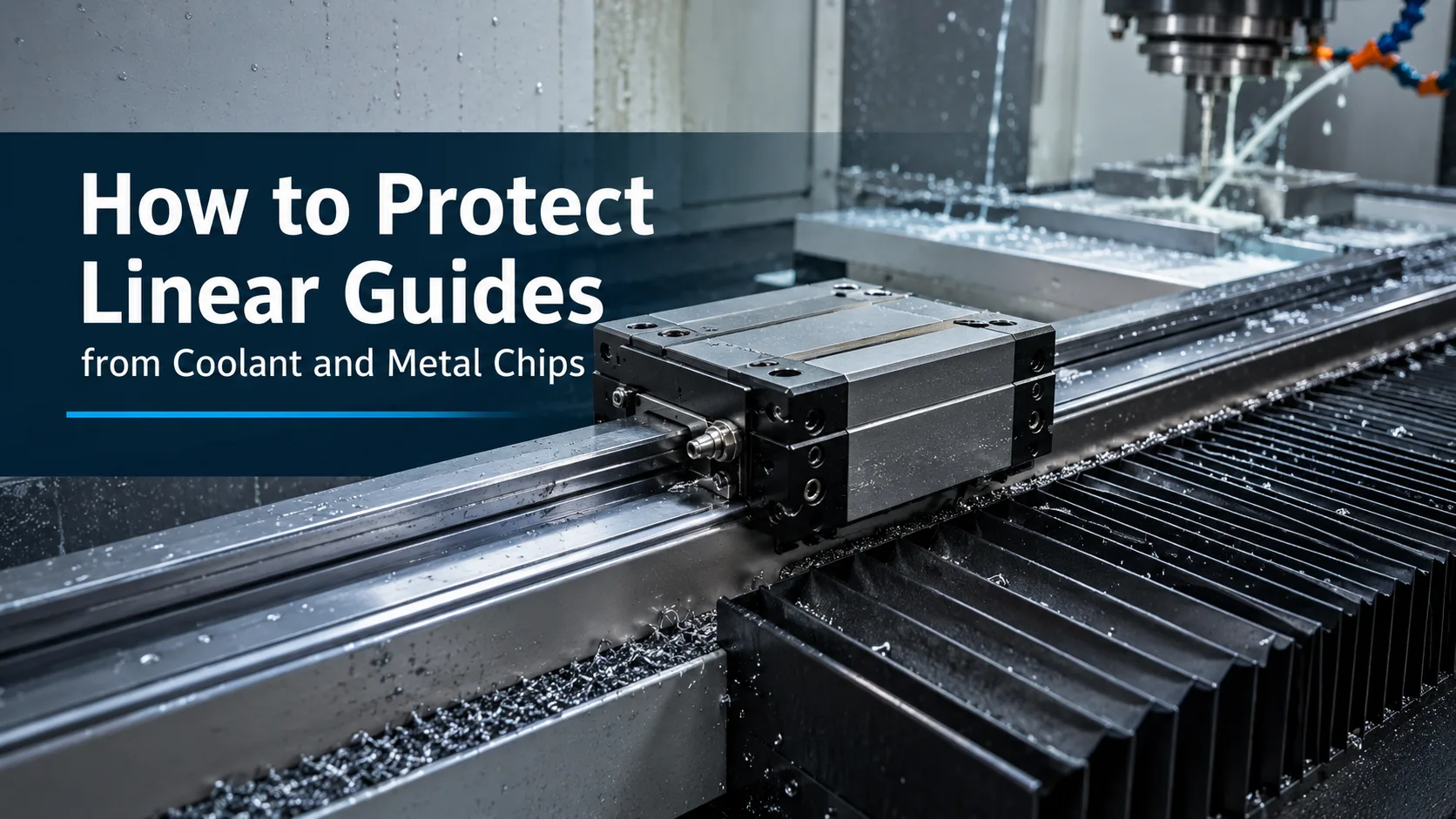
Kühlmittel und Metallspäne können durch die Blockenden, Spalten an der Unterseite, Befestigungslöcher oder freiliegende Schienenoberflächen in Linearführungen eindringen. Ein wirksamer Schutz der Linearführung vor Kühlmittel und Spänen erfordert Blockdichtungen oder Abstreifer, geschützte Befestigungslöcher, gegebenenfalls externe Abdeckungen und eine auf die Art der Verschmutzung und die Maschinenkonfiguration abgestimmte Wartung. Bei CNC-Werkzeugmaschinen können wiederholter Kühlmittelspritzer, abrasive Feinanteile und scharfe Späne Dichtungen, Schmierstoffe und Laufbahnen beschädigen.
Wie Kühlmittel und Metallspäne eindringen und Linearführungen beschädigen
Identifizieren Sie die Hauptkontaminationswege
Ermitteln Sie, wo Verunreinigungen die Führung erreichen, bevor Sie Schutzmaßnahmen auswählen. Enddichtungen verhindern, dass Material nach vorne oder hinten in den Block gelangt, können aber das Eindringen von Verunreinigungen von unten unter Umständen nicht verhindern. In den Führungsbohrungen können sich Späne und Flüssigkeiten sammeln, während freiliegende Führungsabschnitte direktem Spritzwasser oder herabfallenden Spänen ausgesetzt sein können.
Die Ausrichtung beeinflusst das Risiko. Horizontale Schienen sammeln Späne; seitlich angebrachte Führungen können direkt besprüht werden; auch umgekehrte Führungen können mit Flüssigkeit in Kontakt kommen. Dokumentieren Sie Kühlmittelrichtung, Spänebahn, Hub, Reinigungsmethode und Rückstandsposition. Hersteller empfehlen Faltenbälge oder Abdeckungen, um zu verhindern, dass Späne, Kühlmittel, Wasser oder korrosive Medien in eine Führung gelangen.
Kontamination von dauerhaften Schäden unterscheiden
Oberflächenrückstände erfordern möglicherweise keinen Austausch. Eine Reinigung kann ausreichend sein, wenn Späne entfernt werden, ohne den Block zu durchdringen, die Schiene unbeschädigt ist und die Bewegung nach ordnungsgemäßer Schmierung wieder normal funktioniert.
Ein Austausch wird wahrscheinlicher, wenn nach der Reinigung eine raue Stelle zurückbleibt, die Schiene Dellen oder Kratzer aufweist, die Dichtlippen beschädigt sind, Korrosion sichtbar ist oder Geräusche an einer bestimmten Schienenposition wiederholt auftreten. Beschädigte Laufbahnen können nicht durch eine Dichtung repariert werden. Die Achse muss angehalten werden, wenn starke Rauheit oder ein Festklemmen die Sicherheit oder die Positionierung beeinträchtigen könnten.
Wählen Sie die Schutzmethode passend zum Schadstoff.
Kühlmittelnebel, kontinuierliches Spritzen und feine Partikel
Gelegentlicher Sprühnebel lässt sich durch geeignete End- und Seitendichtungen sowie regelmäßige Inspektion beherrschen. Kontinuierlicher Sprühnebel, Schleifstaub oder feine Schleifpaste erfordern in der Regel ein umfassenderes System mit Doppeldichtungen, Bodendichtungen, Kontaktabstreifern, geschützten Befestigungslöchern oder einer externen Abschirmung.
Gehen Sie nicht davon aus, dass eine Standarddichtung wasserdicht oder mit jedem Kühlschmierstoff kompatibel ist. Die Eignung hängt vom Dichtungsmaterial, der Kühlmittelzusammensetzung, der Konzentration, der Temperatur, der Einwirkzeit und der Führungskonfiguration ab. Kühlmittel kann bestimmte Fette emulgieren oder abwaschen, wodurch die Schmierung und der Korrosionsschutz beeinträchtigt werden. Daher muss das Schmiermittel anhand der Führungsspezifikation und des verwendeten Kühlmittels geprüft werden.
Dokumentieren Sie, ob die Verunreinigung als Nebel, stehende Flüssigkeit, Rückstände oder abrasiver Schlamm auftritt, um Dichtungsprobleme von mangelhafter Entwässerung oder Wartung zu unterscheiden.
Große, scharfe oder heiße Metallspäne
Große oder scharfe Späne können eine Elastomerdichtung beschädigen, bevor diese sie von der Schiene entfernen kann. Ein Metallschaber oder -schutz bildet eine härtere erste Barriere, während eine dahinterliegende Kontaktdichtung kleinere Partikel entfernt und das Schmiermittel zurückhält. Sie erfüllen unterschiedliche Aufgaben.
Bei schweren Fräs-, Dreh- oder Bohrarbeiten kann ein Faltenbalg, eine Schienenabdeckung oder eine Maschinenabdeckung erforderlich sein, um Späne abzufangen, bevor sie den Werkstückblock erreichen. Bei heißen Spänen sind die Temperaturgrenzwerte zu beachten. Die Auswahl hängt außerdem von Aufprallrichtung, Geschwindigkeit, Hub und Platz ab.
| Betriebszustand | Schutzmaßnahmen zu bewerten | Hauptbeschränkung |
|---|---|---|
| Leichter Staub oder kleine Späne | End- und Seitendichtungen | Begrenzt gegen schwere Flüssigkeiten oder scharfe Späne |
| Kühlmittelnebel und Feinstaub | Mehrfachkontaktdichtungen und Schmierungssteuerung | Kann den Laufwiderstand erhöhen |
| Große oder scharfe Späne | Metallschaber oder -schutz plus Dichtungen | Ersetzt keine Außenabdeckung |
| Kontinuierliche starke Exposition | Faltenbalg- oder Maschinenkanalabdeckung | Erfordert Kompression und Installationsraum |
| Kontamination von unten | Bodendichtungen oder untere Abschirmung | Die Freigabe muss überprüft werden. |
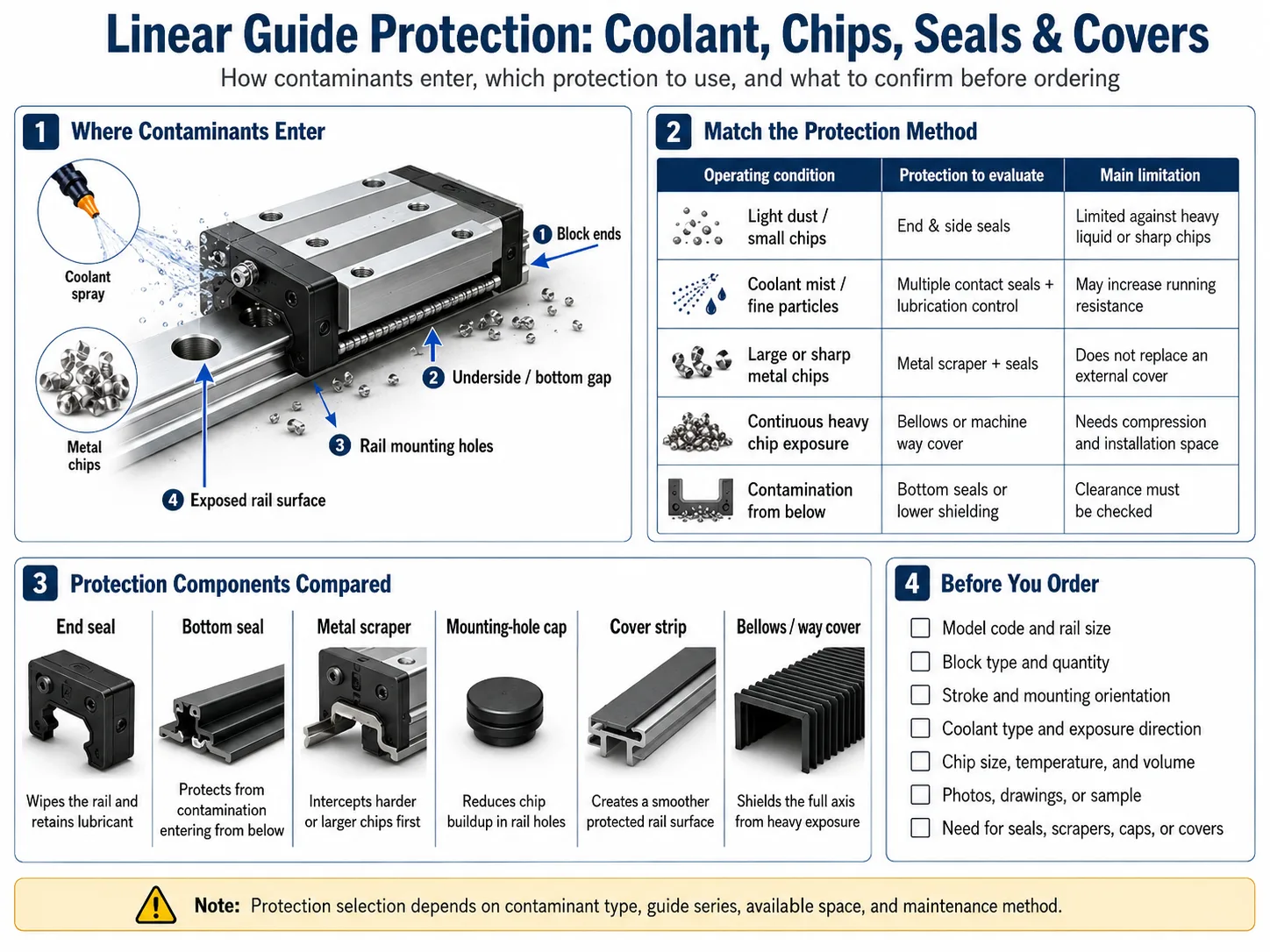
Vergleich von Dichtungen, Abstreifern und Schienenabdeckungen für Linearführungen
Blockmontierte Dichtungen und Abstreifer
Enddichtungen wischen die Schiene beim Eintritt in den Block ab. Seitliche, untere oder innere Dichtungen verhindern das Eindringen von Schmierstoff und tragen zur Schmierstoffrückhaltung bei. Ein Kontaktabstreifer verbessert die Entfernung feiner Partikel, während ein Metallabstreifer härtere Ablagerungen abfängt, bevor diese weichere Bauteile erreichen.
Mehr Kontakt bedeutet nicht automatisch bessere Ergebnisse. Zusätzliche Dichtungen können den Laufwiderstand, die Blocklänge oder den Abstand zum Schmiernippel erhöhen. Käufer sollten die Gesamtabmessungen, den Dichtungswiderstand, die Position des Schmieranschlusses, die Montageausrichtung und den Abstand zu benachbarten Bauteilen überprüfen. Kataloge führen oft separate Abmessungen und Widerstandswerte für Dichtungspakete auf, daher ist die Angabe „mit Dichtungen“ keine vollständige Spezifikation.
Schienenkappen, Abdeckleisten, Faltenbälge und Führungsschienenabdeckungen
Die Abdeckkappen der Befestigungslöcher verschließen die einzelnen Senkbohrungen, sodass sich keine Späne unter der Schienenoberfläche ansammeln können. Ein durchgehender Abdeckstreifen schützt mehrere Löcher und sorgt für eine glattere Abstreiffläche. Abstehende, beschädigte oder falsch montierte Kappen können die Dichtungen beeinträchtigen.
Faltenbälge eignen sich für Anwendungen, bei denen eine flexible Kompression sinnvoll ist. Abdeckungen bieten eine stärkere Barriere gegen schwere Späne oder direktes Kühlmittel. Geben Sie die ausgefahrene und eingefahrene Länge, den Hub, die Drehzahl, die Ausrichtung und den verfügbaren Platz an. Prüfen Sie den Hub der Abdeckung über den gesamten Hub und verwenden Sie keine Abdeckung, um eine unzureichende Entwässerung oder einen direkt auf die Führung gerichteten Kühlmittelstrahl zu verdecken.
Reinigung und Wartung von Linearführungen in kontaminierten Umgebungen
Befolgen Sie die Reinigungs-, Inspektions- und Schmierreihenfolge.
Die Maschine gemäß Wartungsanweisung sperren. Lose Späne von den umliegenden Oberflächen entfernen, bevor der Block bewegt wird, und vermeiden, ihn über einen stark verschmutzten Schienenabschnitt zu schieben.
Reinigen Sie die freiliegende Schiene mit einer für die Maschine und die Führungsmaterialien geeigneten Methode. Prüfen Sie Dichtungen, Abstreifer, Kappen, Abdeckungen, Schmiernippel und Ablaufkanäle. Achten Sie auf Rost, Kratzer, Dellen oder feste Unebenheiten. Schmieren Sie die Schiene erst nach vollständiger Entfernung von Verunreinigungen mit einem für die Führung und die Umgebung zugelassenen Produkt nach. Beachten Sie auch die Herstellerhinweise, die die Entfernung von Fremdkörpern vor dem Nachschmieren vorschreiben.
Druckluft kann Späne gegen die Dichtungen drücken, während überschüssiges Fett Verunreinigungen einschließen kann. Nach Wartungsarbeiten sollte der volle Hub langsam geprüft werden, zunächst – wenn möglich – unter reduzierter Last und anschließend unter normalen Bedingungen.
Wie man eine erneute Kontamination verhindert
Vorbeugung beginnt bei der Maschinenauslegung. Kühlmitteldüsen sollten, wo sinnvoll, umgeleitet, die Entwässerung verbessert und Oberflächen, an denen sich Späne neben den Schienenlöchern ansammeln, vermieden werden. Es muss sichergestellt werden, dass eine äußere Abdeckung den gesamten Arbeitshub abdeckt, ohne an ihre Kompressionsgrenze zu stoßen.
Prüfen Sie Dichtungen, Abstreifer, Kappen, Abdeckungen und Schmierstellen und notieren Sie das Führungsmodell, die Ausrichtung, das Schmiermittel, das Kühlmittel und die Schutzausrüstung.
LQYS Bearings bietet Kugelumlauf-Linearführungsprodukte für Automatisierungsanlagen, CNC-Werkzeugmaschinen und Messgeräte an, darunter Ausführungen mit Vierkant- und Flanschbefestigung sowie Modelle mit Dichtungen oder Selbstschmierung. Käufer können die Produkte einsehen. Optionen für Linearführungen in kontaminierten Umgebungen nach Festlegung der Kontaminationsquelle, der Montageanordnung und des erforderlichen Schutzniveaus.
Reinigen, Schutz verbessern oder Führung austauschen?
Eine Reinigung und eine Schutzverbesserung können sinnvoll sein, wenn die Verschmutzung nur äußerlich ist, die Schienenoberflächen unbeschädigt sind, Dichtungen wiederhergestellt oder ersetzt werden können und die Bewegung wieder gleichmäßig ist. Ein Austausch sollte in Betracht gezogen werden, wenn Korrosion, Riefen, Dellen, wiederholtes Blockieren oder anhaltende Rauheit bestehen bleiben.
Der alleinige Austausch des Blocks birgt Risiken, wenn der Zustand der Schiene, die Modellkompatibilität, die Vorspannung oder die Genauigkeitsklasse unbekannt sind. Bei hochgenauigkeitskritischen CNC- oder Messgeräten kann eine aufeinander abgestimmte Schienen-Block-Baugruppe die sicherere Lösung sein, wenn die Schiene beschädigt ist oder ihre Vorgeschichte nicht nachvollziehbar ist. Die Entscheidung sollte auf der Maschinengenauigkeit, dem Verschmutzungsgrad und den Validierungsanforderungen basieren.
Was Käufer vor der Bestellung bestätigen sollten
Erstellen Sie eine Angebotsanfrage für Kühlmittel- und Chip-Schutz.
Bitte geben Sie die vollständige Modellbezeichnung, die Schienenabmessungen, die Anordnung der Befestigungslöcher, die Blockart und -anzahl, die Ausrichtung, den Hub, die Geschwindigkeit, den Lastzustand, die Schmiermethode und den verfügbaren Platz an. Fügen Sie Fotos der Schiene, des Blocks, der Schutzteile sowie von Verschmutzungen und Beschädigungen bei.
Beschreiben Sie Kühlmitteltyp, Konzentration (falls bekannt), Applikationsmethode, Spangröße, Spantemperatur und Expositionsrichtung. Geben Sie an, ob ein abgedichteter Block, ein Abstreiferpaket, Führungsschienenkappen, eine externe Abdeckung, ein Ersatzblock oder eine passende Führungsbaugruppe benötigt wird. Verwenden Sie Zeichnungen oder ein Muster, falls die Angaben fehlen.
Kompatibilitätsprüfung des Lieferanten auswerten
Eine sinnvolle Lieferantenbewertung unterscheidet zwischen Dichtungen, Abstreifern, Befestigungslochabdeckungen und Außenabdeckungen, anstatt diese als gleichwertig zu behandeln. Sie sollte die Art der Verunreinigung, die Expositionsrichtung, den Hub, die Geschwindigkeit, das Spiel, die Schmierung, die Genauigkeit und die Frage, ob zusätzliche Schutzmaßnahmen die Blockabmessungen oder den Widerstand verändern, berücksichtigen.
LQYS Bearings operiert über Shanghai Yongheshun Import and Export Co., Ltd. und bietet Lagerkategorien für industrielle Anwendungen an. Unternehmensinformationen sind verfügbar über über LQYS-Lager, während die LQYS Lager Die Website bietet Zugang zum breiteren Produktsortiment.
Da die Website nicht alle Optionen für Abstreifer, Faltenbälge, Abdeckungen, Dichtungsmaterialien oder Kühlmittelverträglichkeiten öffentlich bestätigt, sollten Käufer die genaue Modell- und Umgebungsbedingungen anfragen. Es empfiehlt sich, vor einer Großbestellung Zeichnungen oder Muster zu prüfen.
Schlussfolgerung
Der Schutz von Linearführungen vor Kühlmittel und Metallspänen erfordert ein mehrstufiges Vorgehen: Eintrittspfad identifizieren, Dichtungen und Abstreifer an die Art der Verunreinigung anpassen, Befestigungslöcher schützen, bei starker Belastung eine externe Abdeckung verwenden und die Führung warten, ohne dass Späne in den Motorblock gelangen. Bei dauerhaften Schäden sollten Reinigungs- und Schutzmaßnahmen mit dem Austausch des Motorblocks oder eines passenden Satzes verglichen werden.
Für eine technische Überprüfung verwenden Sie Überprüfung des Linearführungsschutzes anfordern und geben Sie das Modell, die Abmessungen, die Ausrichtung, Details zum Kühlmittel, den Zustand der Späne, den Hub, Zeichnungen, die Menge und Fotos der Fehlerstelle an.
Häufig gestellte Fragen
Halten Standard-Linearführungsdichtungen Kühlmittel zurück?
Sie können bei leichten Spritzern helfen, bieten aber keinen ausreichenden Schutz vor dauerhafter Einwirkung. Prüfen Sie Dichtungsmaterial, Konfiguration, Einwirkungsrichtung und Kühlmittelverträglichkeit.
Worin besteht der Unterschied zwischen einer Linearführungsdichtung und einem Metallabstreifer?
Eine Kontaktdichtung entfernt feinere Verunreinigungen und hält das Schmiermittel zurück. Ein Metallschaber fängt größere oder härtere Späne ab. Bei starker Beanspruchung können beide Dichtungen sowie eine zusätzliche Außenabdeckung erforderlich sein.
Wann benötigt eine CNC-Linearführung einen Faltenbalg oder eine Führungsbahnabdeckung?
Prüfen Sie die Eignung einer externen Abdeckung, wenn die Schiene kontinuierlichem Kühlmittelspritzwasser, starken Spänen, scharfkantigen Teilen oder großflächiger Witterung ausgesetzt ist. Überprüfen Sie Hub, Kompressionslänge, Geschwindigkeit und Einbauraum.
Können Metallspäne eine Linearführung dauerhaft beschädigen?
Ja. Absplitterungen können Dichtungen beschädigen, Laufbahnen zerkratzen, Schmierstoff verunreinigen und zirkulierende Bauteile beschädigen. Anhaltende Rauheit, Korrosion, Riefen oder ein fester Blockierpunkt sprechen für einen Austausch.
Sollte eine verschmutzte Linearführung gereinigt oder ausgetauscht werden?
Reinigen und prüfen Sie das Bauteil, sobald äußerliche Verunreinigungen sichtbar sind und keine dauerhaften Schäden erkennbar sind. Ein Austausch sollte in Betracht gezogen werden, wenn die Rauheit bestehen bleibt, die Schiene beschädigt ist oder Kompatibilität und Genauigkeit nicht überprüft werden können.