

Roulements à billes à rainure profonde en miniature: petite taille, grande performance
2026-04-16Roulements à billes à rainure profonde en miniature signifie la ligne métrique d'un diamètre extérieur inférieur à 9 mm ou la ligne de pouce d'un diamètre extérieur inférieur à 9,525 mm. Ces petites pièces contiennent une bague intérieure, une bague extérieure, des billes d'acier et une cage. La matière principale provient de l'acier de roulement (comme l'acier chromé GCr15 ou 52100), de l'acier inoxydable pour lutter contre la rouille, de la céramique pour les taches rapides ou difficiles et parfois des plastiques ou de l'acier au carbone pour des utilisations spéciales bon marché. Le plus petit diamètre intérieur atteint 0,6 mm. Les tailles courantes commencent à 1 mm.
Ces roulements donnent des détails fins, des vitesses de rotation rapides, un son doux et de petites frottements. Leur configuration supporte des charges radiales et certaines charges axiales de quelque manière que ce soit. Dans des domaines précis tels que l'aérospatiale, les outils médicaux, la robotique et l'électronique minuscule, les roulements à billes à rainure profonde en miniature renforcent le détail de l'outil et la confiance dans les réglages difficiles.
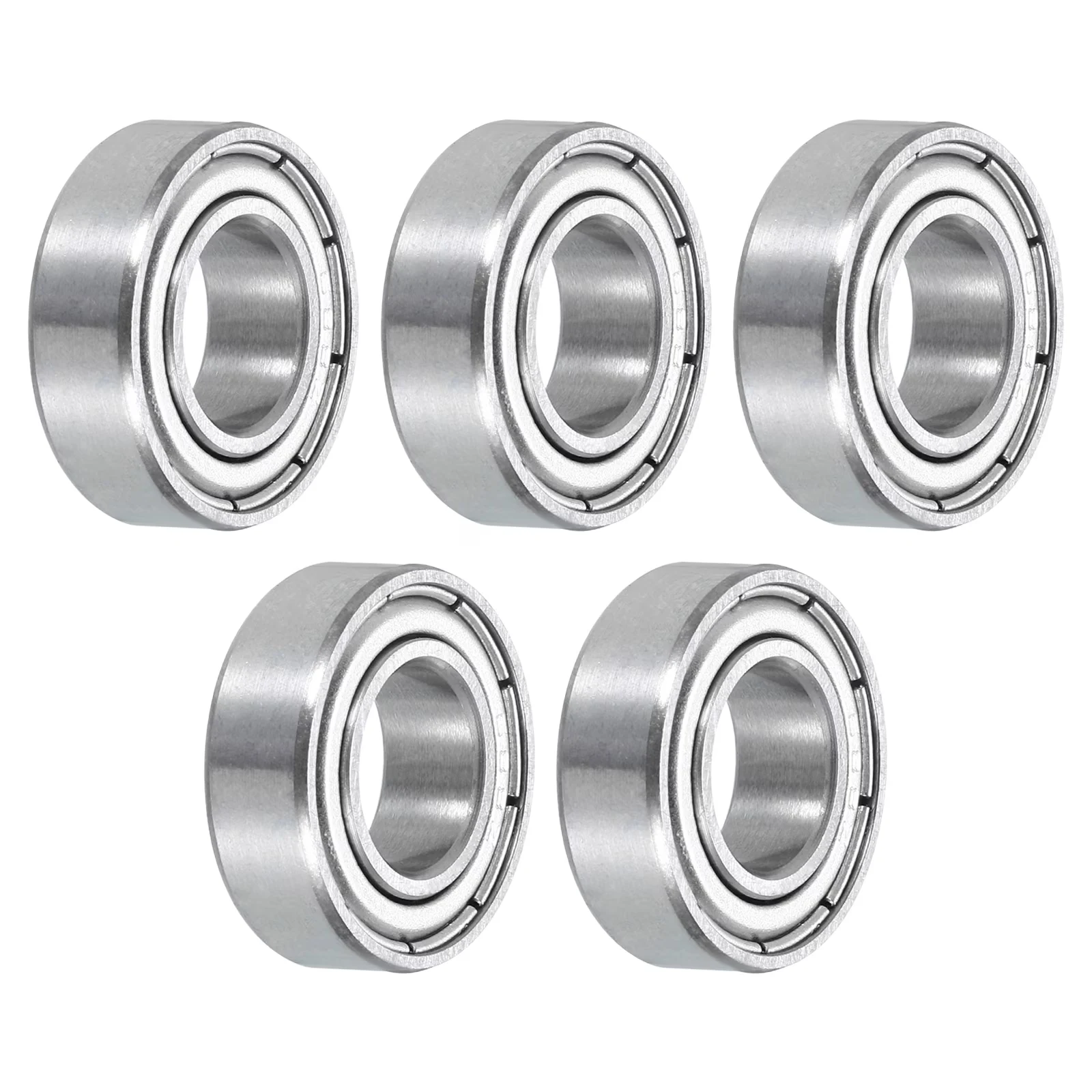 Types de roulements à billes à rainure profonde miniature
Les types de roulements miniatures couvrent le retenteur radial, le pivot, la poussée, le contact radial à grande vitesse, le contact angulaire et les constructions complètes de bille. De nombreux picks sont disponibles dans des tailles de pouces et métriques. Les changements habituels de construction tiennent la rainure profonde standard, les anneaux extérieurs à brides pour une fixation facile, la section mince pour une petitesse maximale et les types d'anneaux intérieurs longs.
Roulements à billes miniatures de taille de pouce
Les roulements à billes miniatures de taille pouce utilisent des unités de mesure anciennes pour les tailles. Ceux-ci apparaissent beaucoup dans les utilisations de travail en Amérique du Nord et l'équipement fabriqué pour les anciennes configurations de mesure. Le diamètre intérieur, le diamètre extérieur et la largeur sont indiqués en pouces ou en parties. Par exemple, 1/8 pouce ou 1/4 pouce fonctionne. Ils correspondent bien aux anciennes pièces. De plus, ils assurent une aide à la charge radiale et axiale dans les points serrés.
Roulements à billes à bride de taille de pouce
Les roulements à billes à bride de taille pouce ont une large lèvre ou bride sur l'anneau extérieur. La bride rend la fixation simple. Il donne une place pour s'aligner contre la maison. Cela réduit le besoin de bords ou de supports supplémentaires. Une telle configuration augmente la tenue latérale. Il convient aux utilisations qui ont besoin d'un endroit exact sous des charges mixtes.
Roulements à billes à bride de taille métrique
Les roulements à billes à bride de taille métrique ajoutent une bride sur la bague extérieure. Ceux-ci gagnent une large utilisation dans les machines exactes du monde. Ils facilitent la mise en place. Ils soulèvent également la puissance de charge axiale. La bride fonctionne comme aide de fixation intégrée. Ainsi, ils conviennent à l'engrenage métrique dans le travail automatique, les outils et les petits moteurs.
Roulements à billes miniatures de taille métrique
Roulements à billes en miniature métriques définissent des tailles par la façon métrique. La plupart du temps, les diamètres intérieurs restent inférieurs à 10 mm. Les règles établies à travers le monde rendent ces roulements communs dans les petites pièces pour les outils précis, l'équipement médical et l'électronique. Les échantillons tiennent des lignes comme 68xx (très léger), 69xx (section mince) et 60xx (régulier). Des modèles comme le 681 (1 mm ID × 3 mm OD × 1 mm de largeur) et le 608 (8 mm ID × 22 mm OD × 7 mm de largeur) conviennent ici.
D'autres types habituels maintiennent les roulements ouverts pour une meilleure perte de chaleur dans les endroits propres, les types blindés (boucliers métalliques ZZ) pour le bloc de saleté sans fermeture complète, et ceux scellés (joints en caoutchouc 2RS) pour la lutte contre la poussière et l'humidité. Les types de brides comme la série MF (par exemple, MF52ZZ, MF128ZZ) et la série MR ajoutent plus de moyens de réparation.
Dimensions et spécifications des roulements miniatures
Gammes de tailles communes
Les roulements à billes à rainure profonde miniatures présentent souvent des diamètres intérieurs inférieurs à 10 mm pour les lignes métriques ou des diamètres extérieurs inférieurs à 9,525 mm pour les lignes de pouces. Les diamètres extérieurs vont de 2 mm à près de 30 mm en petits groupes de bords. Les largeurs varient de 0,8 mm à 10 mm en fonction de la ligne.
Taille du roulement la plus petite
Les plus petites tailles d'ensemble ont un diamètre intérieur de 0,6 mm, un diamètre extérieur de 2,0 mm et une largeur de 0,8 mm.
Roulements miniatures personnalisés
Les usines répondent aux besoins sur commande en changeant le diamètre intérieur, le diamètre extérieur, la largeur, le matériel, le type de cage et la fermeture. Des détails précis, tels que 1 mm ID × 5 mm OD × 2 mm de largeur ou des ajustements impars, permettent de régler pour des besoins spéciaux de charge, de vitesse ou de spot. Les modèles habituels des roulements LQYS sont de 603 à 609, 623 à 629, 633 à 639, 681 à 685. Des sélections bridées comme MF104ZZ à MF95ZZ et MR matches ajouter.
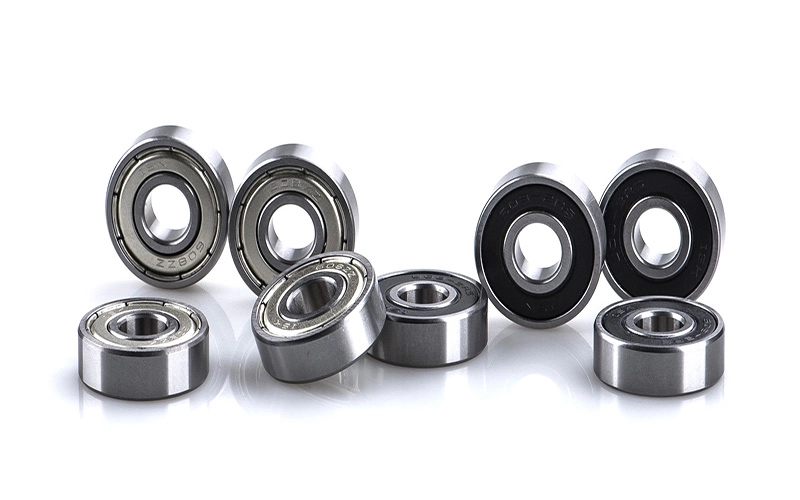
Caractéristiques des roulements à billes à rainure profonde miniature
Les roulements à billes à rainure profonde en miniature brillent dans les petites machines. Leur petit espace aide à la petitesse et à la coupe de poids de l'engrenage complet. Ils présentent un faible taux de frottement, un petit bruit de travail et des besoins légers en huile. La vérité de spin fine et la tenue constante les rendent adaptés au contrôle exact du mouvement. Les caractéristiques supplémentaires protègent la lutte contre la rouille dans les types en inoxydable ou en céramique, une traction faible pour économiser de l'énergie et correspondent à un travail rapide pouvant atteindre des milliers de tours par minute dans des configurations réglées.
Applications de roulements à billes à rainure profonde miniature
Les roulements à billes à rainure profonde en miniature aident de nombreux champs qui ont besoin d'une petite rotation forte.
Roulements miniatures pour applications à grande vitesse
Ces roulements montrent dans les machines exactes et l'engrenage automatique. Cela contient des outils de fabrication de puces, des configurations légères et des arbres rapides. Ils soutiennent également de minuscules moteurs, moteurs à pas, disques durs, imprimantes, appareils photo numériques, capteurs et débitmètres. Leur aptitude à prendre des vitesses élevées avec des ascenseurs à faible tremblement fonctionne dans des équipements électriques et outils.
Roulements miniatures de précision
Les types hautement détaillés répondent à des appels stricts dans les outils de tournage aérospatiaux et les configurations de guidage, les outils de travail automatiques et l'équipement médical comme les perceuses dentaires et les scopes d'apparence. Leur travail constant assure un véritable rendement. Même les petits glissements changent les résultats là-bas.
Roulements Hobby
Dans les modèles et les équipements amusants, les roulements miniatures coupent frotter dans les voitures de commande éloignées, les avions, les navires et les modèles de machines exactes. Ils arrière roues, lames, lignes d'entraînement, et contrôler les côtés. Cela soulève la vitesse, le travail et la durée dans des utilisations amusantes.
De plus en plus d’applications atteignent les nouvelles voitures électriques (petits moteurs électriques et moteurs), la robotique (pièces jointes et entraînements précis) et l’engrenage intelligent. Roulements LQYS donne des roulements miniatures adaptés à ces points exacts et de petits mouvements sur les champs de la machine, de la voiture et de l'électricité.
Choisir le bon roulement à billes à rainure profonde en miniature
La sélection consiste à vérifier de nombreuses pièces techniques pour correspondre aux appels d'utilisation.
Exigence de vitesse
Les roulements à billes donnent souvent des vitesses supérieures plus élevées que les types de rouleaux. Cela vient des forces de tirage inférieures. Les pièces de rouleau plus petites en lignes étroites coupent le démarrage lourd. Ils aiment donc un RPM plus élevé. Les formes de cage fonctionnent: les cages dures (clé en bronze) permettent des vitesses plus élevées que celles estampillées. Le type et la quantité d'huile forment également la vitesse maximale. Les huiles artificielles ou les moyens d'huile-air battent souvent les remplissements d'ensemble dans les taches dures. Pour des vitesses très élevées, choisissez des types de rainures profondes avec une courbe de piste réglée et des cages à faible frottement.
Facteur environnemental
Des endroits de travail tels que la taille et la façon de charger, la chaleur de l'air, l'humidité et les picks de guide de la face de la saleté. Les roulements fermés ou couverts protègent contre la poussière et l'humidité. Les matériaux en acier inoxydable ou en céramique luttent contre la rouille dans les endroits rugueux ou humides. L'huile droite coupe l'usure. Il correspond également aux plages de chaleur. Dans des endroits propres et réglés, les roulements ouverts peuvent fonctionner pour un meilleur refroidissement.
Considérations techniques étendues dans les roulements à billes à rainure profonde miniature
Matériaux et détails de construction
L'acier de roulement donne une lutte fine dure et fatiguée après une réparation thermique exacte. Les types d'acier inoxydable stimulent la lutte contre la rouille pour des utilisations médicales ou alimentaires. Les boules en céramique avec des anneaux en acier (mixtes) ou des constructions en céramique complète donnent une capacité de vitesse maximale, un poids plus faible et un bloc de puissance. Les cages, souvent en acier pressé ou en polyamide, maintiennent l'espace de la boule. Ils coupent aussi le rub.
Options d'étanchéité et de blindage
Roulements ouverts vitesse maximale et perte de chaleur. Mais ils ont besoin d'endroits propres. Les couvercles métalliques (ZZ) offrent une protection sans contact contre les gros morceaux. Les fermetures tactiles en caoutchouc (2RS) rapprochent le haut avec une petite perte de vitesse. No-touch ferme la protection mixte et la traction basse.
Classes de précision et de tolérance
Les roulements miniatures adhèrent souvent à des niveaux élevés de détail pour un petit secoussement et même un travail. Classes serrées coupe shake dans des outils doux. Les picks d'espace intérieur (extra serrés à extra libres) s'adaptent aux besoins de croissance thermique ou de précharge.
FAQ
Qu'est-ce qui définit un roulement à billes à rainure profonde miniature?
Les roulements à billes à rainure profonde en miniature présentent souvent des diamètres extérieurs inférieurs à 9 mm (métrique) ou 9,525 mm (pouce). Les diamètres intérieurs sont aussi petits que 0,6 mm. Ils supportent des charges radiales et axiales légères avec des détails fins et un son doux.
Quels matériaux sont couramment utilisés dans les roulements miniatures?
Les objets habituels contiennent l'acier chromé pour les utilisations définies, l'acier inoxydable pour la lutte contre la rouille et la céramique pour les besoins rapides ou bloqués. Les cages peuvent utiliser de l'acier ou du polymère.
Quelles options d'étanchéité existent-elles pour les roulements à billes à rainure profonde miniatures?
Les picks restent ouverts (sans fermeture), ZZ (couvercles métalliques) et 2RS (fermetures tactiles en caoutchouc). Le choix repose sur le risque de saleté vs appels de vitesse.
Comment les roulements miniatures à brides améliorent-ils l'installation?
La bride intégrée sur la bague extérieure donne une ligne latérale et simplifie le plan de la maison. Cela réduit le temps coupé et augmente régulièrement.
Quelles applications utilisent couramment ces roulements?
Les utilisations habituelles couvrent les petits moteurs, l'équipement médical, la robotique, les outils exacts, les modèles amusants, les disques durs et les petites pièces automobiles.
Partenariez avec un fabricant et un vendeur de confiance pour vos besoins en roulements miniatures
En tant que fabricant et vendeur, Roulements LQYS apporte des roulements à billes à rainure profonde en miniature avec de nouvelles compétences de fabrication et le monde envoie savoir. Si vous avez besoin de modèles de série, de tailles sur commande ou d'OEM pour des plans de taille de travail, LQYS Bearings offre des solutions équitables soutenues par de nouveaux tests et une construction fine. Contactez-nous maintenant par email à salesjake@lqysbearing.comTéléphone 8613002187311 ou WhatsApp 8618013237311 pour discuter des détails, demander des prix ou définir des échantillons. Vérifiez l'ensemble complet de roulements miniatures et d'autres articles sur le site LQYS Bearings pour vous assurer que les pièces qui soulèvent fonctionnent dans des utilisations exactes. Contactez l'équipe d'experts maintenant pour un approvisionnement efficace et des opportunités de partenariat à long terme.