
IKO Bearings: Your Ultimate Guide
2026-04-23Introduction to IKO Bearings
IKO Bearings stand as a well-known series of precision motion parts. People recognize them widely in many industrial uses. They come from Nippon Thompson Co., Ltd. IKO focuses on needle roller bearings, linear motion products, and other rotary and plain bearings. These parts give compact designs, strong load capacity, and steady performance in tough conditions.
This guide explains the main types, technical details, ways to choose them, and real-world uses. Many manufacturers and equipment builders look for IKO-compatible or equivalent options. They want cost-effective yet high-quality choices that keep the same sizes and performance levels.
Understanding Needle Roller Bearings
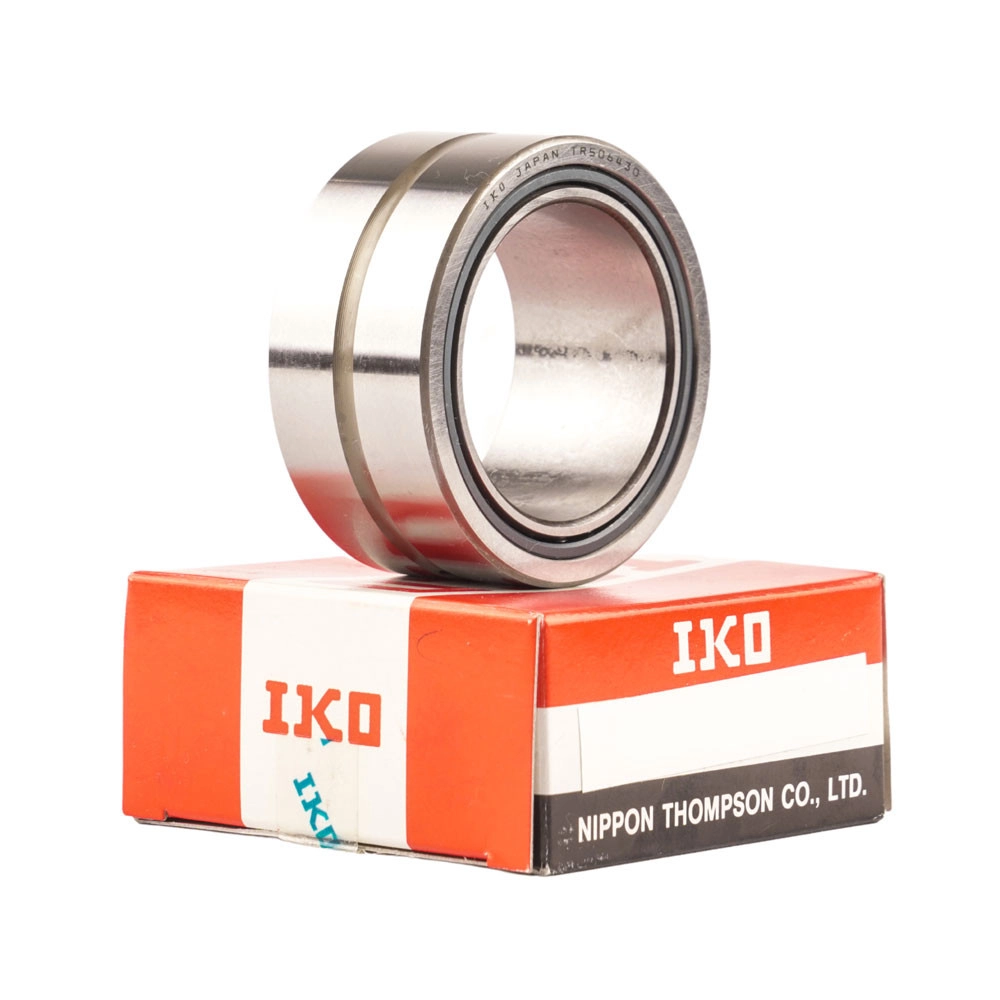
針ローラーベアリング use thin cylindrical rollers. These rollers create a large contact area inside a small cross-section. The design supports high radial loads and still keeps the bearing quite small. As a result, they work well in machines where space is limited.
Shell Type Needle Roller Bearings
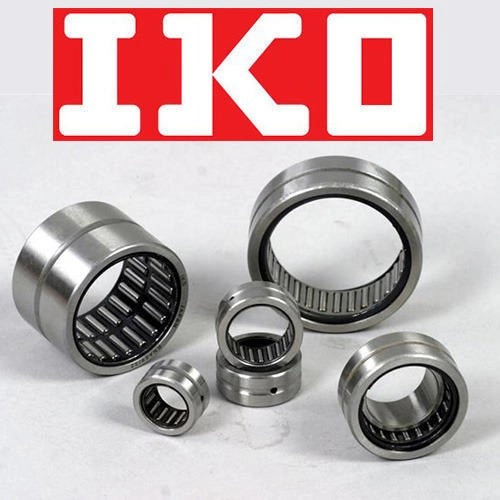
Shell type versions have a thin outer ring made from steel strip. Inside, they hold a needle roller and cage assembly. These bearings stay lightweight and offer high load ratings. Popular series include TA, TLA, BA, and BAM types. They fit applications that need compact radial support. Often, they run without an inner ring.
Machined Type Needle Roller Bearings
Machined type bearings use a precision-ground outer ring. Many also include an inner ring. This setup brings higher rigidity and better accuracy. Series such as NA, RNA, TAFI, and TRI give choices for separable or non-separable designs. C-Lube versions add built-in lubrication technology. This feature helps extend service time without much maintenance.
Needle Roller Cages
Needle roller cages guide and hold the rollers. They appear in engine connecting rods or other mechanisms. KT and KTV series allow high-speed work with less friction. These parts improve durability in systems with back-and-forth motion.
Linear Motion Products from IKO
Linear motion rolling guides allow precise and low-friction movement in automated equipment. IKO linear ways and guides join rails with carriages. The carriages use ball or roller elements for smooth travel.
Miniature Linear Way Series
Miniature linear ways target small precision instruments and compact automation devices. Standard and wide variants meet different load and stiffness needs. These guides keep high repeatability with very little clearance.
Crossed Roller Bearings and Ways
Crossed roller bearings place rollers at 90 degrees in a V-shaped groove. This arrangement creates high rigidity and accurate rotation in a slim shape. CRB, CRBC, and CRBH series handle combined radial, thrust, and moment loads. Types with mounting holes and super-slim designs add more flexibility. They suit machine tools and robotic arms.
Linear Motor Tables and Positioning Systems
Integrated linear motor tables combine guides with direct-drive motors. They provide high-speed and backlash-free positioning. These systems cut settling time when compared to traditional ball screw drives. They help in semiconductor and medical device assembly work.
Other IKO Bearing Types
Cam Followers and Roller Followers
Cam followers have a thick outer ring. It rolls along cam profiles and manages shock loads in tracking tasks. C-Lube cam followers reduce the need for frequent relubrication. Roller followers do similar jobs with crowned or cylindrical outer surfaces.
Spherical Bushings and Rod Ends
Spherical bushings handle misalignment in joints. They support heavy loads in construction and linkage systems. Rod ends allow controlled angular motion and resist bending.
Thrust Bearings and Combined Types
Thrust needle and roller bearings deal with axial loads. Combined needle roller bearings put radial and thrust parts into one unit. This design simplifies assembly in transmissions and gearboxes.
Key Specifications and Technical Considerations
IKO bearings follow strict size standards. Bore diameters, outside diameters, and widths decide if parts can interchange. Dynamic and static load ratings help with life calculations under certain speeds and conditions.
Clearance, fit tolerances, and lubrication methods affect how well the bearings perform. Many IKO products use special coatings or seals for dirty or hot environments. Accuracy classes go from standard to precision grades for machine tool needs.
Load calculations consider radial, axial, and moment forces. Basic rating life formulas predict how long the bearing will last. Static safety factors stop permanent deformation under heavy loads.
Selection Criteria for IKO Bearings
Good selection starts with clear operating conditions. These include load size and direction, speed, temperature range, and surrounding factors. Space limits often point toward needle roller or crossed roller designs.
Engineers check rigidity needs, misalignment tolerance, and how easy maintenance will be. For linear systems, stroke length, acceleration, and positioning accuracy guide the choice of guides.
Cross-reference charts help match IKO part numbers with equivalents from other brands. They base the match on main dimensions. Still, full interchangeability needs checks on load ratings, clearance, and material details.
Applications Across Industries
IKO bearings work in many sectors because of their flexibility and small size.
Automotive and Transportation
Needle roller bearings show up in transmissions, engines, and chassis parts. Linear guides assist with seat adjustments and automated assembly lines. Cam followers manage valve trains and suspension linkages.
Industrial Machinery and Robotics
Crossed roller bearings deliver precision in robot joints and indexing tables. Linear motion products enable accurate movement in CNC machines, pick-and-place systems, and packaging equipment.
Medical and Semiconductor Equipment
Miniature linear ways and clean-room compatible guides provide smooth, particle-free motion in scanners, analyzers, and wafer handling systems. High repeatability supports exact positioning.
Construction and Heavy Equipment
Spherical bushings and rod ends control articulation in excavators and cranes. Roller bearings stand up to shock loads in sheaves and heavy-duty conveyors.
Textile, Steel, and Mining
Needle and cylindrical roller bearings run reliably in high-speed spinning frames, rolling mills, and conveyor systems that face dust or vibration.
Additional uses cover railway systems, power generation equipment, papermaking machinery, and oil field equipment. In these areas, high load capacity and compact size help cut machine weight and overall space.
Material and Manufacturing Aspects
High-carbon chrome steel serves as the usual material for rings and rollers. Workers heat-treat it for hardness and fatigue resistance. Stainless steel versions solve corrosion issues. Cages often use pressed steel or special polymers to lower weight and noise.
Modern production applies advanced grinding and super-finishing steps. These steps reach tight tolerances. Quality tests include dimensional checks, rotational accuracy tests, and endurance validation.
Advantages of Precision Bearing Solutions
Compact designs let machines stay smaller without losing load capacity. High rigidity reduces deflection under load and improves positional accuracy. Low friction supports higher speeds and better energy efficiency.
Maintenance-free options with built-in lubrication extend service life and lower downtime. Interchangeability with common standards makes retrofitting and global sourcing easier.
Expanded Technical Insights: Bearing Life and Performance Optimization
Bearing life prediction follows ISO standards. It uses dynamic load ratings and equivalent loads. Factors like contamination, lubrication condition, and misalignment multipliers change the calculated life.
For linear guides, service life depends on load, speed, and stroke patterns. Manufacturers supply life calculation tools that consider these elements.
Sealing and shielding choices protect against particles or moisture. Labyrinth or contact seals balance protection against added friction.
Design Integration Best Practices
Shaft and housing fits must match the suggested tolerances. This avoids too much preload or looseness. Correct mounting steps prevent brinelling during installation.
Alignment checks during assembly ensure even load distribution across rollers or balls. Lubrication intervals differ by type. Grease-packed or oil-lubricated systems need regular monitoring.
In linear systems, rail parallelism and carriage preload settings improve smoothness and stiffness. End supports and damping elements cut vibration in long-stroke setups.
モバイルバージョンを終了
What are the main types of IKO bearings?
IKO offers needle roller bearings (shell type, machined type, cages), linear motion guides, crossed roller bearings, cam followers, spherical bushings, rod ends, and thrust bearings.
How do needle roller bearings differ from ball bearings?
Needle roller bearings use slender rollers for higher radial load capacity in compact spaces, while ball bearings typically handle combined loads with lower friction at very high speeds.
Are IKO linear guides suitable for cleanroom applications?
Yes, many miniature and standard linear ways feature designs compatible with cleanroom environments, especially those with corrosion-resistant materials or special seals.
結論
Business seeking reliable, high-precision bearing solutions benefit from partnering with an established producer that controls quality from raw materials through final testing. 完璧なシーリング is manufacturer and seller, offering a comprehensive range of angular contact ball bearings, automobile bearings, ball bearings, cylindrical roller bearings, linear bearings, miniature bearings, needle roller bearings, pillow block bearings, self-aligning ball bearings, spherical roller bearings, tapered roller bearings, and thrust ball bearings.
With advanced production equipment, modern testing facilities, and a 12,000 m² manufacturing base, LQYS Bearings delivers products widely applied in mechanical equipment, automotive, railway, steel, textile, metallurgy, mining, and other industrial fields. The company exports to over 30 countries and maintains certifications that underscore commitment to precision and consistency.
For bulk inquiries, OEM specifications, or custom bearing solutions tailored to specific load, speed, or environmental demands, contact LQYS Bearings directly. Reach out via email at salesjake@lqysbearing.com, telephone +8613002187311, or WhatsApp +8618013237311 to discuss requirements, request catalogs, or arrange samples. Manufacturers and sellers gain competitive advantages through stable supply, technical support, and cost-effective high-quality alternatives that align with global industrial standards.