

Как составить список критически важных запасных частей для подшипников: планирование запасов SKF, NSK и NTN.
2026-08-13

Список критически важных запасных частей для подшипников должен предотвратить две дорогостоящие проблемы: избыточные запасы, которые редко используются, и недоступность критически важных для производства подшипников при остановке оборудования. Эффективное планирование запасных частей для подшипников начинается с критичности оборудования, а не только с цены подшипника или его предыдущего потребления. Список должен связывать каждый установленный подшипник с его местоположением на оборудовании, полным обозначением, последствиями отказа, сроками поставки, утвержденными альтернативами, минимальным запасом и моментом, запускающим повторный заказ. Такой подход помогает командам по техническому обслуживанию и закупкам MRO подготовиться к отказам, не рассматривая каждый подшипник как аварийную запасную часть.
Почему планы по выпуску запасных частей для подшипников терпят неудачу без ранжирования по критичности
Оцените оборудование по таким параметрам, как время простоя, безопасность, качество и влияние на восстановление.
Начните с ранжирования оборудования, а не компонентов. Подшипник, установленный в резервном вентиляторе, не создает таких же коммерческих рисков, как подшипник, поддерживающий отдельный редуктор производственной линии, технологический насос или критически важный двигатель.
Оцените каждый актив по следующим критериям:
-
Потеря производства, если его остановить;
-
последствия для безопасности или соблюдения нормативных требований;
-
влияние на качество продукции;
-
наличие резервного оборудования;
-
время, необходимое для доступа к нему и его ремонта;
-
стандартный срок поставки подшипников;
-
наличие утвержденного временного решения.
Недорогой подшипник может оставаться критически важной запасной частью, даже если его отсутствие останавливает весь производственный процесс. И наоборот, дорогостоящий подшипник может не требовать наличия на местном складе, если резервирование оборудования и короткий, подтвержденный срок поставки обеспечивают приемлемую защиту. Аналогичным образом, материалы SKF по управлению запасными частями связывают уровни запасов с критичностью активов, доступностью, параметрами повторного заказа и риском дефицита.
Классифицируйте подшипники как критически важные, имеющиеся на складе повседневного спроса или не имеющиеся на складе.
После завершения ранжирования активов классифицируйте каждый подшипник по одной из трех практических групп.
Критически важная запасная часть необходима, когда ее отсутствие на складе приведет к неприемлемым простоям, угрозе безопасности, потере качества или задержке восстановления. Подшипник, имеющийся на складе по стандартной схеме, имеет предсказуемое использование и может управляться с помощью обычных минимальных и максимальных уровней запасов. Подшипник, отсутствующий на складе, имеет низкую вероятность отказа, короткое время закупки, надежные альтернативы или достаточное предупреждение перед заменой.
Такая классификация позволяет избежать двух распространенных ошибок: рассматривать каждый часто используемый подшипник как критически важный и предполагать, что низкий уровень исторического потребления означает отсутствие необходимости в складских запасах. Редко используемый подшипник с длительным сроком поставки на нерезервированном оборудовании может иметь более высокий приоритет, чем стандартный подшипник, выпускаемый ежемесячно.
Перед установлением складских количеств составьте основной список подшипников.
Укажите полное обозначение, актив и координаты.
В основной перечень подшипников должно входить не только базовый код, такой как 6205 или 22212. Подшипники с одинаковым базовым обозначением могут отличаться внутренним зазором, уплотнениями, защитными экранами, конструкцией сепаратора, точностью, конфигурацией отверстий, смазкой или другими характеристиками, определяемыми суффиксом.
Запишите полное обозначение подшипника, чертеж, руководство по эксплуатации оборудования или утвержденный документ о закупке. Также укажите точное положение, например, со стороны привода двигателя, со стороны, противоположной приводу двигателя, на входном валу редуктора или на внешней стороне насоса. Это предотвратит ситуацию, когда два физически похожих подшипника будут считаться взаимозаменяемыми без технической проверки.
В случаях неполной идентификации следует сохранять фотографии, измеренные размеры, сведения об оборудовании, информацию о корпусе, а также ссылки на чертежи или записи о предыдущих покупках. Компания LQYS уже ведет отдельный справочник суффиксов, поэтому в критическом списке следует указывать полный код, не превращая инвентаризационный документ в словарь суффиксов.
Выявление дублирующих подшипников и общих запасных частей на разных станках.
Дублирование складских запасов часто возникает, когда отделы технического обслуживания, проектирования и закупок используют разные внутренние описания для одного и того же подшипника. Один отдел может указывать обозначение марки, другой — номер производителя оборудования, а третий — только основные размеры.
Сравните записи, используя полное обозначение и требования к применению. Убедитесь, что одна запасная часть может обслуживать несколько идентичных двигателей, насосов, вентиляторов или редукторов. Затем запишите общую установленную базу, обслуживаемую этим элементом.
Не следует объединять записи только потому, что совпадают размеры. Для прецизионных подшипников, комплектов, изделий со специальными зазорами, предварительно смазанных подшипников, изолированных конструкций и конфигураций, предназначенных для конкретных областей применения, может потребоваться отдельный складской учет. Утвержденные альтернативы должны оставаться связанными с исходным изделием, а не заменять его техническую идентичность.
| Критическое поле списка подшипников | Что записывать |
|---|---|
| Актив и позиция | Идентификатор станка и точное местоположение подшипника. |
| Полное обозначение | Полная модель и суффикс |
| Статус бренда | Установлены товары известных брендов и одобренные альтернативы. |
| Установленное количество | Подшипники на машину и количество идентичных активов |
| Критичность | Критически важные, стандартные или нескладируемые товары |
| Время выполнения | Подтвержден нормальный период пополнения запасов |
| Минимальный запас | Утвержденное на объекте количество |
| Триггер переупорядочивания | Количество или событие, которое запускает процесс покупки. |
| Обзор хранилища | Дата проверки упаковки и состояния |
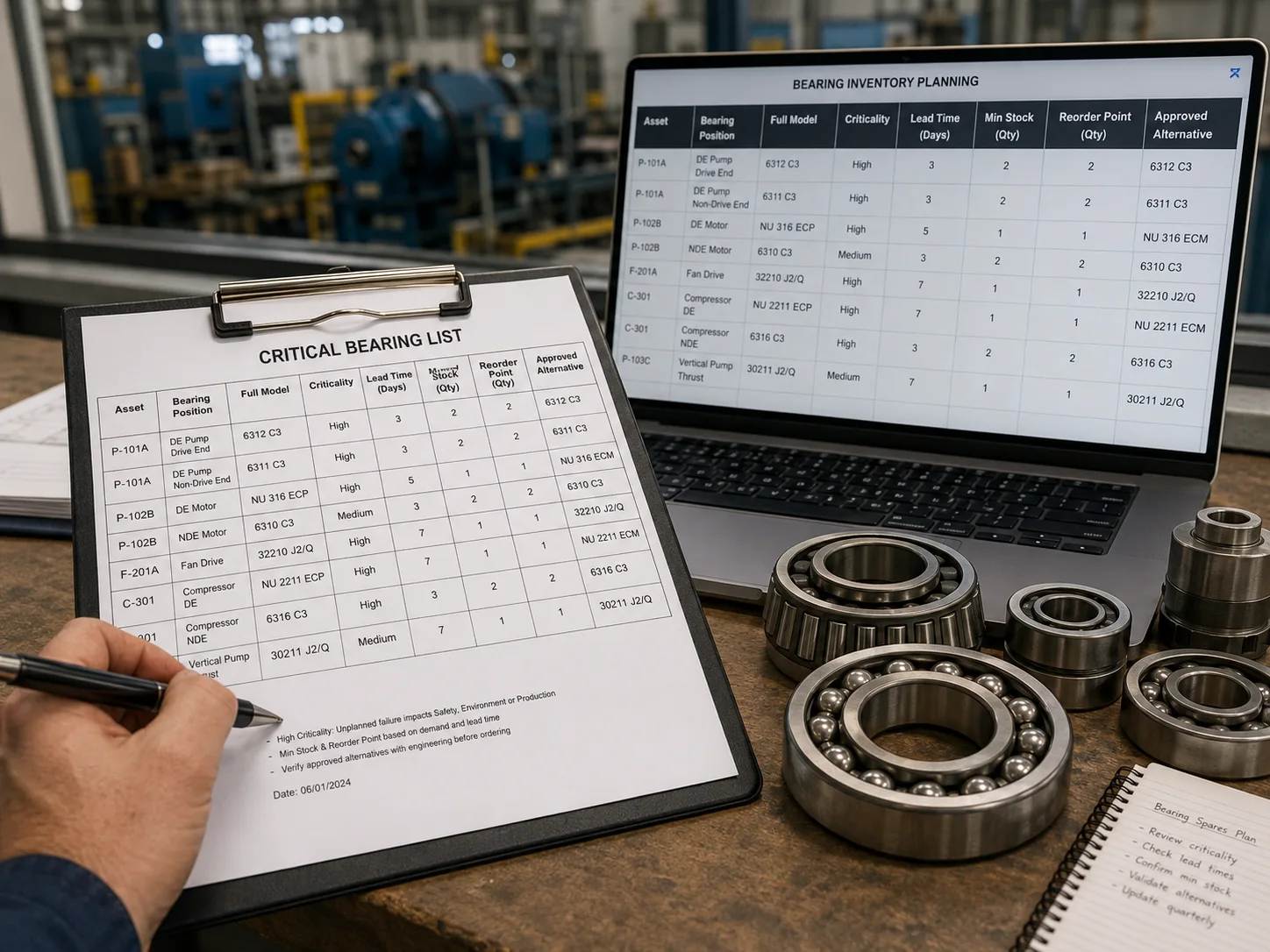
Определите, какие подшипники необходимо держать на складе.
Сочетание последствий отказа, времени выполнения и предсказуемости.
История использования подшипников полезна, но не должна быть единственным фактором при планировании запасных частей. Подшипник, у которого не зафиксировано отказов, все равно может нуждаться в складских запасах, если он установлен в критически важном оборудовании и его замена занимает месяцы. Часто используемый стандартный подшипник может нуждаться лишь в плановом пополнении, если несколько поставщиков могут быстро его обеспечить.
Учитывайте общее количество установленного оборудования, историю наблюдаемых отказов, возможности мониторинга состояния, подтвержденное время выполнения заказа, плановый спрос на остановку производства, продолжительность ремонта и наличие альтернативных вариантов. Прогнозируемое техническое обслуживание может снизить риск аварийных ситуаций при раннем обнаружении износа, но оно не устраняет необходимость в запасном оборудовании, если период предупреждения короче времени закупки.
В случае с новым оборудованием, для которого отсутствуют достоверные данные о потреблении, следует начать с анализа последствий и рисков, связанных с поставками, а затем пересмотреть решение о наличии запасов по мере развития истории эксплуатации.
К подшипникам с длительным сроком поставки, устаревшим и малоиспользуемым подшипникам следует подходить по-разному.
Низкий уровень использования не обязательно оправдывает отсутствие запасов. Специальные подшипники для устаревших станков, импортного прецизионного оборудования, подобранных узлов и нестандартных размеров могут быть сложны в замене после поломки.
По этим вопросам необходимо уточнить, доступна ли оригинальная модель, существует ли технически проверенная альтернатива и может ли плановый капитальный ремонт устранить зависимость. Комплект для остановки производства может быть целесообразен, если несколько связанных подшипников обычно заменяются одновременно во время планового технического обслуживания.
Не следует закупать большие объемы только потому, что определенная модель может устареть. Сначала необходимо проверить потребности в оборудовании, план вывода оборудования из эксплуатации, риски, связанные с хранением, и реалистичное будущее потребление. Решение должно гарантировать доступность оборудования, не превращая неопределенный спрос в постоянный избыток запасов.
Установите минимальный уровень запасов и точки повторного заказа.
Используйте данные об установленной базе, потреблении, времени выполнения заказа и планах остановок.
Универсального ответа на вопрос о том, сколько запасных подшипников должно быть на складе завода, не существует. Для подшипника, установленного в двух некритичных агрегатах, требуется иная политика, чем та, которая применяется ко всем сорока производственным двигателям.
Укажите необходимое количество, исходя из числа установленных позиций, истории отказов или проблем, нормального и наихудшего времени выполнения заказа, планового спроса на остановку производства, минимального объема заказа и допустимого времени простоя. Также учтите, требуется ли обычно замена одного подшипника, пары или полного комплекта подшипников в случае отказа.
Для периодического критического спроса более полезным может оказаться простой, утвержденный на месте минимальный уровень, чем сложная формула, основанная на недостаточных данных. Для подшипников с постоянным потреблением отдел закупок может использовать точку повторного заказа, привязанную к ожидаемому спросу в течение периода пополнения запасов.
Предотвращение дублирования страхового запаса и ложной доступности.
Системы учета могут отображать подшипник как доступный, даже если он не может использоваться для запланированного ремонта. У изделия может быть неправильный суффикс, оно может быть зарезервировано для следующего планового останова, иметь поврежденную упаковку или существовать под дублирующимся складским кодом в другом месте.
Проверка инвентаризации должна подтвердить полную модель, количество, состояние, местоположение и статус распределения. Удалите дублирующиеся настройки минимального запаса, если один утвержденный товар охватывает несколько машин. Не учитывайте непроверенные перекрестные ссылки или испорченные запасы как пригодные для использования.
После каждой поломки необходимо назначать ответственного за пополнение запасов. Без четко определенного ответственного лица и механизма повторного заказа критически важный запасной элемент может оставаться в нулевом количестве до тех пор, пока следующая поломка не выявит проблему.
Варианты замены оборудования SKF, NSK и NTN в соответствии с планом
Сохраняйте фирменные запасные части, когда важна конфигурация.
Гибкость в выборе бренда может снизить риски, связанные с поставками, но в некоторых областях применения следует сохранять проверенный бренд, серию или соответствующую конфигурацию. Примерами могут служить прецизионные подшипниковые узлы, специальные внутренние конструкции, зазоры, специфичные для конкретного применения, фирменные уплотнения, нестандартные системы смазки и конфигурации, одобренные производителем оборудования.
Совпадающие базовые размеры не доказывают технической эквивалентности. Перед заменой подшипника SKF, NSK или NTN необходимо подтвердить полное обозначение, внутренний зазор, класс точности, герметичность, сепаратор, допустимую скорость вращения, требования к нагрузке, посадку, смазку и способ крепления.
В тех случаях, когда производительность оборудования, гарантия или проверка соответствия требованиям зависят от исходной конфигурации, сохраните запасное колесо конкретной марки или получите официальное техническое одобрение, прежде чем добавлять альтернативный вариант в список критически важных подшипников.
Используйте утвержденные перекрестные ссылки для тщательного сокращения складских запасов.
Стандартные промышленные подшипники могут подходить для сравнения с продукцией разных производителей, если их технические требования полностью определены. При сравнении следует учитывать не только диаметр отверстия, наружный диаметр и ширину.
Проверьте допустимые нагрузки, зазоры, уплотнения или защитные кожухи, конструкцию корпуса, точность, соответствие скорости и температуре, смазку, монтажную посадку и условия эксплуатации. При значительном риске следует изучить чертежи, получить образец или проверить альтернативный вариант во время планового технического обслуживания, а не во время аварийной поломки.
Утвержденные альтернативы регистрируются как связанные варианты с указанием даты утверждения и ответственного инженера. Это позволяет сократить дублирование запасов, сохранить отслеживаемость и предотвратить выбор закупочными группами непроверенной замены в условиях сжатых сроков поставки.
Хранение и проверка критически важных запасных частей для подшипников
Обеспечьте сохранность упаковки, надлежащие условия хранения и ротацию запасов.
Важные запасные части пригодны к использованию только в том случае, если они остаются пригодными для установки. Храните подшипники в оригинальной упаковке до тех пор, пока они не понадобятся, в чистом, сухом, хорошо проветриваемом месте, вдали от прямых солнечных лучей, конденсата, коррозионных паров и влаги на уровне пола.
В рекомендациях NSK по обращению с подшипниками рекомендуется хранение на полках или в шкафчиках, а не непосредственно на полу, и особое внимание уделяется низкой влажности и чистым условиям. В инструкциях по техническому обслуживанию также указывается на необходимость сохранения оригинальной упаковки и контроля влажности при хранении подшипников.
Используйте метод FIFO (первым поступил — первым выдан) в качестве метода ротации запасов, но не рассматривайте возраст как единственный критерий приемки. Состояние упаковки, защита от коррозии, условия хранения, а также состояние уплотнений или заводской смазки могут различаться в зависимости от типа подшипника и производителя.
Просмотрите список после технических изменений и изменений в поставках.
Список критически важных подшипников — это не одноразовая электронная таблица. Его следует пересматривать после повторяющихся отказов, необычного расхода, модификаций оборудования, запуска новых производственных линий, вывода оборудования из эксплуатации, изменения сроков поставки от поставщиков, прекращения производства продукции и крупных остановок производства.
Повторяющиеся отказы могут указывать на то, что запасы расходуются из-за нерешенной проблемы, связанной с применением, смазкой, выравниванием или загрязнением. Увеличение запасов без изучения механизма отказа может скрыть техническую причину и повысить себестоимость запасов.
По крайней мере, одно ответственное подразделение должно утверждать изменения в критичности, минимальном количестве, полных обозначениях и альтернативных вариантах. Подразделения технического обслуживания, надежности, проектирования и закупок должны работать с одной и той же контролируемой документацией.
Превратите список критически важных подшипников в запрос предложений и анализ поставщиков.
Подготовьте запрос на коммерческое предложение (RFQ) с полными техническими и коммерческими данными.
Поставщик не сможет точно оценить критически важный перечень подшипников, содержащий только сокращенные номера моделей. В каждом запросе предложений должны быть указаны полное обозначение, марка установленного оборудования, утвержденные альтернативы, положение оборудования, требуемое количество, приоритет поставки и предполагаемый тип закупки.
Разделите элементы на аварийные, аварийные и плановые. Укажите предполагаемое годовое потребление, текущий доступный запас, целевую дату поставки, чертежи, фотографии или образцы в случаях, когда идентификация вызывает сомнения. Укажите любые требования к упаковке и отслеживаемости, а также идентифицируйте подшипники, которые должны поставляться парами или комплектами.
Он Подшипники LQYS На сайте представлены различные категории промышленных подшипников, а также отражена роль компании в производстве, продажах, торговле и экспорте. В опубликованных материалах также обсуждается вопрос поставок подшипников SKF, NSK, NTN и других брендов, а также более широкий ассортимент подшипников компании.
Оцените наличие, отслеживаемость, альтернативы и возможность повторных поставок.
Подходящий поставщик подшипников различных марок должен подтвердить все характеристики моделей перед предоставлением коммерческого предложения, различать наличие на складе и предполагаемые объемы закупок, а также объяснить, прошла ли альтернативная модель техническую экспертизу. Покупателям также следует уточнить состояние упаковки, доступную информацию об отслеживаемости, реалистичные сроки поставки и ожидания относительно повторных поставок.
Единовременный избыток запасов может решить проблему немедленного дефицита, но может оказаться недостаточным для удовлетворения постоянных потребностей в техническом обслуживании и ремонте. При принятии решений о долгосрочных поставках следует учитывать не только цену за единицу продукции, но и стабильность поставок.
Информация о компании доступна по адресу: О подшипниках LQYSНа сайте компания Shanghai Yongheshun Import and Export Co., Ltd. указана как производитель и продавец подшипников различных типов, однако любые заявления об официальной авторизации конкретной международной марки следует проверять отдельно, а не предполагать, исходя из статуса дистрибьютора.
Вывод
Полезный список критически важных запасных частей для подшипников содержит информацию о назначении оборудования, полной идентификации подшипника, сроках поставки, количестве установленных деталей, уровне запасов, утвержденных альтернативах и условиях хранения. Начните с критически важного оборудования, удалите дублирующиеся записи, установите практические триггеры для повторного заказа и пересматривайте список при каждом изменении оборудования или условий поставки.
Для уточнения наличия товара или получения сводного предложения, представить список критически важных подшипников для проверки С полными обозначениями, суффиксами, данными об активах, количеством, необходимыми датами, чертежами и фотографиями, компания LQYS Bearings сможет ответить, основываясь на предоставленных данных о продукции и закупках, не полагаясь на неполные базовые данные.
Часто задаваемые вопросы
Какие подшипники завод должен хранить в качестве критически важных запасных частей?
Необходимо сохранять подшипники, отсутствие которых может привести к неприемлемым последствиям для производства, безопасности, качества или восстановления. Также следует учитывать сроки поставки, резервирование оборудования, предсказуемость отказов и наличие утвержденных альтернатив.
Сколько запасных подшипников следует хранить на складе?
Количество зависит от установленного оборудования, истории отказов, сроков поставки, плановых остановок, установленных требований и допустимого времени простоя. Единого, подходящего количества для каждого завода не существует.
Как установить точку повторного заказа для подшипникового оборудования?
Используйте прогнозируемый объем потребления в течение подтвержденного периода пополнения запасов, плановый спрос на техническое обслуживание, необходимый минимальный запас и риск увеличения срока поставки. Назначьте четкий триггер закупки и ответственного за нее.
Можно ли использовать подшипники SKF, NSK и NTN в качестве альтернативы?
В качестве альтернативы могут быть рассмотрены некоторые стандартные подшипники, но перед утверждением необходимо подтвердить их полное обозначение, зазор, точность, уплотнения, сепаратор, смазку, нагрузку, скорость, посадку и область применения.
Как следует хранить запасные подшипники в течение длительного времени?
Храните их в оригинальной упаковке в чистом, сухом, хорошо проветриваемом месте, не на полу и вдали от влаги и коррозионных загрязнений. Применяйте ротацию запасов и периодически проверяйте упаковку и состояние товара.