

A Procurement Guide to Miniature Deep Groove Bearings for Electronic Equipment
2026-05-21In electronic equipment manufacturing, miniature ball bearings for electronics are usually judged by much more than price or model number. A small bearing inside a cooling fan, encoder, sensor module, compact motor, gimbal, office device, or robotics unit may look like a standard purchased part, but its running condition can affect noise, current draw, shaft stability, heat, product feel, and field life. For OEM buyers, distributors, and production engineers, miniature deep groove ball bearings need to be checked against real working conditions, including size, speed, load, seal structure, material, grease, noise level, clearance, and batch consistency.

What Miniature Deep Groove Ball Bearings Do in Electronic Devices
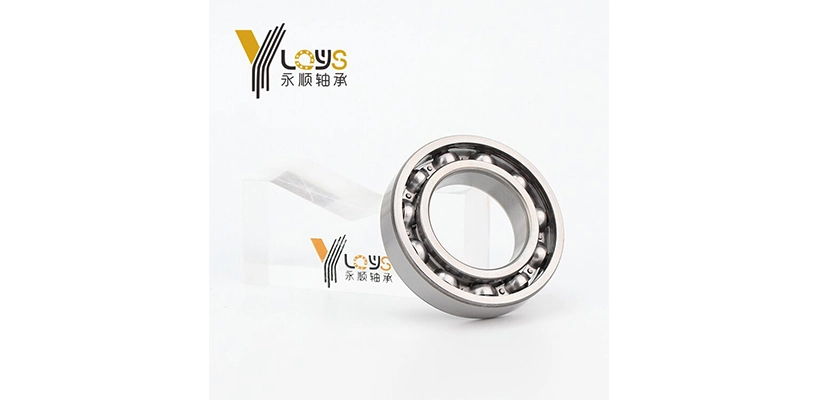
Miniature deep groove ball bearings are compact rolling bearings used where shaft rotation must stay smooth in a very limited space. In many bearing catalogs and factory classifications, miniature bearings usually refer to small bearings with outside diameters often below 30 mm. The deep groove raceway allows the bearing to carry radial load and light axial load while keeping friction low enough for small rotating parts.
This is why small ball bearings for electronics are widely used in fan hubs, micro motor end caps, encoder shafts, precision instrument assemblies, and light-duty drive systems. The bearing supports the shaft, but it also controls vibration, running noise, and rotational accuracy. A bearing with the right dimensions but poor grease control or unsuitable clearance may still fail the final device test. In electronics, fit is only the starting point.
Why Low Noise Becomes a Purchasing Standard
Noise is one of the easiest bearing problems to notice and one of the hardest to explain after mass production has started. A motor can pass a quick no-load test and still become noisy after longer operation. Common causes include dust inside the raceway, grease that does not match speed, excessive clearance, tight assembly, shaft misalignment, or inconsistent surface finish.
Low noise miniature bearings are especially important in cooling fans, medical devices, office automation equipment, sensors, encoders, drone motor bearings, and precision instrument bearings. These products often run near people or sensitive components. A faint vibration during incoming inspection can become a clear complaint after the bearing runs inside a plastic housing for hundreds of hours. For bulk buyers, noise grade, grease type, internal clearance, and clean assembly conditions should be confirmed before purchase orders move from sample quantity to production volume.
Typical Applications in Electronics and Compact Motion Systems
Small Motors and Cooling Fans
Miniature bearings for small motors are common in DC motors, brushless motors, micro gear motors, and compact drive units. These applications usually require low starting torque because the motor has limited power at startup. If the bearing creates too much drag, the motor may start slowly, draw more current, generate extra heat, or show unstable speed.
Cooling fan bearings face a slightly different set of concerns. Fan manufacturers usually compare noise, speed, lifetime, cost, and delivery stability at the same time. In many indoor electronic fans, ZZ miniature bearings are preferred because the metal shields help reduce dust entry while keeping friction lower than many contact-sealed structures. For clean electronic assemblies, that balance is often practical.
Sensors, Encoders, Robotics, and Precision Instruments
Sensors and encoders need smooth shaft support and repeatable motion. A miniature deep groove ball bearing used in these assemblies should have stable dimensions, suitable clearance, and clean running behavior. Robotics modules, gimbals, small automation units, portable instruments, and drone motor bearings also use high speed miniature bearings when compact size and smooth rotation are required.
A frequent sourcing mistake is choosing only by bore diameter, outside diameter, and width. Two bearings with the same miniature bearing size may perform differently once grease, seal drag, cage design, internal clearance, shaft fit, and housing tolerance are included. This is why technical confirmation before bulk ordering is worth the time.
How to Choose Miniature Bearings for Electronic Applications
Size, Speed, and Load
A miniature bearing size chart can narrow the model range, but the final decision should come from the application. Buyers should confirm bore diameter, outside diameter, width, operating RPM, radial load, possible axial load, mounting method, temperature range, and expected service life. A quiet bearing for a 24V cooling fan does not face the same conditions as a bearing inside a compact drive motor that starts and stops all day.
Deep groove miniature ball bearings are suitable for many medium- and high-speed electronic applications, but speed capacity depends on the complete design. Grease, shield or seal type, clearance, shaft fit, and housing accuracy all affect the result. When the device has a strict acoustic requirement, low friction alone is not enough.
Clearance, Torque, and Running Feel
In small motors and fan assemblies, low starting torque often matters as much as load capacity. Excessive torque can raise current draw and heat, while unstable torque can create uneven running sound. Clearance also needs careful control. Too little clearance may cause heat after installation. Too much clearance may allow shaft movement, vibration, and noise.
For low noise miniature bearings, buyers should provide working speed, mounting method, noise target, operating temperature, and expected life during inquiry. This gives the supplier enough information to recommend a suitable clearance, lubricant, and sealing form instead of only matching the drawing size.
Material and Lubrication
Common material choices include chrome steel, stainless steel, and selected ceramic-related structures for special environments. Chrome steel is widely used in general electronic products because it offers a practical balance of hardness, wear resistance, and cost. Stainless steel may be selected where corrosion resistance is more important, such as humid environments or certain medical and instrument applications.
Lubrication must match speed, temperature, noise level, and service life. Grease is often used in shielded miniature bearings and sealed miniature bearings because it supports longer running time and helps protect the internal contact area. However, grease type and fill amount should be controlled carefully, especially in high speed miniature bearings for fans and compact motors.
Open, ZZ, and 2RS Miniature Bearings
Open miniature bearings are suitable for clean assemblies where the bearing is protected by the surrounding structure or where lubrication is handled separately. They usually offer the lowest friction, but they are more exposed to dust and particles.
ZZ miniature bearings use metal shields to reduce contamination while keeping running resistance relatively low. This structure is widely used in electronic motors, cooling fans, and general compact devices. 2RS miniature bearings use rubber seals to improve protection against dust, moisture, and grease leakage, although contact seals can increase torque.
For many electronic assemblies, ZZ miniature deep groove ball bearings are a balanced option when speed, noise, and basic dust protection all matter. In dusty, humid, or outdoor electronic devices, 2RS miniature bearings may be the better choice because sealing and grease retention carry more value than minimum friction.
What Buyers Should Confirm Before Bulk Orders
A clear RFQ should include the bearing model if known, but the model number alone is not enough. Miniature bearing specifications should cover bore size, outside diameter, width, material, seal type, clearance, lubricant, working speed, radial load, temperature range, noise requirement, packaging method, quantity, and delivery schedule.
This information helps an OEM miniature ball bearing supplier recommend the right structure for the real device. For example, a fan maker may request the same bearing dimension used in an older model. If the new fan speed is higher, the acoustic target is stricter, or the operating temperature has changed, the previous bearing may no longer be suitable. Early confirmation reduces repeated sampling, shortens approval time, and lowers the chance of field failure.
About Shanghai Yongheshun Import and Export Co., Ltd.
Shanghai Yongheshun Import and Export Co., Ltd. is a bearing manufacturer and export supplier integrating production, sales, trade, and international service. Through the LQYS bearing business, the company supplies ball bearings, miniature bearings, deep groove ball bearings, and related bearing products for industrial and precision applications.
The company has 40+ employees, a 12000m² factory area, and exports to 30+ countries. For B2B buyers, these details matter because miniature bearing sourcing depends on stable batch supply, practical product selection support, export experience, and consistent communication. Electronic product manufacturers, distributors, and wholesale buyers can source miniature deep groove ball bearings, shielded miniature bearings, sealed miniature bearings, and OEM miniature bearing options according to application requirements.
Conclusion
Miniature bearing selection in electronics should be handled as a performance decision, not only a purchasing task. The right miniature deep groove ball bearing can reduce noise, control starting torque, support high-speed rotation, improve fan or motor life, and help electronic products pass long-term reliability testing. Buyers should review size, speed, load, seal structure, clearance, material, lubrication, and supplier capability before placing bulk orders. When working conditions are clearly provided, selecting miniature ball bearings for electronics becomes more accurate, more stable, and more cost-effective.
FAQs
Q1:Why do miniature ball bearings make noise in electronic motors?
A1:Miniature ball bearings may make noise in electronic motors because of contamination, unsuitable grease, incorrect clearance, shaft misalignment, poor mounting, or rough internal surfaces. In compact motor housings, even slight vibration can become audible because there is little space to absorb sound.
Q2:How do I choose ZZ or 2RS miniature bearings for electronics?
A2:ZZ miniature bearings are often used in small motors, cooling fans, and clean electronic assemblies because they provide dust protection with relatively low friction. 2RS miniature bearings are better for dusty, humid, or exposed environments where stronger sealing and grease retention are required.
Q3:What miniature bearing size is right for a small DC motor?
A3:The correct miniature bearing size depends on shaft diameter, housing bore, available width, operating speed, load, and noise requirement. Before ordering miniature bearings for small motors, buyers should confirm bore diameter, outside diameter, width, RPM, seal type, clearance, and working environment.
Q4:How can electronic device manufacturers reduce miniature bearing failure?
A4:Electronic device manufacturers can reduce miniature bearing failure by choosing the correct seal type, controlling assembly cleanliness, matching clearance to speed and temperature, using suitable lubrication, and avoiding excessive preload. Sample testing under real working conditions should be completed before bulk production.
Q5:Where can bulk buyers source miniature ball bearings for electronics?
A5:Bulk buyers can source miniature ball bearings for electronics from a professional bearing manufacturer or export supplier that provides size selection, seal options, material choices, and stable batch supply. Shanghai Yongheshun Import and Export Co., Ltd. supplies miniature and deep groove ball bearing products for B2B applications.