

FAG, NSK, and NTN Bearings for OEM Projects: How to Compare Specifications, Lead Time, and Total Cost
2026-06-26

FAG NSK NTN bearings which are selected for OEM projects are selected prior to the first production order being released. While the purchasing team are asking for a price, the bearing in question can affect such items as shaft size, housing design, load rating, seal type, bearing life, maintenance and spare parts supply. Small changes in the bearing suffix, clearance, cage material or delivery time can have significant effects on a project if bearing specifications are not locked down early in the process.
Bearing procurement is a project decision for OEM buyers, equipment manufacturers and industrial distributors. A reliable industrial bearing supplier supports the buyer to fix specifications, sample requirements, batch delivery and costs before the order moves from the trial production phase to regular purchasing.
OEM Bearing Sourcing Starts Before the Purchase Order
The first serious discussions about OEM bearing sourcing are usually held when designing a product, during prototype testing or at the start of a pilot production run. A motor manufacturer might require low noise ball bearings, a gear box manufacturer focus on radial and axial loads and the connected shaft design in relation to bearing selection, a pump manufacturer discuss seal types and lubrication, operating temperatures and potential for corrosion, a machinery manufacturer require the same bearings for successive production runs.
OEM bearing supplier selection is not just for spot purchases. The selected supplier must understand that the supplier confirmed to use one bearing model for samples and for small-batch production, for the spare parts inventory and for after sales service. If the bearing is changed after the drawing has been frozen, it would require additional tests and additional work for the revised purchasing files and production delays.
Specifications Must Be Confirmed Before Price Comparison
Dimensions, Load Rating, and Internal Design
Price comparison only after exact technical specification has been defined. When purchasing as OEM buyer, you should above all check the technical details of the bearing: Bearing dimensions, Dynamic load rating static load rating, speed, clearance, seal, cage, precision class, lubrication, operating temperature and mounting. All details which beyond the catalog data decide whether a bearing can run safely in your application.
Bearing specifications for NSK bearings, FAG bearing dimensions and NTN OEM bearings of same type number may look similar but have different suffixes or design details inside the bearings. For example, bearing for high speed motor requires different clearance than that for conveyor or agricultural application. Sealed bearing suitable for dusty application may not be suitable for high speed/low friction application.
Sample Approval and Drawing Confirmation
OEM buyers should not move directly from quotation to mass order when the bearing affects a critical assembly. Sample approval, drawing confirmation, and working condition review help prevent mistakes before production quantity is committed. If the equipment requires special noise control, high-speed performance, heavy radial load, bidirectional axial load, or better contamination protection, these points should be confirmed during the sampling stage.
Shanghai Yongheshun supplies bearings for model reference of various common bearing types such as ball bearings, angular contact ball bearings, cylindrical roller bearings, needle roller bearings, tapered roller bearings, spherical roller bearings and thrust ball bearings. As a supplier for the ball bearing OEM manufacturing part for general rotating equipment for equipment manufacturers, it is also suitable for reference for motor, pump, conveyor, fan and other machinery parts.
FAG, NSK, and NTN Should Be Compared by Application, Not Habit
There are many international bearing brands, commonly used by OEM buyers, but bearing choice should not be based on brand habit. The type of machine is the determining factor. For example, a textile machine, an electric motor, a car part, a pump, a reducer, a printing machine, a agricultural machine or an automation part has different requirements with respect to clearance, seals, cage design, lubrication, noise, speed etc. and thus demands a specific bearing.
A bearing that functions well in a low speed gearbox is likely not to be the best choice for a motor that is used for long hours at higher temperature. A bearing with more sealing is better in dusty environments but creates higher friction in compact designs. In OEM projects the better question is not which brand is better in general, but which specification is suitable for the load, the speed, the fit, the lubrication, the environment and the maintenance.
Lead Time Can Decide Whether the OEM Project Stays on Schedule
Bearing lead time is generally more important for OEM projects than for most single part replacement parts. The time it takes to receive a sample can delay the testing of prototypes. A late pilot batch can hold up customer approval. The production lead time can force the buyer to hold too much safety stock or pay to use urgent freight.
Planning of lead time for OEM bearing orders should include the time required for delivery of samples, for timing of the trial order, for the start of batch production, for repeat orders, for export packing, and for the required amount of spare parts. If a project is to be supplied with FAG bearings for OEM, NSK components for the motor, and NTN bearings for regular assembly the buyer must check whether the supplier can deliver the first items and whether he can also supply them for follow-up orders in the due time required.
For bulk bearing orders the stability of communication is as important as the price. A supplier that clearly explains stock status, packaging, shipment time and quantity planning gives the buyer control of the production schedule.
Total Cost Includes More Than Unit Price
Bear in mind the total cost of the bearings and how wrong specifications, delayed deliveries, retesting, production halt, emergency shipping, quality disputes and excess stock can all cost you a lot of money. For an OEM project a lower price for a bearing can turn out to be more expensive because of rework or delivery problems to the end customer.
In terms of Total Cost of Ownership one should include the technical check, the success rate of the samples, the batch stability, the packaging, the lead time, the communication speed and the after sales service. In addition one should also find out if the supplier is able to check alternative specifications without pushing too expensive bearings. The aim is not to buy the cheapest bearing in order to keep the project stable until mass production starts and the first articles are approved by the buyer with a sample approval.
Why Multi-Brand Bearing Sourcing Matters for OEM Buyers
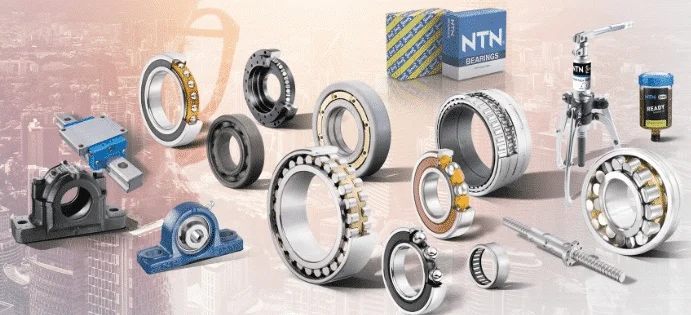
For most OEM projects a mix of bearing types or even brands is required. One machine can be equipped with deep groove ball bearings in the motor, angular contact ball bearings in a precision shaft, cylindrical roller bearings for heavy radial loads and needle roller bearings for very compact applications. For such projects the buyer needs to acquire bearings from different manufacturers, such as FAG, NSK, NTN, INA, NACHI, IKO, TIMKEN, Koyo, THK, NMB and FYH for example, for the individual components or for entire models, also for special customer requirements.
Shanghai Yongheshun is a multi-brand bearing supplier. As a supplier, it helps the buyers to communicate across various product categories and even across different international bearing brands. On the other hand, it is also supplying its own bearing range. This position would be suitable for the OEM buyers who require model checking, quantity planning and technical communication all from a single sourcing channel.
Shanghai Yongheshun Import and Export Co., Ltd. is a company with integrated production and sales, trading and export business. The company is equipped with a 12000m² factory area and has over 40 employees. It is also well equipped with modern testing machines and has rich exporting experience to more than 30 countries. For the OEM purchasing teams, this company does not only provide the products needed, it also coordinates the whole project and checks the details of the provided specifications.
Conclusion
FAG, NSK, and NTN bearings for OEM projects should be compared through specifications, lead time, and total cost, not unit price alone. Buyers should confirm dimensions, load rating, clearance, seals, cage type, precision grade, lubrication, working conditions, sample approval, and batch delivery planning before moving into mass orders. A reliable sourcing decision helps reduce design changes, production delays, and repeated purchasing problems.
Need to verify bearing dimensions, load ratings, clearances, seals, cage types, precision grades, etc. with equivalent specifications? Forward the bearing model, drawing, quantity forecast, sample requirements, working conditions etc. and we will perform the verification and assist with sourcing.
FAQs
Q1: How do I choose FAG, NSK, or NTN bearings for an OEM project?
A: When selecting bearings for an OEM project, it is advisable to first clarify the area of application. Afterwards, the bearing dimensions, the load rating, the speed, the clearance, the seal type, the cage material, the lubrication, the temperature, the mounting conditions as well as the required service life should be checked before comparing the prices of FAG, NSK and NTN bearings.
Q2: What bearing specifications should OEM buyers confirm before ordering?
A: It is always advisable to double check your OEM supplier for all the critical details such as model number suffix, dimensions, dynamic and static load ratings, clearance, seals, ball cage type, bearing precision grade, lubrication, working temperature and packaging details. It is also good to get the engineering drawings confirmed and send a sample to them for your first production run.
Q3: How does lead time affect OEM bearing sourcing?
A: Lead time affects sample approval, pilot production, mass production, stock management and delivery to customers. When sourcing OEM bearings, it is wise to test a sample, to check the delivery time for a batch, the stock available, the method of packing, and whether the supplier can cope with repeat orders before deciding whether to use the supplier.
Q4: Why is total cost more important than unit price for OEM bearings?
A: When considering cost it is not just a case of looking at the unit price. The unit price multiplied by testing risk, delivery delay, emergency freight, holding cost, quality issues, rework, machine down time all provide a better insight into cost. A low unit price for a bearing does not necessarily mean it is the best option if there is uncertainty over the bearing specification, batch quality, lead time etc.
Q5: What information should I send for OEM bearing technical confirmation?
A: Send the bearing model, drawing, old sample photo, quantity forecast, equipment type, speed, load condition, temperature, lubrication method, seal requirement, and target service life. This helps confirm whether the bearing fits the OEM project before ordering.