

Why Does a Tapered Roller Bearing Overheat After Installation? Preload vs. Endplay
2026-07-02Tapered roller bearing overheating after installation is usually linked to bearing setting, mounting, lubrication, or an operating condition that was not fully reviewed during replacement. Excessive tapered roller bearing preload is a frequent cause, but insufficient endplay, incomplete seating, poor fits, contamination, and misalignment can create similar heat symptoms. The right response is not simply to loosen the locknut. The assembly needs a structured check before heat progresses into scoring, discoloration, cage damage, or seizure.
This issue is common in gearboxes, wheel hubs, reducers, conveyor drives, and heavy equipment. A new tapered roller bearing can match the original part number and still run hot because the cup and cone are not seated squarely, the setting is too tight, or thermal growth changes the adjustment after the machine reaches operating temperature.

Preload vs. Endplay: The Setting Behind Many Heat Problems
What Tapered Roller Bearing Preload Does
Preload is intentional axial interference in the bearing arrangement. It removes most axial movement and can improve shaft rigidity, positional accuracy, and resistance to deflection. A controlled preload may be required in assemblies that need firm shaft location under changing thrust loads, such as certain pinion, wheel-end, and machine-drive arrangements.
The trade-off is friction. When tapered roller bearing preload is excessive, the rollers are forced harder into the raceways and against the guide rib. Rolling torque rises, the lubricant film is placed under greater demand, and heat can build quickly. A tighter setting is not automatically a safer setting. Excessive operating preload can reduce bearing life and contribute to lubrication problems caused by high heat generation.
What Tapered Roller Bearing Endplay Does
Endplay is the measured axial movement that remains after assembly. Proper tapered roller bearing endplay gives the arrangement room to accommodate thermal expansion and operating movement. It is not uncontrolled looseness; it is a setting selected for the actual machine.
Many assemblies aim for a near-zero running condition, but the cold setting may need endplay because the shaft, housing, spacers, and bearing rings heat differently. A setting that appears correct during installation can become excessive operating preload after the unit reaches steady temperature.
Why Preload vs. Endplay Cannot Be Copied from Another Machine
The preload vs. endplay decision depends on the bearing arrangement, speed, axial load, fits, shaft and housing materials, lubricant, seal drag, and heat flow. A generic torque, back-off angle, or clearance value from another machine can be wrong for the current assembly. The exact product size is only one part of the decision.
For example, a compact wheel hub may use a field adjustment procedure based on a specific nut, washer, seal, and spindle arrangement. An industrial gearbox may instead require a shim-controlled setting, spacer-controlled preload, or a measured axial position. Applying one method to another assembly can create early bearing heat even when the bearing itself is dimensionally correct.
Why a Tapered Roller Bearing Runs Hot After Replacement
Excessive Preload or Insufficient Endplay
When a tapered roller bearing gets hot after installation, confirm whether the adjustment is too tight. The shaft may feel acceptable during hand rotation yet develop high running torque at service speed. Grease may soften or leak past the seal, while the bearing housing becomes noticeably hotter than its normal operating baseline.
Overtightening a locknut, changing shims without measurement, or replacing components that alter the axial stack-up can all create excessive preload. In paired arrangements, one bearing may also be overloaded when the opposite bearing is not fully seated or clamped. Proper backing and positive clamping of bearing components are essential during setting.
Incomplete Seating and Incorrect Clamping
Tapered roller bearings use separable cone and cup components, so component seating is critical. A burr on the shaft shoulder, debris behind the cup, paint in the housing bore, a damaged spacer, or an uneven locknut face can stop a ring from locating fully. The bearing may initially run normally, then settle under load and begin to overheat.
Before changing the setting, inspect the cup seat, cone seat, shoulders, spacers, threads, end cap, and housing bore. A replacement bearing cannot correct a worn shaft journal, distorted end cap, or out-of-round housing. Tapered roller bearings are designed for separable installation and axial clearance adjustment, which makes correct mounting surfaces especially important.
Lubrication Problems That Look Like a Preload Problem
Tapered roller bearing lubrication should be checked at the same time as preload and endplay. Grease that is too stiff at start-up or unable to maintain film strength at operating temperature can raise friction. Overfilling a cavity can cause churning losses, while underfilling, incorrect oil viscosity, low flow, incompatible grease, water, and abrasive particles can lead to heat and early damage.
The large roller end and guide rib require a stable lubricant film. Heat marks, smearing, or scoring near this area often indicate a lubrication problem, excessive preload, or both. Localized scoring in tapered roller bearings may appear at the large roller end and guiding rib when high temperature and lubricant-film failure lead to direct mechanical contact.
Incorrect Fits and Housing Condition
A cone that creeps on the shaft or a cup that moves in the housing changes both load distribution and axial setting. Excessively tight fits can also reduce working clearance and add mounting stress. Damaged threads, distorted end caps, uneven locknut faces, or poorly machined shoulders make a tapered roller bearing adjustment unreliable.
For repeated overheating, the technical review should include shaft diameter, housing bore, fit condition, mounting arrangement, spacer dimensions, and locking method. Buyers often focus on bore size and outside diameter, but a correct bearing replacement depends just as much on the shaft and housing condition.
Misalignment and Abnormal Load
Tapered roller bearings carry combined radial and axial loads, but they still require accurate support geometry. A bent shaft, tilted housing, poor gear mesh, loose base, or excessive belt tension can move load toward one side of the roller path. This may show up as local overheating, vibration, noise, and uneven wear.
Review changes in operating conditions as well. A gearbox that now operates longer shifts, starts under a heavier load, or runs at another speed may generate heat that did not exist in the original duty cycle. Reducing preload alone may hide the symptom while the underlying load problem remains.
How to Diagnose Tapered Roller Bearing Overheating
Read the Temperature Pattern
Measure the same position on the bearing housing during comparable starts and loads. A sharp rise shortly after assembly often points to excessive preload, incomplete seating, lubricant drag, or a poor fit. A slower increase after several hours may point to inadequate oil supply, contamination, overload, or damage progressing in service.
The key is to compare the temperature trend with the machine’s normal baseline. A housing that feels warm is not automatically a problem. A steady increase beyond normal operating behavior requires attention. Temperature monitoring is a practical way to identify lubrication and bearing-system problems before severe damage develops.
Inspect Rotation, Axial Movement, and Lubricant Condition
Check whether the shaft turns freely, whether axial movement is abnormal, and whether the lubricant shows distress. Darkened grease, a burnt smell, visible leakage, metallic particles, or an unexplained increase in drive power should be recorded before adjustment.
If the unit is opened, inspect the raceways, rollers, cage, large roller ends, and guide ribs. Discoloration may indicate excess temperature. Scoring or peeling indicates lubricant-film failure and direct metal contact. When that damage is present, resetting tapered roller bearing preload or endplay alone may not restore reliable operation.
Reset the Bearing Only Against a Defined Method
A tapered roller bearing adjustment should follow the machine drawing, an approved service manual, or application-specific technical data. Manual adjustment can suit simple assemblies, but it requires rotation during seating and a confirmed final setting. On high-value gearboxes or repeat-production assemblies, dial indicators, shim control, torque checks, or preset spacers can provide more repeatable results.
A generic nut torque, back-off angle, or endplay figure should not be copied from another application. It may be correct for a specific hub or reducer and unsafe for a different bearing arrangement. The correct setting must account for thermal growth, the load path, and the required shaft position.
Where This Problem Appears in Real Equipment
Tapered Roller Bearing Overheating in a Gearbox
Helical and bevel gears create axial thrust that changes with torque, direction, and temperature. A bearing set too tightly can pass a no-load check and then run hot once the gear train is loaded. Gear mesh, shaft position, oil level, oil viscosity, and bearing spacing should be reviewed together.
A gearbox bearing failure often begins with a temperature increase, then develops into noise, vibration, unstable gear contact, or lubricant discoloration. In this application, preload must support shaft position without creating unnecessary friction.
Why a Wheel Hub Tapered Roller Bearing Runs Hot
Wheel hubs commonly use opposing tapered roller bearings to support radial load and thrust from cornering. Adjustment, seal drag, grease quantity, spacer condition, and the tightening procedure all affect temperature. Over-tightening and incomplete seating are common causes, but worn hub bores and incorrect mating components should also be checked.
A wheel hub that becomes hot immediately after service should not be returned to operation until the cause is confirmed. Continued running can damage the bearing raceway, grease seal, hub surface, and related components.
Heat in Conveyor and Heavy Drive Systems
On conveyor and heavy-drive equipment, belt tension, chain pull, shock loads, and base distortion can heat the bearing indirectly through the shaft. The bearing may be hot while the root cause is an over-tensioned drive or uneven gearbox load. Inspection should include the complete power path, not only the bearing housing.
This is particularly relevant for industrial maintenance teams handling conveyors, mining equipment, agricultural machinery, reducers, construction equipment, and other heavy-duty drive systems where loading conditions can change over time.
What Buyers Should Confirm Before Ordering a Replacement
A part number alone is not enough for a dependable tapered roller bearing replacement. Buyers should confirm the cone and cup designation, bore, outside diameter, width, row configuration, mounting direction, expected radial and axial loads, operating speed, lubricant, sealing arrangement, fit requirements, and whether the assembly is designed for preload or endplay.
Failure history should be included in the inquiry. If the previous bearing discolored, scored, or seized, provide photographs, temperature history, lubricant details, and the current adjustment method. This helps avoid purchasing the same bearing again while leaving the original installation problem in place.
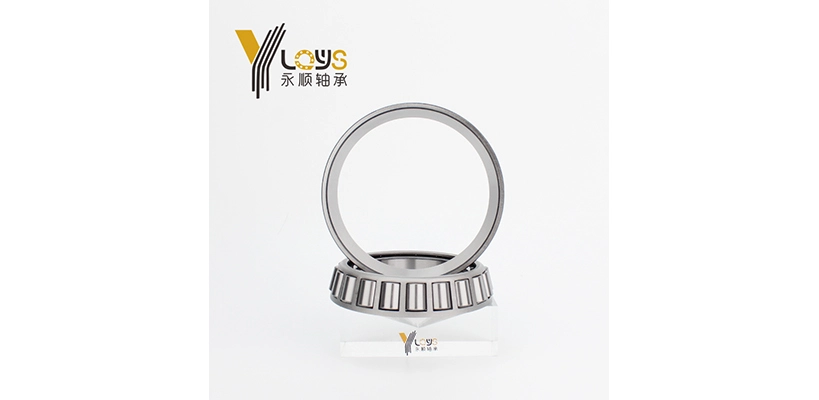
The tapered roller bearing product range includes single-row, double-row, and four-row configurations. Single-row designs are commonly arranged in pairs when axial load must be supported in both directions. Double-row and four-row designs can be considered where higher capacity and stability are required. The final selection should follow the actual duty and arrangement, not the apparent size of the original part.
Supplier Support for Long-Term Purchasing
For volume purchasing, supplier capability matters as much as bearing dimensions. A qualified supplier should be able to clarify the bearing arrangement, verify the cone and cup designation, identify whether preload or endplay is intended, and flag missing operating information before an order is finalized. Clear marking, protected packaging, inspection support, and direct communication on order requirements are essential in B2B supply.
LQYS Bearings supplies tapered roller bearings and other industrial bearing categories for machinery, automotive, power transmission, and heavy-duty applications. Its product information describes combined radial and axial load capability, separable construction, adjustable axial clearance, and single-, double-, and four-row options.
Shanghai Yongheshun Import and Export Co., Ltd. integrates production, sales, trade, and export. Its public company profile lists a 12,000 m² factory area, more than 40 employees, and supply to more than 30 export countries. For buyers managing repeat replacement programs, mixed equipment fleets, or application-specific sourcing, this provides a practical basis for discussing dimensions, operating conditions, and delivery requirements before an order is confirmed.
Conclusion
A hot tapered roller bearing should not be accepted as a normal part of replacement work. Excessive preload and insufficient endplay are frequent causes, but seating, fits, lubricant condition, alignment, load, and thermal growth also determine whether the bearing stabilizes at a reasonable operating temperature.
For procurement teams and maintenance planners, source the bearing and define the working condition together. Provide the bearing code, machine type, shaft and housing dimensions, speed, radial load, axial load direction, lubricant, operating temperature, and clear damage photos when seeking support. Buyers can request an application review for product selection, samples, or a quotation based on those details.
FAQs
Q1: Why is my tapered roller bearing overheating after installation?
A1: A tapered roller bearing may overheat after installation because preload is too high, endplay is too small, a cup or cone is not fully seated, lubricant is unsuitable, or shaft and housing fits are incorrect. Check the mounted setting and lubrication condition first, then inspect the surrounding assembly for misalignment or abnormal load.
Q2: Can too much preload cause tapered roller bearing overheating?
A2: Yes. Excessive tapered roller bearing preload raises rolling torque and contact stress. It can reduce the lubricant film at critical contact areas, increase temperature, and lead to discoloration, scoring, or early tapered roller bearing failure. Preload should only be used when the arrangement and operating condition call for it.
Q3: How do I adjust tapered roller bearing endplay without causing heat?
A3: Use the machine-specific adjustment procedure and measure the setting with the proper method. Rotate the assembly while adjusting so the rollers and rings seat correctly. Do not use a generic nut torque or back-off rule unless it is specified for the exact machine and bearing arrangement. The final setting must account for thermal growth during service.
Q4: Can overgreasing make a tapered roller bearing run hot?
A4: Yes. Excess grease can create churning and drag, especially at elevated speed or where the housing has limited free volume. Removing grease without checking preload, fit, and alignment can miss the root cause. Grease type, amount, compatibility, and condition should be reviewed together.
Q5: Should I replace a tapered roller bearing if it gets hot after installation?
A5: Replacement may be necessary if inspection finds discoloration, scoring, peeling, metal particles, cage damage, or seizure. If the bearing is still undamaged, the issue may be corrected by addressing the tapered roller bearing setting, lubrication, seating, fit, or alignment. The cause should be confirmed before another bearing is installed.