
How to Buy Genuine SKF, NSK, FAG, and NTN Bearings: Industrial Procurement Checklist
2026-06-05For industrial buyers, the decision to buy genuine SKF, NSK, FAG, and NTN bearings is rarely just a purchasing task. It affects machine uptime, repair schedules, warranty risk, and spare parts planning. A bearing with the wrong suffix, unclear source, poor packaging, or mismatched clearance can create problems long after the invoice is paid. In daily procurement work, the safest order is usually the one supported by a full model number, confirmed application details, realistic lead time, clear packing information, and a supplier that understands technical specifications.
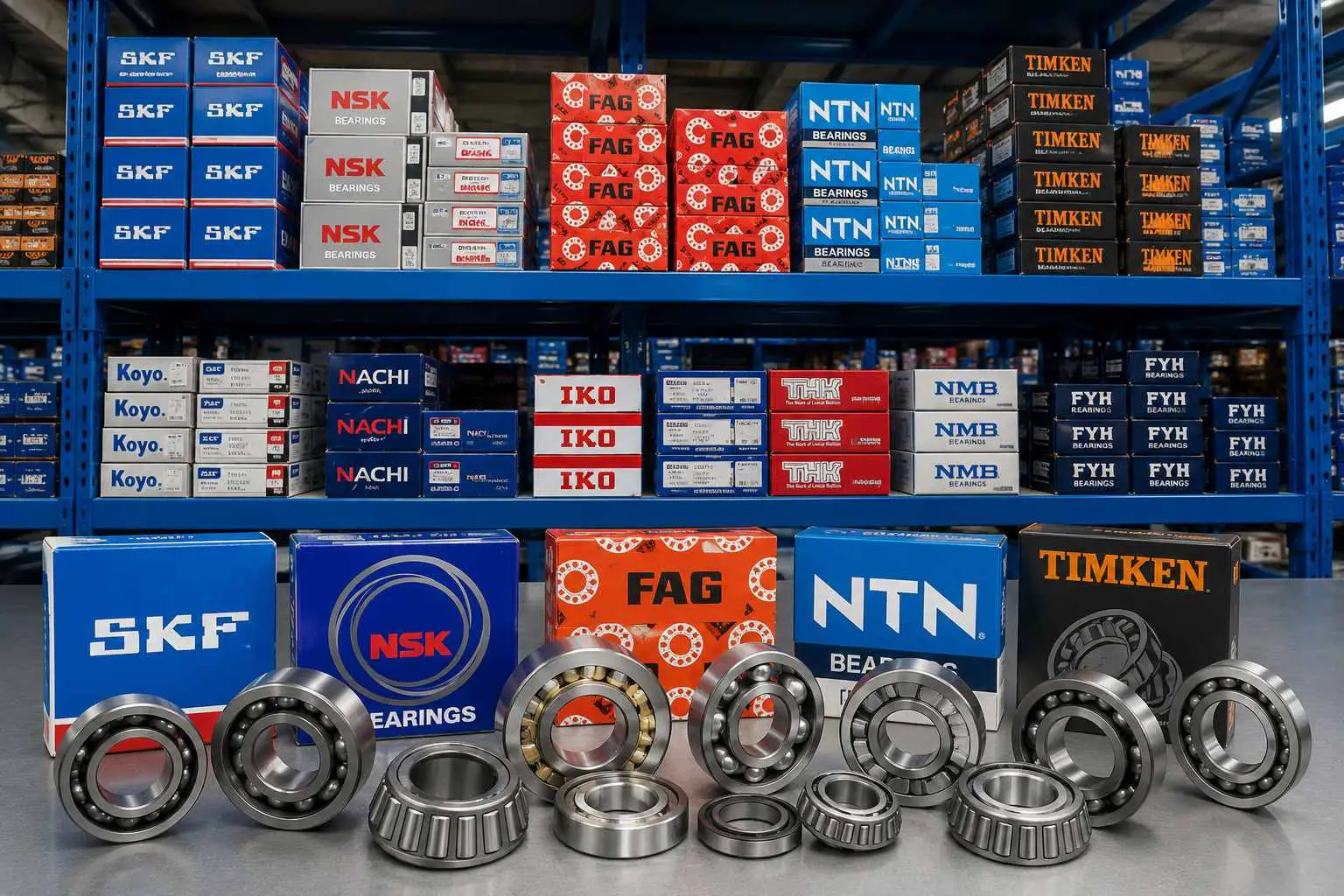
Shanghai Yongheshun Import and Export Co., Ltd. serves as a multi-brand bearing supplier and industrial bearing sourcing partner for buyers who need international bearing brands, while also supplying LQYS bearing products. The company supports customers in machinery, automotive systems, power transmission, electric power, mining, oil, papermaking, and general industrial maintenance. For factories, distributors, repair companies, and OEM purchasing teams, this sourcing structure helps reduce specification errors and keeps bearing procurement more organized.
Why Genuine Bearings Matter for Industrial Buyers
Genuine bearings matter because industrial equipment depends on stable material quality, heat treatment, dimensional accuracy, cage strength, grease condition, and raceway finish. A counterfeit bearing or unclear-source bearing may look acceptable in a warehouse photo, yet fail quickly once it is installed in a gearbox, pump, fan, conveyor, motor, or heavy machine.
The usual warning signs are not difficult to recognize. Bearing noise, overheating, vibration, grease leakage, rough rotation, and short service life often appear first. After that, the cost moves beyond the bearing itself. Labor, production loss, emergency freight, shaft damage, and housing wear may become part of the repair bill. For industrial bearing procurement, the lowest offer is not always the lowest-cost
Confirm the Bearing Model Before Asking for a Quote
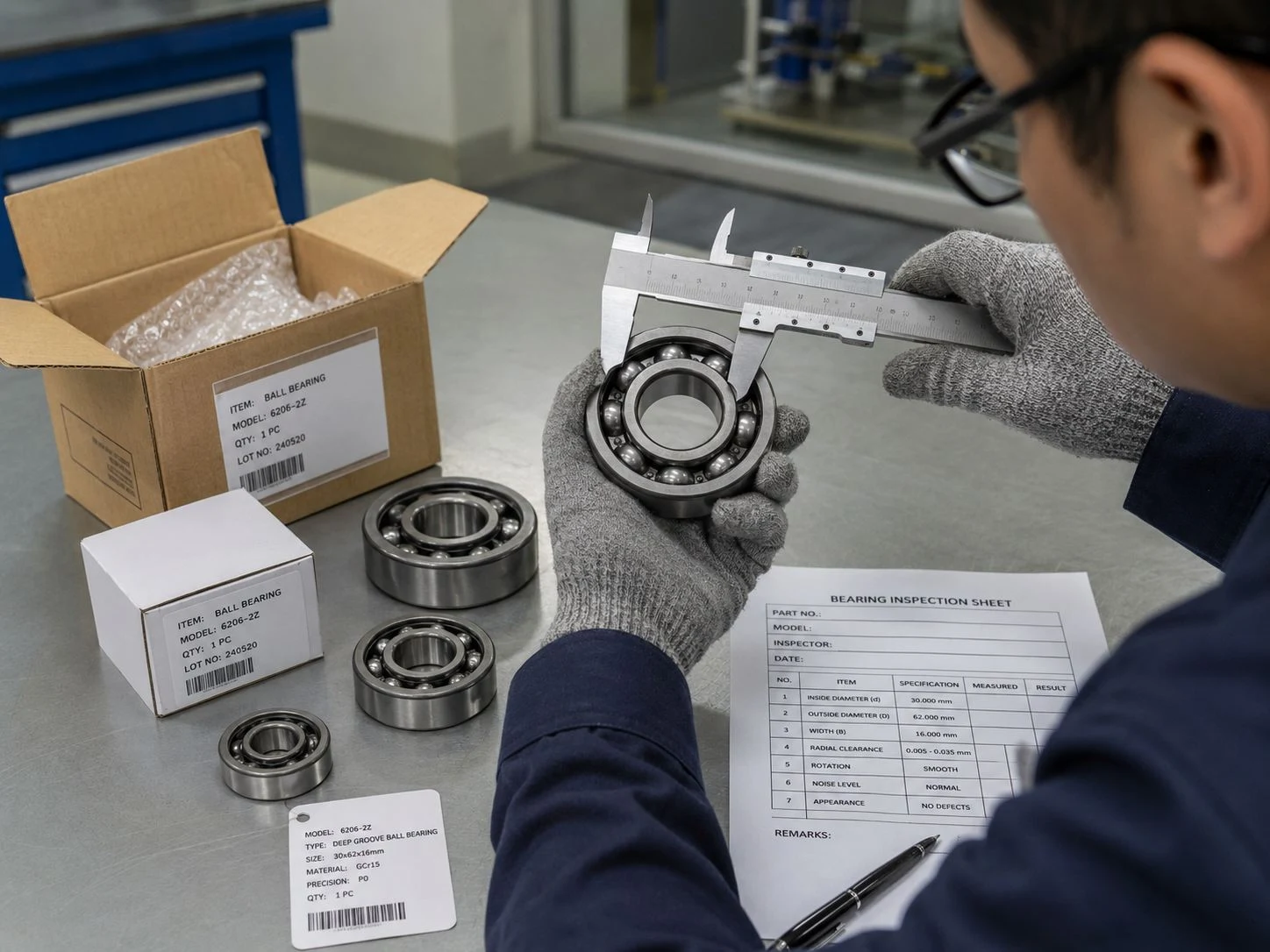
A bearing quotation should start with the complete bearing model number. Bore size and outside diameter are not enough. Many SKF bearings, NSK bearings, FAG bearings, and NTN bearings share similar basic dimensions, but suffix codes can change the actual product significantly.
Model Numbers, Suffix Codes, and Application Details
A simple model such as a deep groove ball bearing number may come in open type, rubber-sealed type, metal-shielded type, C3 clearance, low-noise grease, high-temperature grease, or different cage materials. The same issue appears with angular contact ball bearings, cylindrical roller bearings, spherical roller bearings, tapered roller bearings, and thrust ball bearings.
Before asking for a bearing price, buyers should prepare the full model marking, old bearing photos, equipment nameplate, drawing, shaft size, housing size, operating speed, load condition, and quantity. If the original marking is damaged, measurement alone should be treated carefully. A bearing replacement selected only by size may fit the shaft but still fail under the real working load.
Check Supplier Reliability Before Bulk Orders
A reliable bearing supplier should do more than quote a unit price. For technical purchasing, the supplier should confirm the model, explain the suffix, check stock availability, provide product photos when needed, and give a practical delivery schedule. Good communication before the order often prevents expensive mistakes after shipment.
Shanghai Yongheshun Import and Export Co., Ltd. works as a supplier of genuine SKF, NSK, FAG, and NTN bearings and a bearing distributor for international brands. The company also supplies LQYS bearing categories such as ball bearings, angular contact ball bearings, cylindrical roller bearings, needle roller bearings, spherical roller bearings, tapered roller bearings, and thrust ball bearings. This product range is useful when a maintenance project requires several bearing types under one purchasing plan.
For wholesale bearings or bulk orders, supplier reliability becomes even more important. Buyers should check response speed, export experience, packing details, document handling, and the ability to support repeat orders. A clear supplier process reduces delays, especially when one shipment contains multiple brands, models, and bearing series.
How to Avoid Fake SKF, NSK, FAG, and NTN Bearings
Fake SKF bearings, fake NSK bearings, fake FAG bearings, and fake NTN bearings are a real concern in industrial sourcing. The risk increases when the quotation is far below the normal market range, the source is unclear, product photos are vague, batch information is missing, or the supplier avoids technical questions.
Packaging, Labels, and Source Checks
A practical bearing authenticity check should include model number, suffix, packaging condition, label details, batch information, invoice details, and available documents. For high-value models or urgent repair stock, buyers may request photos before shipment. The packaging should match the ordered brand and model, and the label should be clear enough for warehouse inspection.
No single visual check can replace a reliable source. Still, careful purchasing habits reduce risk. Abnormal low price, inconsistent stock claims, unclear delivery promises, and weak technical communication should be treated as warning signs before payment is made.
Compare Price, Stock, and Lead Time Correctly
Bearing price matters, but it should be read together with stock availability, MOQ, delivery time, payment terms, shipping method, packing condition, and downtime risk. A cheaper bearing quotation may lose its value if the goods miss a planned shutdown or arrive with an incomplete specification.
For repair companies and industrial distributors, stable supply is often more useful than chasing the lowest price. Fast-moving models should be planned in advance. Critical equipment should have a spare parts strategy. When bearings are used in motors, reducers, pumps, conveyors, vehicles, or production machinery, late delivery may cost more than the price difference between suppliers.
When to Consider Bearing Cross Reference
A bearing cross reference can help when the required brand is out of stock or the lead time is too long. However, an equivalent bearing should be confirmed by specification, not by size alone. The replacement must match dimensions, load rating, speed rating, clearance, seal type, cage design, precision grade, lubrication, and working conditions.
An SKF bearing equivalent, NSK bearing equivalent, FAG bearing equivalent, or NTN bearing equivalent may be suitable in some cases, but the application decides the final answer. A bearing used in a low-speed conveyor has different demands from one used in a high-speed motor, precision gearbox, or heavy-duty reducer. Technical confirmation should come before the purchase order.
Industrial Bearing Procurement Checklist
| Check Item | What Buyers Should Confirm |
|---|---|
| Bearing model | Full part number and suffix |
| Brand | SKF, NSK, FAG, NTN, or required specification |
| Application | Motor, gearbox, pump, fan, conveyor, vehicle, machinery |
| Specification | Size, clearance, seal, cage, precision, lubrication |
| Quantity | Sample order, repair stock, or bulk order |
| Stock | Available quantity and delivery time |
| Documents | Invoice, packing details, product photos, certificates if available |
| Packaging | Brand packaging, label, batch information |
| Supplier | Export experience, response speed, technical support |
| Risk control | Avoid abnormal low price and unclear source |
Conclusion
Buying SKF, NSK, FAG, and NTN bearings for industrial use requires more than matching a part number. Genuine source, full model confirmation, correct suffix, stock status, packaging, lead time, and supplier reliability all affect the final result. For factories, distributors, repair teams, and OEM buyers, a careful procurement process helps reduce fake bearing risk, avoid specification mistakes, and keep equipment running with the right bearing.
Need help confirming bearing dimensions, load rating, clearance, seals, or equivalent specifications? Send the bearing model, drawing, photos, or working conditions to Shanghai Yongheshun Import and Export Co., Ltd. for technical support.
FAQs
Q1: How do I know if SKF, NSK, FAG, or NTN bearings are genuine?
A1: Check the supplier source, packaging, label, model number, suffix, batch information, price level, and available documents. Buyers should be cautious with abnormal low prices, unclear product photos, missing packing details, or suppliers that cannot confirm basic specifications.
Q2: Where can I buy SKF, NSK, FAG, and NTN bearings for industrial use?
A2: Industrial buyers can purchase from a reliable multi-brand bearing supplier that provides model confirmation, stock information, packing details, export support, and technical communication. Shanghai Yongheshun Import and Export Co., Ltd. serves as an industrial bearing sourcing partner for international bearing brands.
Q3: What information should I send before asking for a bearing quote?
A3: Send the full bearing model, required brand, quantity, application, equipment type, photos, dimensions, seal type, clearance grade, precision requirement, and delivery request. Complete information helps the supplier quote the correct bearing and avoid suffix mistakes.
Q4: Can I replace one bearing brand with another equivalent bearing?
A4: A bearing cross reference may be possible, but the replacement must match dimensions, load rating, speed rating, clearance, seals, cage type, precision grade, lubrication, and actual working conditions. Equivalent specifications should be confirmed before ordering.
Q5: Why is an unusually low bearing price risky?
A5: An unusually low bearing price may indicate unclear source, wrong specification, old stock, damaged packaging, or counterfeit bearing risk. In industrial equipment, downtime and replacement cost often exceed the savings from a low-price purchase.