

IKO Nippon Thompson Needle Roller Bearing Replacement: Do You Need an Inner Ring or a Hardened Shaft?
2026-07-17
When replacing an IKO Nippon Thompson needle roller bearing, the key question is whether the shaft can work as the inner raceway. If the shaft is hardened, ground, and suitable for direct needle roller contact, a bearing without an inner ring may be used. If the shaft is soft, worn, rough, damaged, or unknown, an inner ring is usually the safer replacement choice.
For B2B buyers, maintenance teams, machinery repair companies, and equipment manufacturers, this decision affects bearing life, shaft wear, downtime risk, and purchasing accuracy. A replacement order should not be based only on the bearing number. The shaft condition, original bearing structure, available radial space, lubrication path, and load conditions should also be checked before selecting an IKO needle bearing inner ring or a bearing without inner ring.
Quick Answer: Inner Ring or Hardened Shaft?
Needle roller bearings are often selected because they provide high radial load capacity in a compact design. This makes them useful in machinery where space is limited but load demand is high, such as industrial equipment, automotive transmission systems, compact drives, and repair assemblies.
The replacement choice depends on the raceway condition. In some needle bearing arrangements, the shaft itself works as the inner raceway. This can reduce radial space and allow a larger shaft diameter. However, the shaft must be suitable for rolling contact. If the shaft surface is not qualified, the rollers can damage the shaft and cause early bearing failure.
Use an Inner Ring When the Shaft Is Not a Qualified Raceway
Use an inner ring when the shaft cannot be verified as a proper rolling raceway. This is common in replacement and repair work where the original shaft material, hardness, surface finish, or heat treatment record is not available.
An inner ring is usually the better purchasing direction when the shaft is soft, worn, scored, pitted, rusted, discolored, or dimensionally uncertain. It is also recommended when the original bearing assembly used a separate inner ring, when the machine has already shown repeated bearing failure, or when the application involves heavy radial load, shock load, frequent start-stop operation, or difficult lubrication conditions.
In these cases, buying only a needle roller bearing without checking the shaft may reduce the first order cost but increase the risk of repeat failure after installation.
Use a Hardened Shaft When Space and Shaft Quality Allow It
A needle roller bearing without inner ring may be suitable when the shaft was originally designed and finished as the inner raceway. This option is common when radial space is limited and the equipment design requires the largest possible shaft diameter within a compact housing.
This choice may be considered when the original design used a bearing without inner ring, the shaft is hardened and ground, the raceway surface is smooth and undamaged, and the fit, lubrication, load, and speed are consistent with the product specification.
The decision should still be verified against the actual bearing specification and application conditions, especially when the replacement part is not the same original model.
Why Shaft Condition Matters in IKO Needle Bearing Replacement
Needle rollers create line contact with the raceway. This structure allows high radial load capacity in a small bearing envelope, but it also places concentrated stress on the raceway surface. If the shaft is too soft, rough, worn, or misaligned, the new bearing may be installed correctly but still fail early.
What Happens If Needle Rollers Run on a Soft Shaft?
When needle rollers run directly on an unsuitable shaft, the first visible damage often appears on the shaft surface rather than inside the bearing. Common signs include polishing, grooves, pitting, metal flaking, abnormal noise, vibration, heat, and increased clearance.
In maintenance work, these symptoms are sometimes mistaken for a bearing quality problem. In many cases, the actual cause is that the shaft was not suitable to act as the inner raceway. This is why an IKO needle roller bearing replacement should not be selected by ID, OD, and width alone.
Key Shaft Checks Before Replacement
Before purchasing an IKO needle bearing inner ring or a bearing without inner ring, check the shaft and surrounding assembly conditions. The most important items include shaft diameter, shaft tolerance, visible wear, surface finish, hardness status, housing bore condition, lubrication method, contamination risk, load direction, operating speed, and whether the original design used an inner ring.
If the shaft condition is unknown, the safer procurement route is to share photos, dimensions, and the original bearing number with the supplier before confirming the order.
|
Check item |
Why it matters |
Buyer action |
|
Shaft hardness |
Determines whether the shaft can act as the raceway |
Verify against the bearing specification or use an inner ring when uncertain |
|
Surface finish |
Rough surfaces can accelerate wear and heat |
Inspect or measure before ordering |
|
Shaft wear |
A worn shaft can damage a new bearing quickly |
Replace the shaft or evaluate an inner ring if space allows |
|
Original structure |
Helps avoid selecting the wrong replacement type |
Match the original with or without inner ring unless redesign is confirmed |
|
Lubrication path |
Poor lubrication can cause heat and early failure |
Confirm oil hole, grease path, and adjacent components |
|
Axial movement |
The wrong inner ring width may interfere with movement or seals |
Check shaft movement, seal position, and available width |
IKO Inner Ring Series: IRT, IRB, LRT and LRB
IKO inner rings are used with shell-type or machined-type needle roller bearings to provide a suitable rolling raceway when the shaft cannot serve that function. For replacement buyers, the series name matters because different inner ring families are used for different bearing structures.
IRT and IRB Inner Rings for Shell-Type Needle Roller Bearings
IRT and IRB inner rings are associated with shell-type needle roller bearing arrangements. In replacement work, the buyer should not choose by series name alone. The inner ring must match the shaft diameter, bearing width, bearing type, available axial space, and adjacent components.
When checking IRT or IRB inner rings, confirm whether the application uses metric or inch sizing, the shaft diameter, inner ring width, bearing width, chamfer requirements, axial positioning needs, and whether seals or nearby parts require additional width.
If the machine uses a shell-type or drawn cup needle bearing and the shaft surface is not qualified, the correct inner ring can provide a more controlled rolling surface.
LRT and LRB Inner Rings for Machined-Type Needle Roller Bearings
LRT and LRB inner rings are generally used with machined-type needle roller bearing arrangements. These bearings may be selected with or without inner rings depending on the shaft condition, available radial space, load conditions, and original machine design.
For purchasing teams, the practical question is whether the order should include only the bearing, only the inner ring, or a complete matched replacement. The answer depends on the original part number, shaft condition, and whether the old inner ring shows wear. If the old inner ring has grooves, pitting, discoloration, scoring, or dimensional change, replacing only the outer bearing may not solve the problem.
Replacement Selection Matrix for B2B Buyers
The following matrix helps maintenance engineers, purchasing teams, and distributors convert technical conditions into a practical purchasing decision.
|
Replacement condition |
Recommended purchasing direction |
|
Shaft is soft, worn, rough, damaged, or unknown |
Choose a needle roller bearing with inner ring or request inner ring matching |
|
Shaft is hardened, ground, and undamaged |
A bearing without inner ring may be suitable |
|
Original bearing had an inner ring |
Replace with the same structure first unless redesign is confirmed |
|
Original bearing had no inner ring |
Inspect the shaft raceway before ordering |
|
Shaft is damaged |
Replace the shaft or evaluate whether an inner ring can be used within the available space |
|
Part number is incomplete |
Send dimensions, photos, and application details for checking |
|
Brand replacement is needed |
Provide the IKO number and request equivalent bearing support |
|
Urgent maintenance shutdown |
Provide bearing number, shaft size, width, quantity, and failure photos |
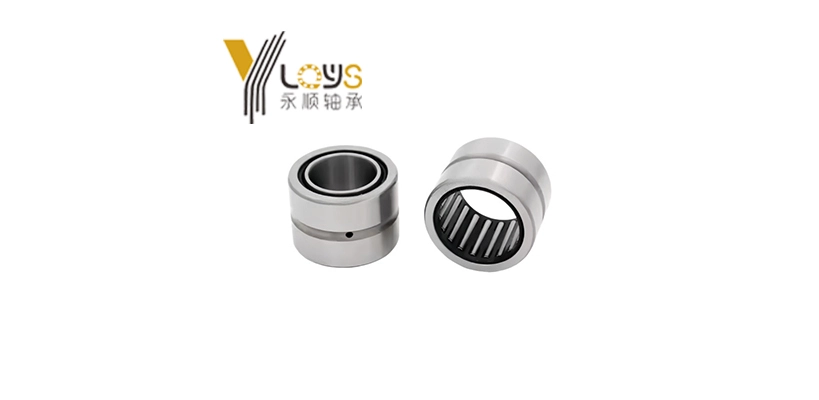
For product selection, buyers can review the needle roller bearing category, which includes needle roller bearings with inner ring and needle roller bearings without inner ring for compact, high-load applications.
What Information Should You Send for an IKO Bearing RFQ?
An accurate RFQ helps reduce back-and-forth communication and lowers the risk of receiving the wrong replacement. For IKO needle roller bearing replacement, include as much of the following information as possible:
- IKO bearing part number
- Inner ring part number, if available
- Shaft diameter
- Housing bore
- Bearing width
- Existing inner ring width
- Shaft condition: hardened, ground, worn, soft, damaged, or unknown
- Equipment type and application
- Load and speed, if known
- Lubrication condition
- Required quantity
- Preference for IKO original, equivalent replacement, or cost-effective supply option
- Photos of the failed bearing, shaft, housing, and old inner ring
Shanghai Yongheshun Import and Export Co., Ltd. operates LQYS Bearings as a bearing business covering production, sales, trade, and export. Its product range includes needle roller bearings and other industrial bearing categories for machinery, automotive, metallurgy, mining, papermaking, and related applications. Buyers comparing IKO needle bearing replacement options can use the company website as a starting point for reviewing bearing categories and procurement support.
How to Avoid Early Failure After Replacement
A technically correct bearing number can still fail if the installation conditions are wrong. For needle roller bearings, the most common replacement mistake is focusing only on size while ignoring the shaft raceway.
Common Mistakes During Replacement
Avoid these errors during IKO needle roller bearing replacement:
- Matching only ID, OD, and width
- Reusing a shaft with visible wear marks
- Installing a bearing without inner ring on an unqualified shaft
- Ignoring lubrication holes or grease path differences
- Replacing an inner ring only because it “looks usable”
- Changing to an equivalent bearing without checking clearance, tolerance, and width
- Ignoring axial movement when selecting inner ring width
- Failing to compare the new structure with the original bearing arrangement
A reliable replacement process should begin with the failed part, continue through shaft inspection, and end with supplier confirmation before purchase.
Choosing a Supplier for IKO Needle Bearing Replacement
A B2B supplier should help the buyer confirm the replacement logic, not only quote a part number. For this type of order, useful supplier support includes checking whether the application needs an inner ring, identifying whether the shaft can serve as the raceway, confirming equivalent bearing options, and helping buyers prepare RFQ details.
The supplier should also understand the difference between needle roller bearings with inner ring and without inner ring. This matters for machinery repair, OEM purchasing, distribution, and factory maintenance projects where a wrong structure can cause repeat downtime.
Before ordering, buyers should ask the supplier to confirm several points: whether the original bearing used an inner ring, whether the shaft condition is suitable for direct roller contact, whether the inner ring width matches the application, whether the lubrication path is affected, and whether the proposed equivalent bearing should be checked against the original specification.
For company background, buyers can review About LQYS. For project-specific RFQs, replacement checks, or part number confirmation, submit the bearing number, dimensions, shaft condition, quantity, application details, and failure photos through Contact LQYS.
Technical Review Note
Final bearing selection should be verified against the actual product specification, shaft condition, load, speed, lubrication method, installation space, and operating environment. The guidance above is intended to support replacement judgment and RFQ preparation, not to replace application-specific engineering confirmation.
Conclusion
An IKO Nippon Thompson needle roller bearing replacement should be selected based on both the bearing number and the shaft raceway condition. If the shaft is hardened, ground, and suitable for direct needle roller contact, a bearing without inner ring may be appropriate. If the shaft is soft, worn, rough, damaged, or unknown, an inner ring is usually the safer direction.
Before placing an order, prepare the IKO part number, shaft diameter, bearing width, inner ring number, photos, quantity, and application conditions. This helps the supplier check whether the correct choice is an IKO inner ring, a complete needle roller bearing with inner ring, a bearing without inner ring, or an equivalent replacement solution.
FAQs
Do all IKO needle roller bearings need an inner ring?
No. Some IKO needle roller bearings can run directly on a hardened and ground shaft when the shaft is designed to work as the inner raceway. If the shaft is not suitable or the original design used a separate inner ring, an inner ring should be considered.
Can a needle roller bearing run directly on a shaft?
Yes, but only when the shaft is suitable for rolling contact. The shaft should be checked for hardness, surface finish, wear, dimensional accuracy, and lubrication condition. If the shaft condition is unknown, using an inner ring may reduce replacement risk.
Should I replace the inner ring together with the needle bearing?
If the inner ring is worn, pitted, discolored, scored, or dimensionally changed, replacing it together with the bearing is usually the safer maintenance decision. If the inner ring appears usable, it should still be inspected before reuse.
How do I know whether to use an IKO inner ring or a hardened shaft?
Choose based on the original design, shaft condition, radial space, load, speed, lubrication, and installation limits. A hardened shaft may save radial space, while an inner ring provides a controlled raceway when the shaft is not suitable.
What information is needed for an IKO needle bearing replacement RFQ?
Send the IKO bearing number, inner ring number if available, shaft diameter, housing bore, bearing width, shaft condition, quantity, application details, and photos of the failed bearing or shaft. This information helps confirm whether an inner ring, hardened shaft arrangement, or equivalent replacement is suitable.