

How Often to Grease Electric Motor Bearings? Frequency, Grease Quantity, and Step-by-Step Lubrication Guide
2026-07-16
Electric motor bearings should not be greased by a fixed calendar rule alone. The correct electric motor bearing lubrication interval depends on bearing type, motor speed, load, temperature, contamination, grease compatibility, and whether the bearing is designed for relubrication. For maintenance teams, the real question is not only how often to grease electric motor bearings, but also how much grease to add, how to apply it safely, and when replacement is a better decision than regreasing.
Quick Answer: How Often Should Electric Motor Bearings Be Greased?
For industrial motors, greasing frequency should be based on operating conditions rather than a universal “every few months” rule. A motor running continuously in a hot, dusty, or wet environment may need a shorter electric motor bearing grease interval than a lightly loaded motor used intermittently in a clean area.
Why there is no single fixed greasing interval
Bearing size, running speed, grease type, housing design, seal condition, and duty cycle all affect lubricant life. High-speed operation can increase grease churning and heat. Heavy contamination can shorten grease life. A blocked grease relief path can also cause overpressure during relubrication.
When annual, shorter, or condition-based lubrication may be needed
Some motors may only require inspection during scheduled maintenance, while severe-duty motors may need a running-hour-based plan. Condition monitoring, bearing temperature, vibration, grease leakage, and noise should be used together before changing a motor bearing lubrication schedule.
Do All Electric Motor Bearings Need Grease?
Not every electric motor bearing should be regreased. Before adding grease, identify whether the motor uses sealed-for-life bearings, shielded bearings, open bearings, or a housing with grease fittings.
Double sealed and double shielded bearings
Many double sealed or double shielded bearings are supplied with grease inside the bearing. These designs may not require field regreasing, depending on the motor design and service conditions.
Open, single-shielded, and relubricatable bearings
Open-type and certain relubricatable motor bearings may require periodic lubrication through a grease fitting. Open-type bearings are more dependent on correct lubricant quantity, cleanliness, and maintenance intervals.
How to check whether a motor bearing can be regreased
Check the motor nameplate, maintenance manual, bearing arrangement, grease fitting, drain plug, and bearing designation. If the bearing type, seal type, or lubrication path is unclear, verify the specification before adding grease.
What Determines Electric Motor Bearing Greasing Frequency?
Motor speed and bearing size
Higher speed and larger bearings can change grease behavior inside the bearing cavity. A large bearing may need more grease by volume, but that does not mean the cavity should be filled completely.
Operating temperature
Heat accelerates grease aging. If a motor runs hotter than normal after lubrication, the cause may be overgreasing, grease incompatibility, excessive load, misalignment, poor ventilation, or bearing damage.
Continuous-duty vs intermittent-duty operation
A motor running 24 hours per day usually needs a different maintenance plan than a standby motor or a machine used only during seasonal production.
Dust, moisture, contamination, and seals
Dusty conveyors, pumps, fans, compressors, textile machinery, mining equipment, and paper machinery can expose bearings to contamination. Seal condition and housing protection should be reviewed before simply shortening the lubrication interval.
Grease type and compatibility
Grease should be compatible with the previous lubricant, bearing type, operating temperature, speed, and application. Mixing incompatible greases may cause softening, hardening, oil separation, or poor lubrication film formation.
Electric Motor Bearing Greasing Frequency Planning Table
|
Motor Condition |
Lubrication Planning Approach |
Maintenance Risk |
|
Light-duty motor in a clean area |
Inspect during scheduled maintenance |
Low if temperature and noise remain stable |
|
Continuous-duty industrial motor |
Use running hours and condition checks |
Medium if interval is too long |
|
High-speed motor |
Use smaller measured quantities and closer monitoring |
Heat and churning risk |
|
Hot or dusty environment |
Shorten inspection interval and check seals |
Grease aging or contamination |
|
Stored or idle motor |
Rotate and inspect before restart |
False brinelling or grease separation risk |
Light-duty motors
For low-load applications in clean environments, the maintenance focus is usually inspection, temperature tracking, and confirming whether the bearing is actually relubricatable.
Continuous-duty industrial motors
Continuous-duty motors should have a documented electric motor greasing schedule based on running hours, load, temperature, and historical failure data.
High-speed or high-temperature motors
High-speed and high-temperature motors require careful grease quantity control. Too much grease can increase heat and shorten bearing life.
Dusty or wet environments
In wet or dusty conditions, lubrication alone may not solve the problem. Seal type, housing protection, and contamination control should be reviewed.
Stored or idle motors
Idle motors should be inspected before restart, especially when they have been stored in humid, dusty, or vibration-prone areas.
5. How Much Grease Should You Add to an Electric Motor Bearing?
Grease quantity formula
A common planning method is to calculate grease quantity from bearing size:
Grease quantity in grams = Bearing outside diameter × Bearing width × 0.005
This formula is a planning reference. The final amount should be checked against the motor manufacturer’s instructions and the bearing arrangement.
Example calculation for 6203, 6205, 6308 bearings
A 6205 bearing with a 52 mm outside diameter and 15 mm width would use this estimate:
52 × 15 × 0.005 = 3.9 g
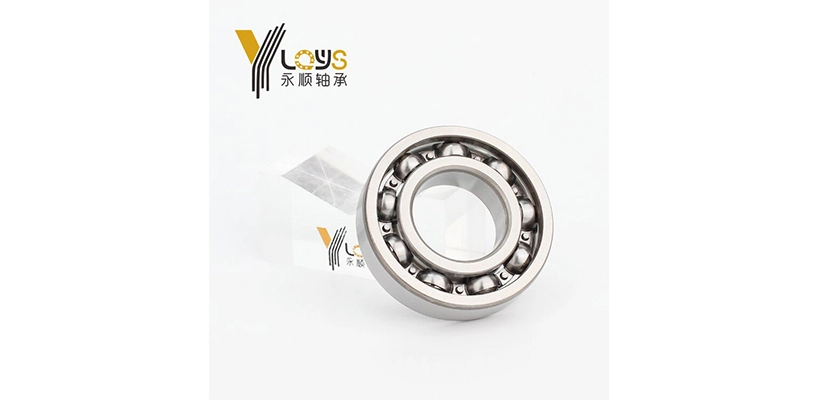
For a replacement or maintenance calculation, a 6205 deep groove ball bearing for electric motors can be specified together with seal type, clearance, speed condition, temperature, and application.
How to convert grams into grease gun strokes
Grease guns do not all deliver the same output per stroke. Maintenance teams should measure one stroke output in grams, then calculate the required number of strokes. Guessing by “two or three pumps” can lead to overgreasing.
Why overgreasing causes heat and failure
Too much grease can create churning, temperature rise, seal pressure, leakage, and possible contamination near motor components. Undergreasing can lead to friction, noise, wear, and early bearing failure.
How to Grease Electric Motor Bearings Step by Step
Clean the grease fitting
Wipe the grease fitting before lubrication. Dirt around the fitting can be pushed directly into the bearing housing.
Remove the drain or relief plug
If the motor has a drain or relief plug, remove it before adding grease. This helps old grease and excess pressure escape.
Add grease slowly
Use a manual grease gun and apply grease slowly. Fast pumping can create pressure spikes and may damage seals or push grease into areas where it does not belong.
Let excess grease purge
Allow excess grease to purge from the relief path where applicable. The motor may need to run under safe operating conditions to help distribute the grease.
Reinstall the plug and monitor temperature/noise
After relubrication, monitor temperature, vibration, noise, and leakage. Any abnormal change should be recorded and investigated.
Common Electric Motor Bearing Lubrication Mistakes
Overgreasing
Overgreasing is one of the most common causes of motor bearing overheating after greasing. It often happens when maintenance teams lubricate by habit instead of calculated quantity.
Undergreasing
Insufficient grease can cause metal-to-metal contact, rising noise, vibration, and surface damage.
Mixing incompatible grease
Different grease thickeners and base oils may not work together. If grease history is unknown, the old lubricant condition should be checked before adding a new product.
Greasing sealed-for-life bearings
Adding grease to bearings not designed for regreasing can create pressure, seal damage, or no real maintenance benefit.
Ignoring blocked drain passages
A blocked drain passage can trap old grease and cause pressure buildup. Cleaning the grease path may be necessary before relubrication.
Troubleshooting After Greasing: Heat, Noise, Leakage, and Vibration
Bearing gets hot after greasing
Heat after greasing may indicate overgreasing, grease incompatibility, blocked relief, excessive load, misalignment, or existing bearing damage.
Grease leaks from the motor
Grease leakage can result from too much grease, damaged seals, wrong grease consistency, or excessive internal pressure.
Bearing noise remains after lubrication
If noise remains after correct lubrication, the bearing may already be damaged. Lubrication cannot repair pitting, wear, corrosion, or incorrect fit.
When lubrication is not the root cause
If a motor continues to run hot or unstable after proper relubrication, review the broader electric motor bearing failure causes before replacing the same bearing repeatedly.
When to Replace the Electric Motor Bearing Instead of Regreasing
Repeated overheating
Repeated overheating after correct grease quantity and procedure may point to bearing damage, wrong clearance, incorrect fit, excessive load, or unsuitable seal configuration.
Abnormal noise or vibration
Persistent noise, vibration, or rough rotation is a warning sign. The bearing should be inspected rather than continually regreased.
Contaminated or hardened grease
Blackened, hardened, watery, or contaminated grease may indicate harsh operating conditions or sealing problems.
Wrong clearance, seal, or speed rating
Replacement should consider bearing model, internal clearance, seal or shield type, speed condition, load, temperature, and environment. For broader sourcing, industrial bearing solutions from LQYS can be reviewed as part of a structured replacement plan.
RFQ Checklist for Replacement Electric Motor Bearings
Bearing model and dimensions
Provide the bearing code, bore diameter, outside diameter, width, and any markings visible on the old bearing.
Seal/shield type
Specify open, ZZ, 2RS, or other seal configuration. This affects lubrication needs and contamination protection.
Clearance grade
C3 or other clearance requirements should be confirmed against speed, temperature, and motor design.
Speed, load, and temperature
Share RPM, duty cycle, load direction, operating temperature, and whether the motor runs continuously.
Quantity, brand preference, and application
For procurement, include target quantity, application, failure symptoms, drawings, samples, or photos. Shanghai Yongheshun Import and Export Co., Ltd. integrates production, sales, trade, and export of various bearing types, and its products are used in mechanical equipment, water and electricity, engineering, railway, automobile, steel, electricity, textile, metallurgy, mining, oil, papermaking, and other fields. Buyers can contact LQYS for replacement motor bearing inquiries with the above RFQ information.
Conclusion
Electric motor bearing lubrication should be handled as a controlled maintenance decision, not a routine habit. The right plan depends on whether the bearing can be regreased, how the motor operates, what grease is used, how much grease is added, and whether symptoms point to lubrication failure or bearing replacement.
For B2B buyers, the next step is to document the bearing model, dimensions, seal type, clearance, speed, temperature, duty cycle, application, quantity, and failure photos. This information helps Shanghai Yongheshun Import and Export Co., Ltd. evaluate whether the project requires the same bearing type, a sealed version, a different clearance, or a more suitable replacement configuration.
FAQs
How often should electric motor bearings be greased?
Electric motor bearings should be greased according to bearing type, motor speed, load, temperature, contamination level, grease type, and operating hours. A fixed calendar interval is less reliable than a condition-based or running-hour-based plan.
How much grease should I put in an electric motor bearing?
A common estimate is bearing outside diameter × bearing width × 0.005 in grams. The result should be checked against the motor maintenance instructions, housing design, and grease gun output.
Can you over grease electric motor bearings?
Yes. Overgreasing electric motor bearings can cause heat, churning, seal pressure, grease leakage, and possible contamination. Grease should be measured, added slowly, and allowed to purge where the motor design permits.
Do sealed electric motor bearings need grease?
Many sealed or shielded motor bearings are supplied with grease and may not require field relubrication. The bearing designation, motor manual, and maintenance instructions should be verified before adding grease.
Why is my motor bearing hot after greasing?
A motor bearing may become hot after greasing because of excess grease, incompatible grease, blocked relief paths, misalignment, overload, poor ventilation, or existing bearing damage. If temperature remains abnormal, inspection and replacement evaluation may be needed.