

Needle Roller Bearings With or Without an Inner Ring: Is Your Shaft Hard Enough?
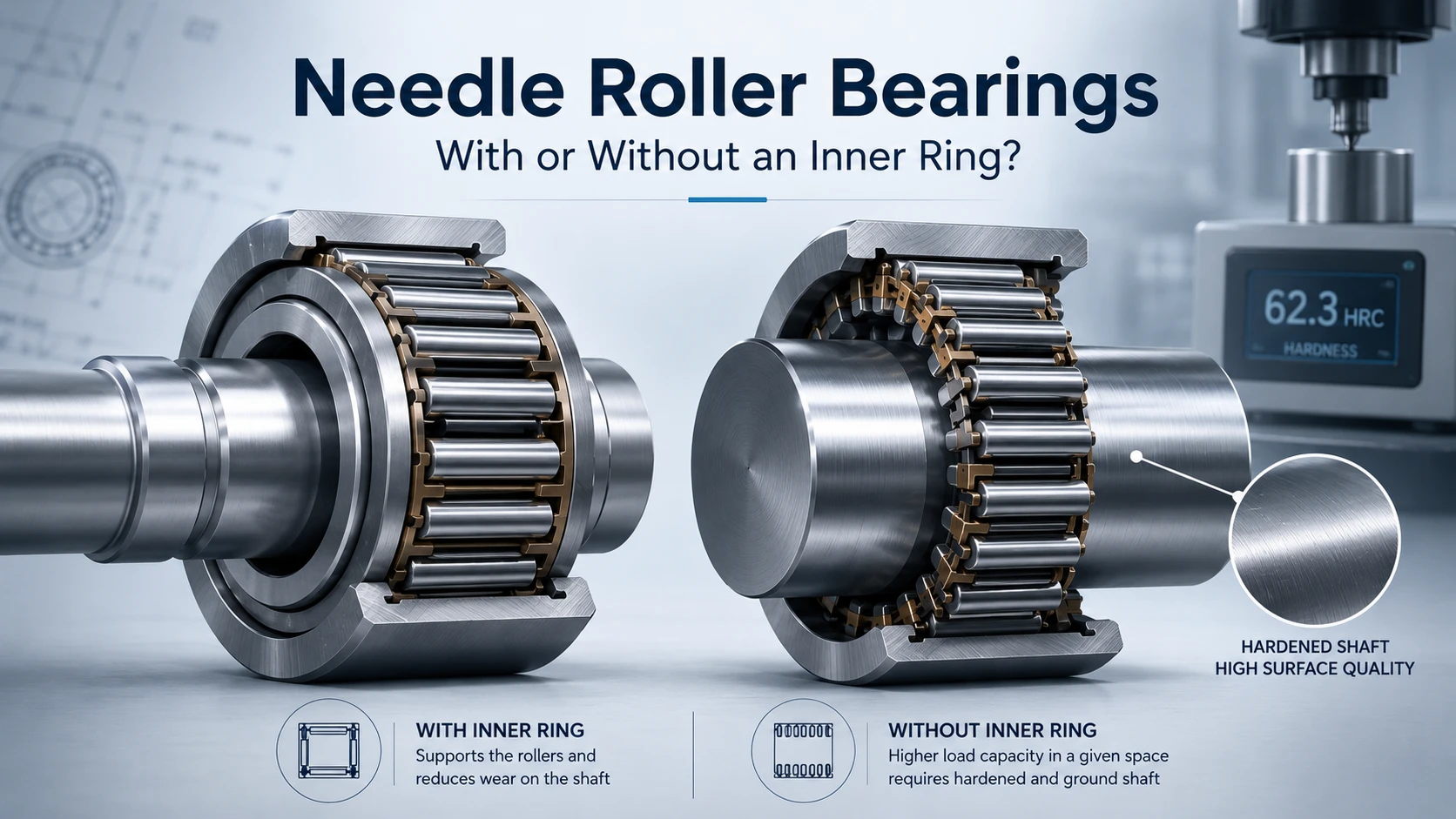
2026-07-09Both needle roller bearings with and without an inner ring can be chosen based on the same grounds: high load capacity within a very tight space. What makes them different is the origin of the rolling surface. In a bearing with an inner ring, the rolling surface is made by the bearing itself. On the contrary, in a bearing without an inner ring, the shaft journal serves as the rolling surface.
However, this difference impacts more than just the list of parts. It impacts the design of the shaft, heat treatment process, cost of production, maintenance, and bearing life span. In the case of an OEM engineer, the bearing without an inner ring allows creating a compact and robust construction. In the case of maintenance and replacement personnel, the needle roller bearing with an inner ring may be more practical when the shaft cannot be effectively hardened, ground or restored.
The needles are long and have small diameter providing high load capacity in low radial cross-section. Needle roller bearings are extensively used in transmissions, pumps, reducers, textile machines, printing machines, automobiles and other compact industrial assemblies.
Needle Roller Bearing With or Without an Inner Ring: The Raceway Decides
When Can a Needle Bearing Run Directly on a Shaft?
A needle roller bearing without an inner ring can run directly on a shaft when the shaft journal has been designed as a bearing raceway. This usually means the shaft material, heat treatment, surface finish, geometry, and effective hardening depth have been controlled during manufacturing.
This design reduces radial space because the separate inner ring is removed. It can also allow a larger shaft diameter within the same housing envelope, which may improve system rigidity. In compact gearboxes, automotive transmissions, hydraulic pumps, and high-volume OEM assemblies, that benefit can be meaningful.
However, a no-inner-ring needle bearing transfers the responsibility for bearing raceway quality to the shaft. The shaft is no longer just a structural component. It becomes a precision rolling contact surface. If the shaft is too soft, rough, tapered, out of round, damaged, or poorly lubricated, the bearing may wear a groove into the journal long before the rolling elements themselves appear damaged. LQYS notes that no-inner-ring designs use the shaft surface as the raceway and require the shaft to be hardened and ground to suitable precision for reliable service.
When Should a Needle Roller Bearing With an Inner Ring Be Used?
A needle roller bearing with an inner ring is the safer option when the shaft cannot act as a reliable raceway. This includes shafts made from material that cannot be heat-treated appropriately, shafts with an existing wear groove, shafts that require frequent disassembly, and replacement projects where machining the journal is not practical.
The inner ring provides a hardened, finished rolling surface between the shaft and the needle rollers. It also makes repair planning simpler. If the running surface becomes damaged, the inner ring can be replaced without automatically requiring a new shaft.
For maintenance departments, this often matters more than the small amount of radial space saved by eliminating the inner ring. A machine may be down because a shaft journal is worn, while the outer ring and housing remain acceptable. In that case, replacing the shaft can require more labor, longer downtime, and higher cost than fitting a properly selected inner-ring design.
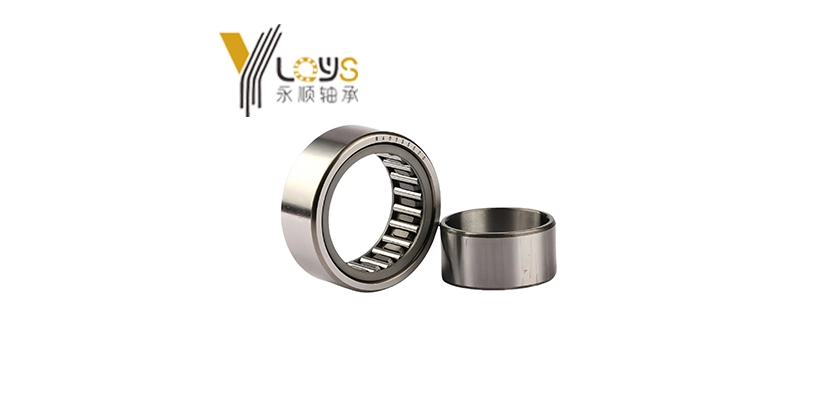
The needle roller bearings with inner rings supplied by LQYS Bearings are intended for applications where shaft hardness is insufficient or where repeated assembly and disassembly are expected. Their construction includes an inner ring, outer ring, needle rollers, and cage, providing a dedicated raceway rather than relying on the shaft surface.
Is Your Shaft Hard Enough for a Needle Roller Bearing Without an Inner Ring?
Shaft Hardness Is Only the First Requirement
The question “Is the shaft hard enough?” sounds simple, but hardness alone does not determine whether a needle roller bearing without an inner ring will perform well. The shaft must also have enough effective hardening depth to support repeated rolling contact beneath the surface.
For direct shaft raceway applications, technical catalogs commonly specify a hardened raceway range around HRC 58 to 64. That figure should not be treated as a universal purchasing requirement. The correct hardness and case depth depend on the bearing series, roller diameter, load level, operating speed, lubricant, and heat-treatment method.
A shaft that is hard only at the surface may still fail under repeated load. The rolling contact stress extends beneath the visible surface, so the hardened layer must support the load path. A shallow or inconsistent heat-treated layer can lead to cracking, plastic deformation, pitting, or premature shaft raceway wear.
Surface Finish and Geometry Matter Just as Much
A hardened shaft with poor surface finish is still a poor raceway. Needle rollers are long relative to their diameter, so they are sensitive to uneven contact. Surface roughness, taper, roundness, cylindricity, and shaft runout all influence how the load is shared across the roller length.
If the shaft journal has high spots, grinding marks, corrosion, dents, or a visible wear band, the rollers do not contact the raceway evenly. One part of the roller may carry more load than the rest. That can increase friction, produce vibration, raise temperature, and shorten bearing life.
This is why a needle roller bearing shaft surface finish should be reviewed before a no-inner-ring replacement is ordered. The correct question is not only, “What is the shaft diameter?” It is also, “Can this shaft continue to serve as a bearing raceway?”
Do Not Treat Mild Steel as a Finished Raceway
Can a needle bearing run directly on a mild steel shaft? In most industrial applications, that is not recommended unless the journal has been specifically heat-treated and finished for rolling contact. An untreated or lightly machined shaft can wear quickly under the concentrated line contact created by needle rollers.
A common maintenance problem starts when a worn bearing is replaced with the same no-inner-ring design, while the shaft journal is left unchanged. The new bearing initially appears acceptable, but the rollers continue running on the existing damaged surface. Noise, vibration, metallic particles in lubricant, and shaft grooves return soon after commissioning.
When a needle bearing is wearing the shaft, replacing only the bearing may not solve the problem. The shaft raceway condition must be inspected before deciding whether to repair the journal or switch to a needle roller bearing with an inner ring.
Inner Ring vs. Shaft Raceway in Real Applications
Compact OEM Assemblies
A needle roller bearing without an inner ring is often attractive in high-volume OEM production. The design can reduce component count, lower radial build height, and permit a larger shaft within the available space. When shaft heat treatment and grinding are controlled consistently, this structure can be efficient and durable.
Applications such as compact transmissions, gear pumps, drive mechanisms, textile machinery, and automotive components may use the shaft directly as the raceway. In those environments, the shaft is designed around the bearing from the start.
The buyer should still confirm that the shaft raceway specification is part of the production drawing. A no-inner-ring bearing should not be selected only because it has a lower apparent price or a smaller radial section.
Repair and Replacement Projects
For repair work, the situation is different. The shaft may already have wear, corrosion, scoring, or insufficient hardness. The original design may have used a direct raceway, but the replacement decision should be based on the condition of the current components, not only the original drawing.
A needle roller bearing inner ring replacement can provide a practical route when the shaft is still dimensionally usable but no longer suitable as a direct rolling surface. The inner ring creates a new finished raceway, reducing dependence on the damaged journal.
This approach can be useful in industrial gearboxes, machine tools, printing equipment, agricultural machinery, and production lines where shaft replacement requires major disassembly. It can also support spare-parts planning, because an inner ring can be stocked alongside the bearing assembly for future service.
Frequent Disassembly and Service Access
Where bearings are removed regularly for inspection, cleaning, tooling changes, or scheduled maintenance, an inner ring may reduce the risk of gradual journal damage. Repeated mounting and dismounting can mark or alter the shaft surface, particularly when pullers, heat, or tight fits are involved.
A separate inner ring also provides a clearer inspection point. The maintenance team can examine the raceway itself rather than judging shaft condition indirectly through noise or vibration. LQYS identifies frequent disassembly as one of the operating conditions where an inner-ring needle roller bearing is suitable.
What Happens When a Needle Bearing Runs on an Unsuitable Shaft?
An unsuitable shaft raceway can cause a chain of failures. The first sign may be a light polishing band or a shallow groove on the shaft. As the contact surface deteriorates, the rollers may begin to slide or load unevenly. Lubricant can carry fine metallic debris, while vibration and noise become more noticeable.
In severe cases, the shaft may develop pitting, scoring, flaking, or permanent indentations. The bearing may then show early fatigue even though the rolling elements are correctly sized for the application. A shaft raceway problem can look like a low-quality bearing problem, which is why failure analysis should include both the bearing and the journal.
Needle roller bearings also have limited tolerance for misalignment compared with some other bearing types. A long roller can be sensitive to angular error between the shaft and housing. An inner ring improves the raceway condition, but it does not correct a bent shaft, distorted housing, poor mounting alignment, or excessive deflection. Those conditions should be addressed before any replacement bearing is installed.
What Buyers Should Confirm Before Ordering Needle Roller Bearings
Confirm the Bearing Construction
Before purchasing, confirm whether the application uses a machined-ring needle roller bearing, drawn-cup needle bearing, needle roller and cage assembly, cam follower, or thrust needle roller assembly. These products can look similar in a catalog but serve different mounting and load requirements.
A bearing with an inner ring is primarily a radial bearing solution. If the application also has substantial axial movement or thrust load, the assembly may require shoulders, thrust washers, guide components, or a separate thrust bearing arrangement. Axial load should never be assumed to be covered simply because the bearing includes an inner ring.
Confirm the Shaft and Housing Condition
The purchase specification should include shaft diameter, housing bore, shaft material, shaft surface condition, hardening method, and any visible journal damage. If a direct shaft raceway is intended, provide the surface finish and hardness requirements from the machine drawing.
For replacement projects, photographs of the shaft, inner ring, rollers, and lubrication condition can be more valuable than a part number alone. A bearing designation confirms nominal dimensions, but it may not reveal why the previous installation failed.
Confirm Load, Speed, Lubrication, and Contamination Risk
Needle roller bearings are valued for high radial capacity in compact spaces, but the bearing must still be matched to the actual load and speed. Shock loads, oscillating motion, high-speed rotation, inadequate grease, low oil flow, water ingress, and abrasive contamination can all reduce service life.
For machinery exposed to dust, cutting fluid, moisture, fibers, or metal chips, sealed designs and appropriate lubrication should be considered. LQYS offers multiple needle roller bearing categories, including inner-ring and no-inner-ring designs, drawn-cup bearings, cage assemblies, and cam followers for compact, high-load applications.
Supplier Capability Matters in Long-Term Purchasing
For bulk sourcing, a qualified supplier should do more than match dimensions. The supplier should ask whether the shaft will function as the raceway, whether the shaft has been hardened and ground, whether the application requires an inner ring, and whether the machine has experienced journal wear or premature bearing failure.
The supplier should also be able to confirm dimensional tolerances, product marking, packaging requirements, quantities, and the intended operating environment. When a customer is replacing bearings across several machine models, clear application records help prevent one incorrect bearing construction from being used across all locations.
LQYS Bearings supports buyers sourcing needle roller bearings for compact, high-load applications in industrial machinery, automotive systems, pumps, gearboxes, textile equipment, and related mechanical assemblies. Product selection can be discussed around shaft condition, radial space, load direction, lubrication, replacement frequency, and required dimensions rather than relying on a single part number.
For buyers who need consistent supply, Shanghai Yongheshun Import and Export Co., Ltd. reports integrated production, sales, trade, and export operations. Its public company information lists more than 40 employees, a 12,000 m² factory area, and export activity across more than 30 countries. Those capabilities are relevant when orders involve repeat purchasing, custom packaging, mixed bearing requirements, or export documentation.
Conclusion
The selection process of needle roller bearing with or without inner ring must consider the shaft raceway first, rather than the bearing price. The absence of an inner ring would be beneficial for space saving and compact design if the shaft raceway is hardened, ground, and controlled accordingly. In case of uncertainty on the shaft raceway hardness, wear out journal, and regular maintenance, the inner ring option becomes the safer choice.
In preparation for purchase, please verify the bearing structure, shaft raceway status, surface condition, load, speed, lubrication, contamination possibility, and maintenance schedule. The buyers providing all these information early are more likely to get an appropriate bearing design which would suit the machinery and reduce future damage of shaft raceway.
For technical selection, sampling, quotation purpose, buyers can ask for the shaft raceway verification of LQYS Bearings using bearing code, shaft diameter, shaft material, operation load, speed, lubrication type, and pictures of the worn journal.
FAQs
Q1: Does a needle roller bearing need an inner ring?
A1: A needle roller bearing does not always need an inner ring. A no-inner-ring design can use the shaft directly as the raceway when the shaft is hardened, ground, and manufactured to the required geometry. An inner ring is recommended when the shaft cannot meet those raceway requirements or when the shaft is already worn.
Q2: What shaft hardness is needed for a needle roller bearing without an inner ring?
A2: Many direct-raceway needle roller bearing applications use hardened shaft surfaces in the HRC 58 to 64 range. However, the required value depends on the bearing series, load, roller size, heat-treatment method, and effective hardening depth. Shaft hardness should be checked against the relevant bearing specification rather than copied from another application.
Q3: Can a needle bearing run directly on a mild steel shaft?
A3: A needle bearing should not normally run directly on untreated mild steel. The shaft may wear quickly because it is acting as the rolling raceway. A hardened and ground shaft is generally required for direct-raceway needle roller bearing designs. If the shaft cannot be prepared correctly, a needle roller bearing with an inner ring is usually more suitable.
Q4: Why is my needle bearing wearing a groove in the shaft?
A4: A needle bearing may wear a groove in the shaft because the shaft is too soft, the surface finish is poor, lubrication is inadequate, contamination is present, or the load is higher than expected. Shaft misalignment, taper, and existing journal damage can also create uneven roller contact. Replacing the bearing without checking the shaft raceway may lead to another early failure.
Q5: When should I use a needle roller bearing with an inner ring?
A5: Use a needle roller bearing with an inner ring when shaft hardness is insufficient, the shaft cannot be ground accurately, the journal is worn, service work requires repeated disassembly, or replacement of the shaft would create excessive downtime. The inner ring provides a separate precision raceway and can simplify future maintenance.